Class: Mammalia Order: Carnivora Family: Canidae Genus: Canis Species: lupus
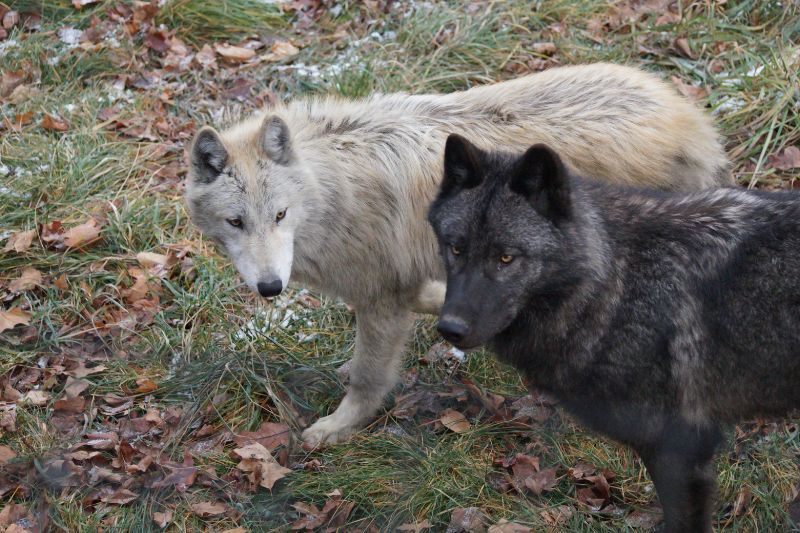
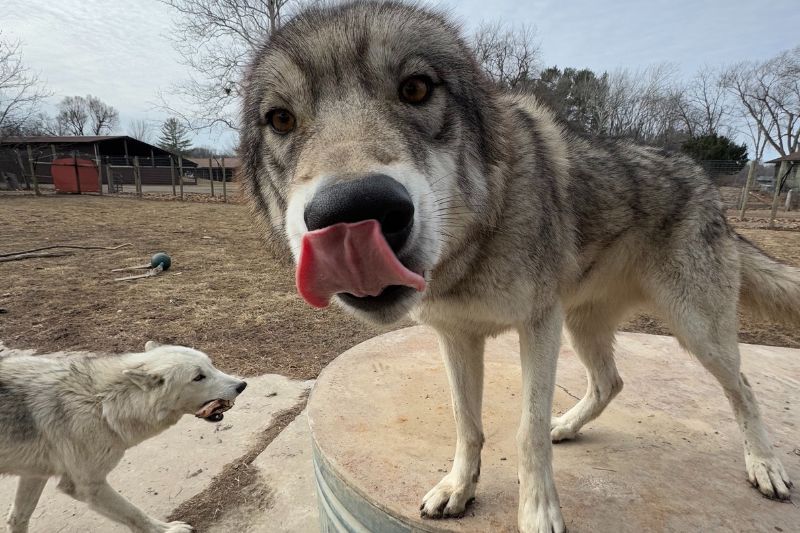
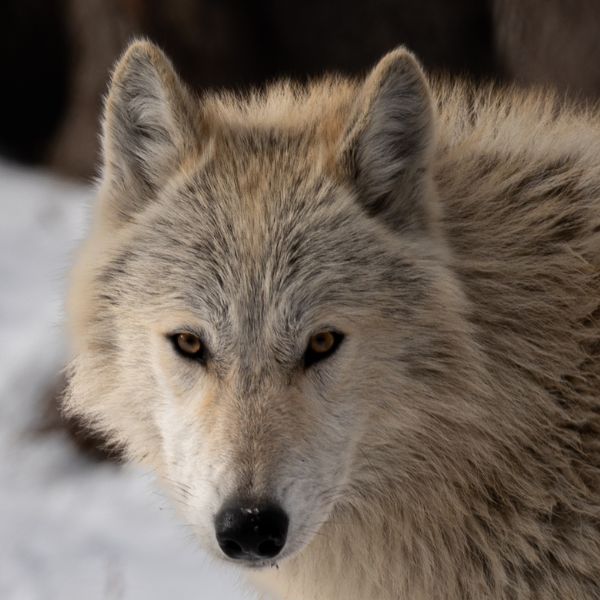
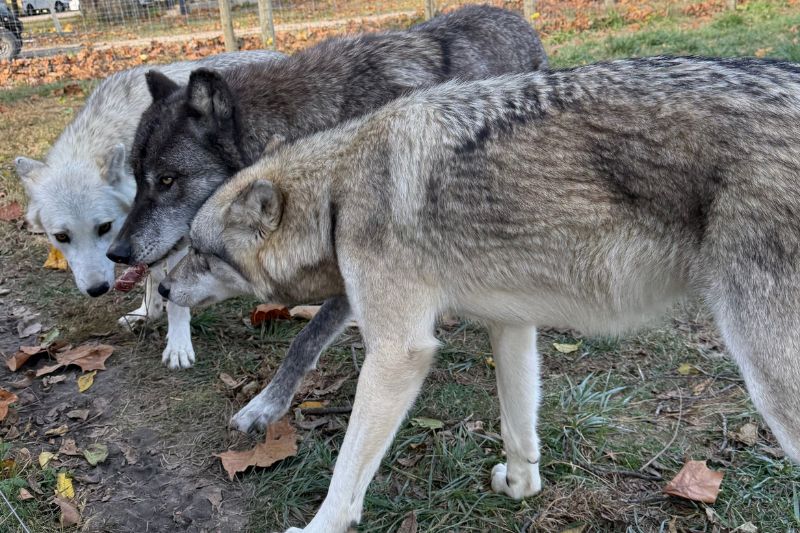
Gray Wolves are the largest member of the Canidae (dog) family, weighing 40-175 lbs (18-80 kgs) depending on their geographic location and sex. In Illinois, gray wolves are considered endangered and weight between 70-120 lbs (31-54 kgs). Wolves are highly social animals and almost always live in packs. The pack is a complex social family that hunt, feed, travel, and rest together.
The pack idea of wolf dominance hierarchy is primarily a natural reflection of the age, sex, and reproductive structure of the group, with the breeding male dominating all others and the breeding female garnering food from the male while she is tending young pups. The "alpha" concept arose from studies of captive wolves that were not related to each other. These unrelated wolves fought for dominance, creating a hierarchy that does not reflect natural wild pack behavior.

Unlike many mammals, wolves do not make regular use of shelters. A den is constructed solely for the purpose of birthing and raising pups and is only used for about 2 months. Dens are usually located on slopes, ridges or other high ground, near a water source.
Wolves are opportunistic carnivores and will feed on the animals that offer the easiest opportunity for a successful hunt including the sick, weak, old, or young. In the wild wolves primarily hunt ungluates, deer, elk, moose, bison, and caribou, but can also include small prey like rabbits, beaver, rodents, and fish as well as insects, berries and carrion. While in captivity, wolves will generally eat a carnivore diet or commercially prepared raw meat supplemented with dry dog food.

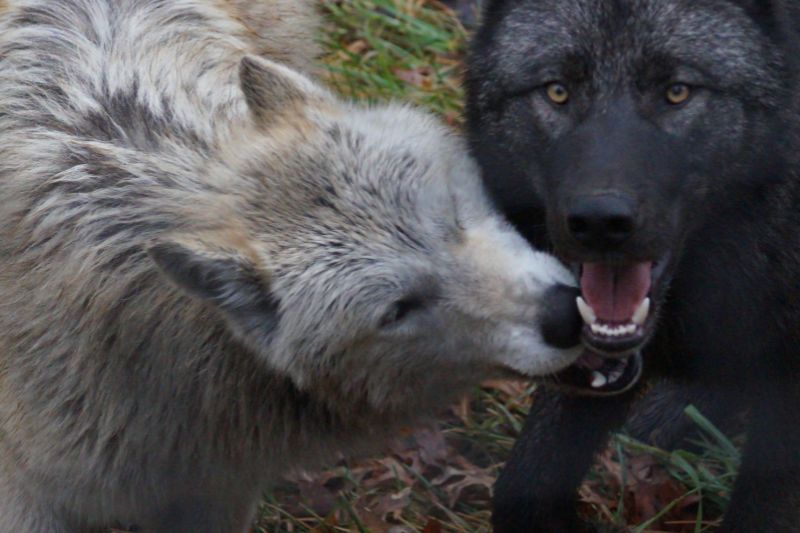
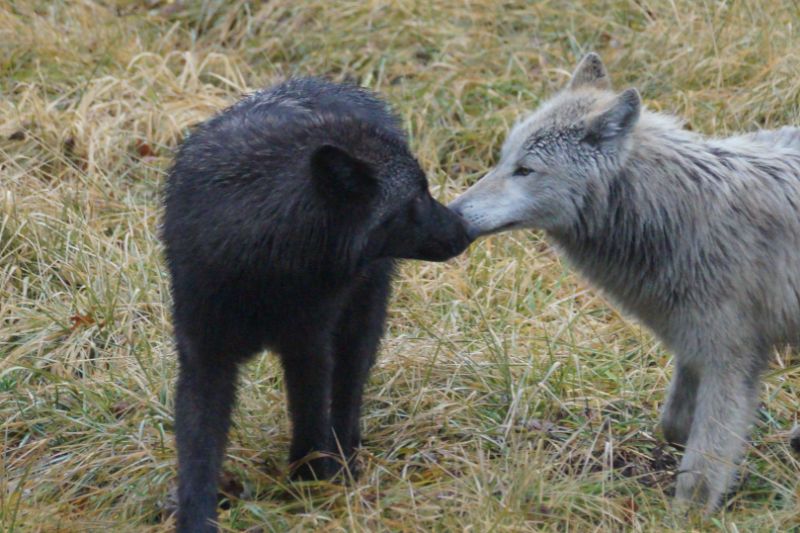
Wolves communicate with each other through sound, special scent, and body language in response to different situations. Vocalizations wolves use to communicate are separated into four categories - whimpering, growling, barking, and howling. Whimpering can be used to convey submission, anxiety or maternal communication with pups. Growling is used as a warning. Barking can be used as a warning or alarm signal. Howling, the most well known form of wolf communication, carries over long distances and can be for social or defensive communication. Scents include scat, urine and pheromones that can be used for individual identification, marking a territory, and more. Body language includes body movements and position as well as facial expressions to convey dominance, submission, aggression, playfulness, and other emotions. Some examples include position of the ears (either held erect or flattened against the head), the tail (wagged or held stiff), and the hairs on the back (erected or laid flat). These behaviors are used in response to different situations.
Wolves spend almost their entire waking time either eating or hunting. After finishing a meal, which typically consists of deer or elk, they will begin almost immediately searching for new prey. Wolves have three main methods of locating prey: direct scenting, chance encounter, and tracking. Of these three, direct scenting is used most often. Wolves play a major role in removing sick and elderly animals from a herd.
Throughout history, wolves have been given the reputation of being vicious, blood-thirsty animals, and were hunted vigorously into the early 1900’s. With the help of werewolf movies and the like, a fear of wolves has been instilled in our society, and the cycle is perpetuated. In truth, wolves typically avoid human contact at all costs, and in North America the risk of a wolf attacking a human in the wild may not be zero, but it is far too low to calculate.