Class: Mammalia Order: Artiodactyla Family: Cervidae Genus: Odocoileus Species: virginianus
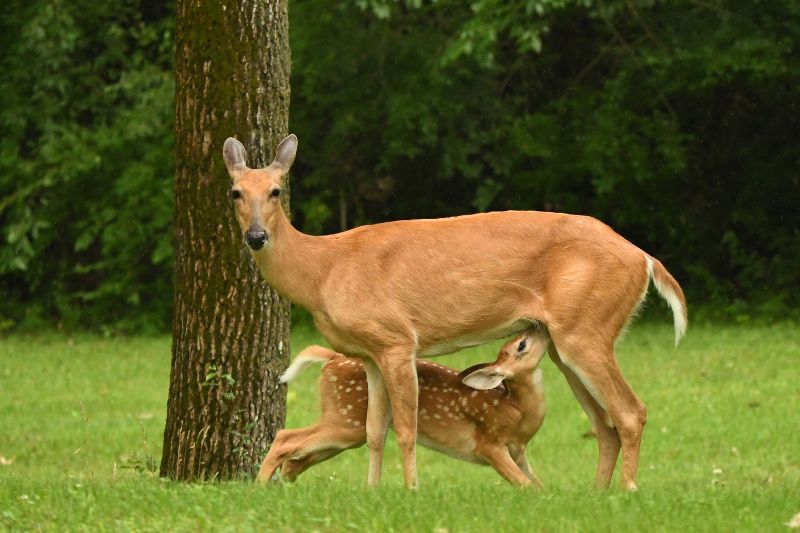
White-tailed deer are the largest extant Illinois Mammal ranging in height of 3 to 3 ½ feet with males weighing 75 to 300 lbs. and females weighing between 50 and 200 lbs. Female deer, or does, tend to remain together in family groups consisting of the eldest, her yearling female offspring, and her fawns from that year (typically 2). Since male white-tailed deer are polygamous, they are not associated with the females except during breeding season and normally do not associate with each other for extended periods of time. Males may form bachelor groups for short periods in late winter and early summer.
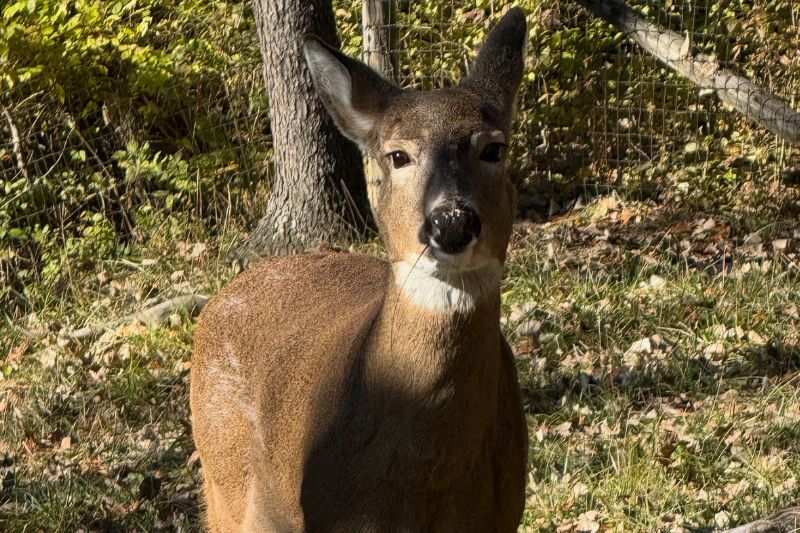
Wildlife Prairie Park is home to wild deer that guests can see during their their daily visits or when staying overnight in lodging.
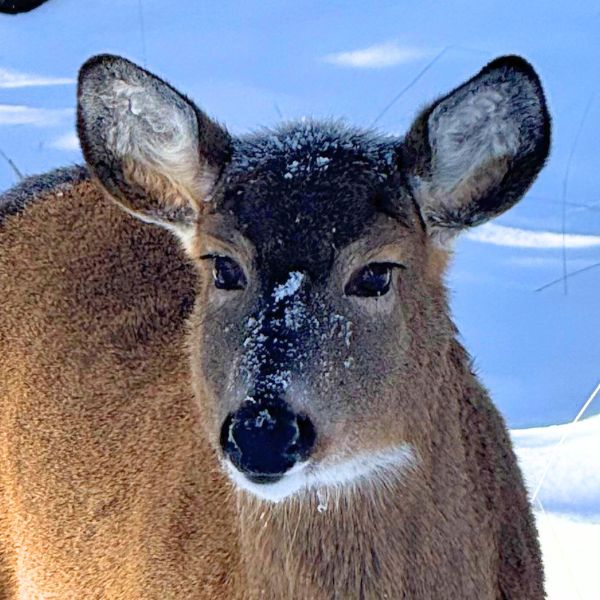

White-tailed deer live in wooded areas and edge habitats, which may be along streams, around wetlands, on hillsides, in fields and pastures or remnant forests. They are frequently found foraging at considerable distances from the woodland or forest areas, but return to these areas for refuge.
In the wild, their diet consists of grass, fruits, nuts, twigs, and grain. In captivity, alfalfa hay is included in their diet.
Help Feed Our Deer
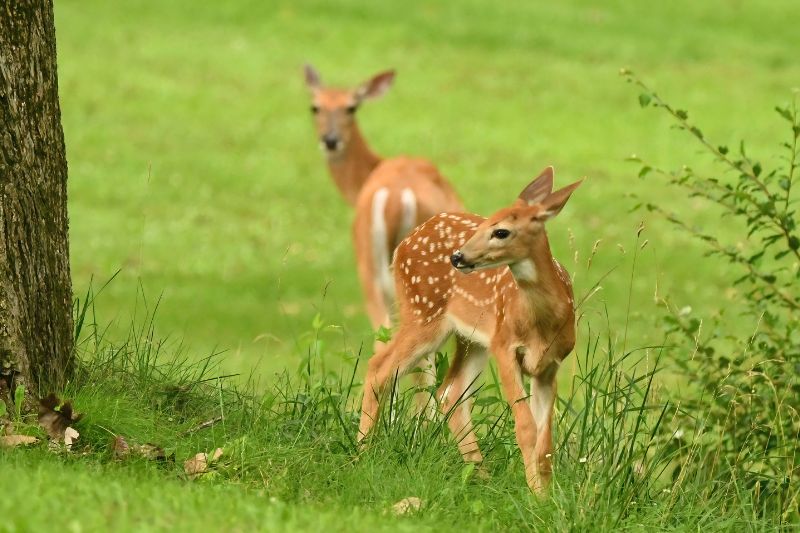
Does are very secretive and reclusive during fawning season, at which time, the doe will give birth to her fawn or fawns and then keep them in hiding by laying in the grass until they are strong enough to join the family group again and stay safe from predators. Fawns will stay where their mother left them, lying motionless, while the mother leads predators away from the fawn. The fawns also stay safe by being nearly scentless and relying on their spotted coats to camouflage them. The fawning season typically lasts from May to August.
The raised tail, with white hair underneath, serves as a visual warning to predators that the deer has spotted danger, and cannot be taken by surprise. It also serves as a warning to other deer that danger is in the area.
Antlers appear on the adult males, or bucks, usually during April. Growing continues throughout the spring and summer, during which time, the antlers are covered in “velvet”, actual living tissue that provides nutrients to the growing bone. Antlers are a form of communication, and they demonstrate dominance. Each buck sheds its antlers every winter after breeding.
Deer are mainly crepuscular, active at dusk and dawn, or nocturnal, active at night, but night and they are known to browse openly during overcast days. They may, however, be startled at any time out of hiding. White-tailed deer have very sensitive hearing, and any loud noises send them running in the other direction.