Class: Reptilia Order: Squamata Family: Colubridae Genus: Heterodon Species: nasicus
The Western hognose snake is identified by an upturned scale at the tip of the nose with their belly and underside of tail being mainly black in color. They are a medium-sized, stout snake with a gray or tan back covered with 35-40 dark blotches. They have numerous small, unpaired scales on top of the snout, in front of the eyes. They are most often observed crossing sandy roads in brushy or weedy sand prairie remnants. It widens its neck, hisses, and sometimes strikes when disturbed, then it rolls onto its back and feigns death.
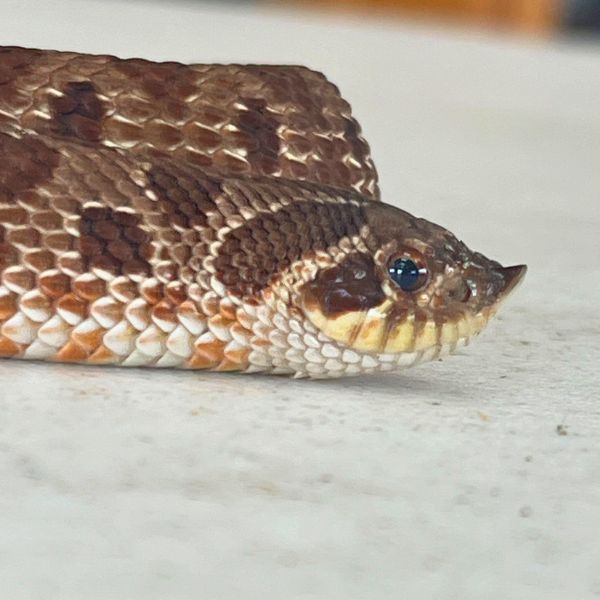
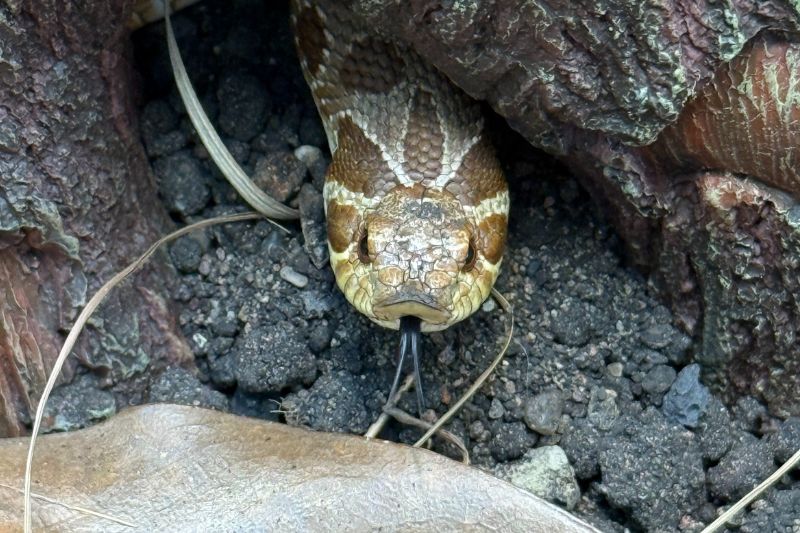
Its range is from Illinois to Alberta, Canada and then south to southeastern Arizona and Central Mexico. They live in sand prairies, savannas and adjacent woodlots in well-drained soil.
Their diet in the wild will consist of toads, other amphibians, reptiles, and their eggs as well as small mammals. At times the Hognose will dig its prey out of sand with its snout. In captivity, the main diet is rodents.
Help Feed Our Hognose Snake
Hognose snakes have enlarged rear teeth and a primitive venom apparatus. While non-venomous to humans and useful in capturing prey, their bite might cause an allergic reaction in some people. They are also commonly referred to as the ‘puff adder’.
Their saliva is toxic to its prey and is injected with enlarged posterior teeth. Main predators are raptors and medium-sized mammals. If startled or threatened, they will exhibit defensive behavior that may include flattening the head and neck, hissing, feigning strike by striking to the side rather than biting), releasing feces and foul-smelling musk, then rolling onto its back with mouth open appearing to have died.