Class: Mammalia Order: Didelphimorphia Family: Didelphidae Genus: Didelphis Species: virginiana
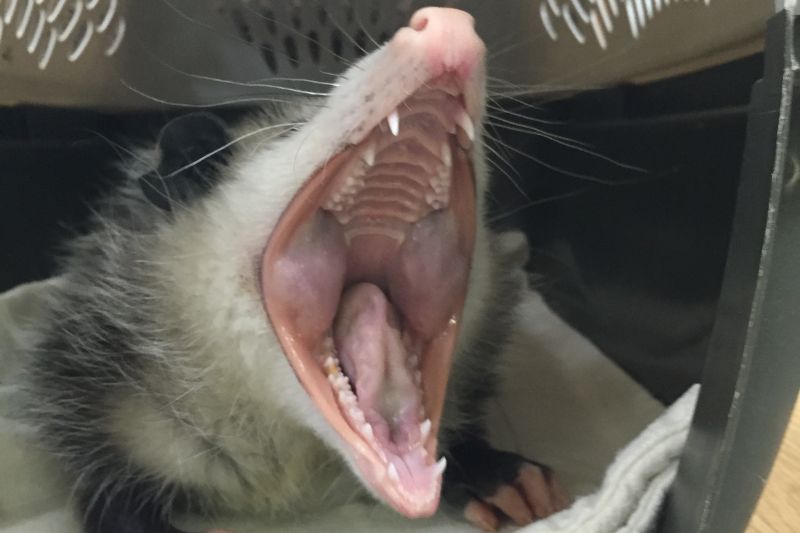
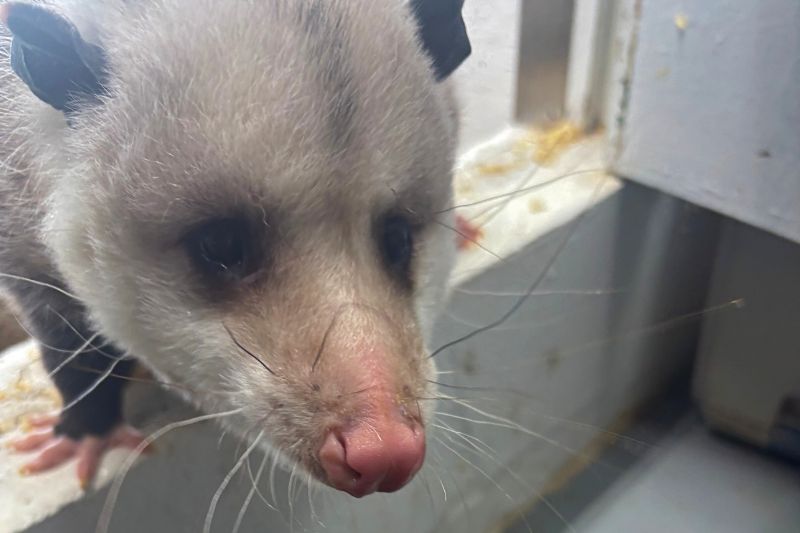
Virginia opossums has many unique adaptations, which enable it to be one of the most agile members of the animal world. First, the opossum has a prehensile tail, which is used almost like a fifth foot. It is used for balance, grasping items like tree branches, and is also used to carry nesting materials. Second, are its opposable “thumbs,” which help it grasp and hold items very efficiently. They also aid in climbing. Third, the opossum’s feet have ridges on the bottom used for traction on all surfaces. Fourth, it has 50 teeth in its mouth, giving it the distinction of being the land mammal with the largest number of teeth in Noth America. Next, the opossum has extremely thin ears, so it is very susceptible to frostbite. In extreme conditions, parts of the paper-thin ears have broken off. Lastly, the opossum is a marsupial, carrying its young in a pouch, much like a kangaroo. In fact, the Virginia Opossum is the only marsupial in North America north of Mexico. Most other marsupials live in Australia. Opossum young aka joeys are born after only 12 days, so they must find their way to the pouch to develop fully.
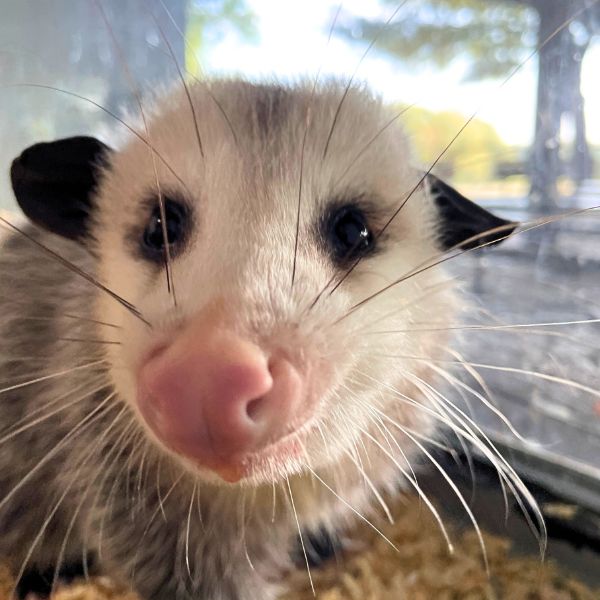

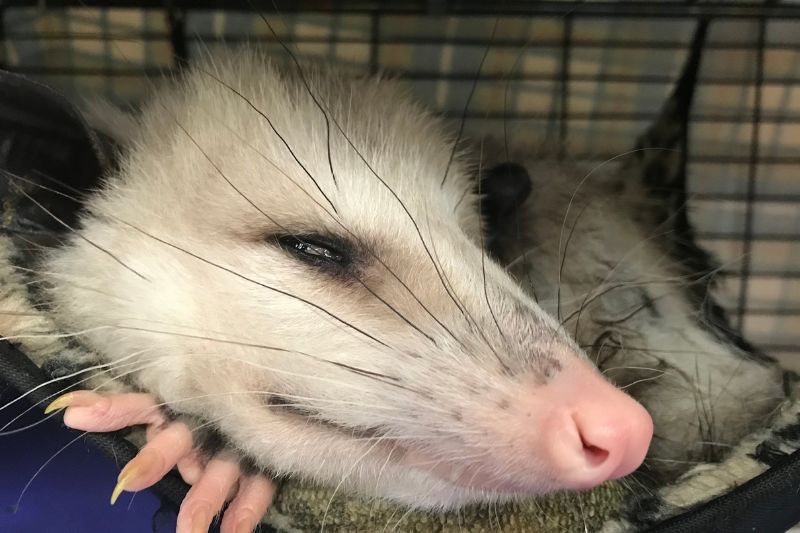
Opossums are very adaptable animals that thrive in a wide variety of habitats. Dens are usually simply constructed under forage or in a hollow tree trunk. Opossums have been known to take up residence in cities, finding refuge in alleys and window wells.
Their diet in the wild consists of insects, ticks, small rodents, fruits, vegetables, carrion and garbage. In captivity they are generally fed with a commercially prepared carnivore diet of prepared raw meats along with fruits and vegetables.
Help Feed Our Opossums
Opossums are very secretive and nocturnal, and those who have observed them while they are active, notice a unique behavior. Opossums are usually sluggish, and amble slowly toward their destination, but will hiss, growl and bear their teeth if challenged. If these tactics do not reroute a potential predator, the opossum may run, but it may also involuntarily “play dead”. By slowing down body processes and retreating into a coma-like state, predators will normally leave the scene. Once the danger has passed, the opossum will “wake up” and carry on as before.
Opossums, as quickly as they can move on occasion, are often victims of speeding motorists. As a nocturnal animal, their eyes cannot adjust to changes in light effectively, so they are rendered temporarily blind by car headlights. Raccoons and skunks on occasion suffer the same fate as the opossum when faced with the bright lights of moving vehicles.
Opossums are opportunistic omnivores and are often blamed for “garbage robbing” in many areas. Opossums are not free from blame, however, as garbage can often contain the contents of a well-balanced opossum meal. To coexist with opossum secure your outside garbage and pet food.
Virginia opossums are highly resistant to snake venom specifically from vipers like rattlesnakes and copperheads. They also rarely carry rabies because their lower body temperature is inhospitable for the virus.