Class: Aves Order: Cathartiformes Family: Cathartidae Genus: Cathartes Species: aura
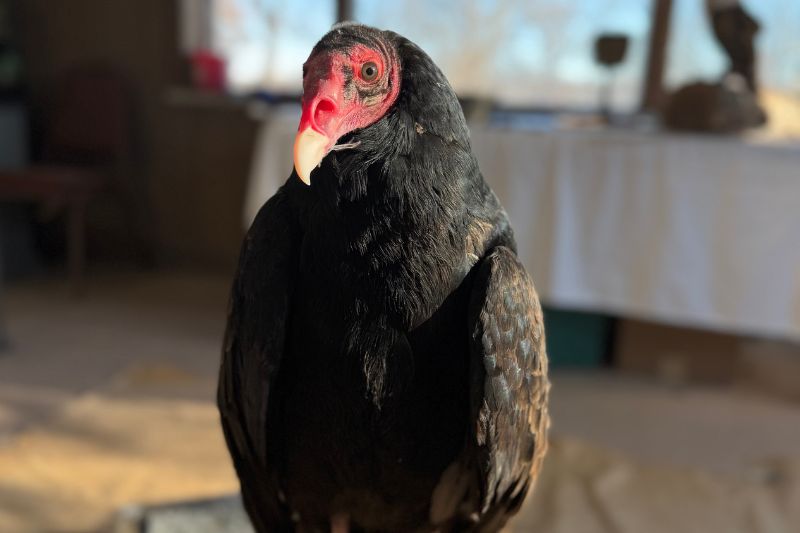
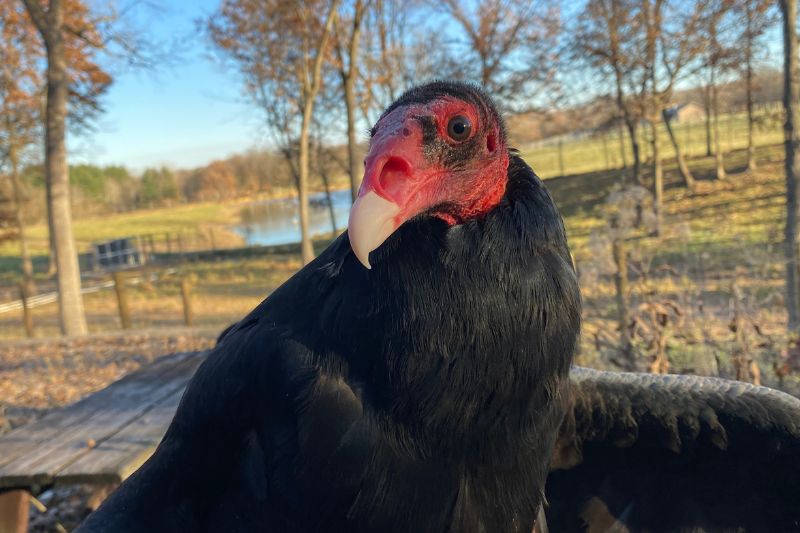
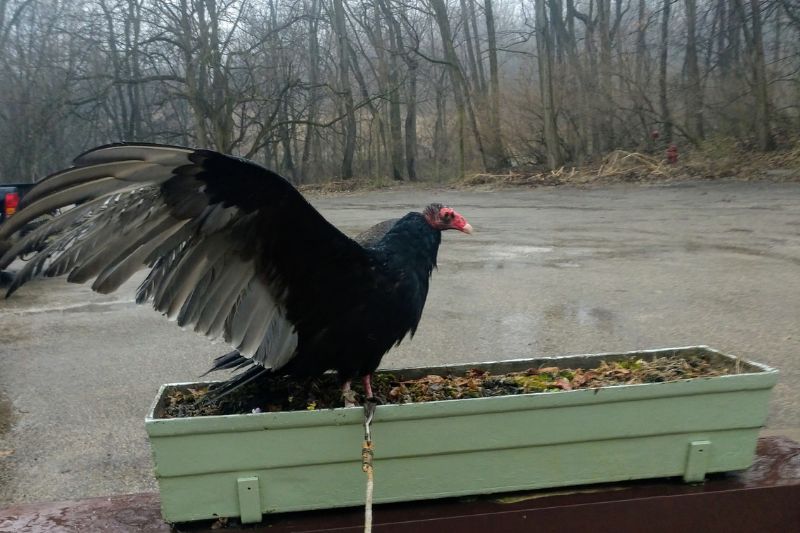
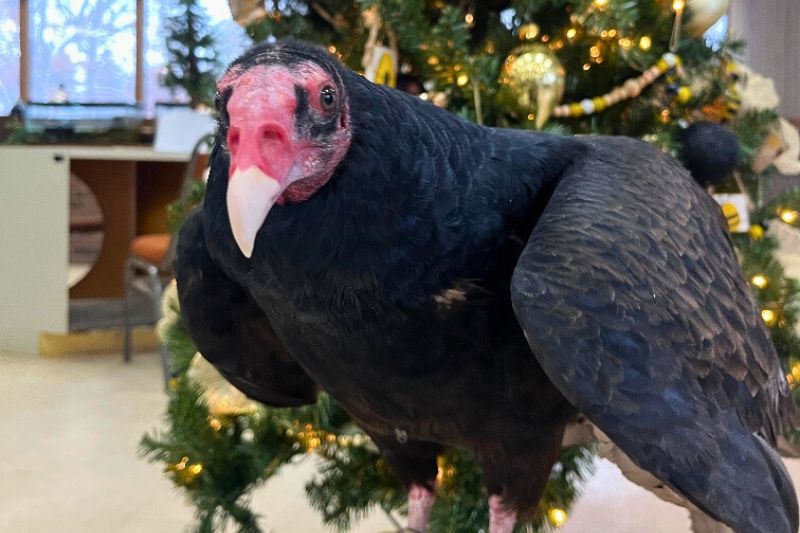
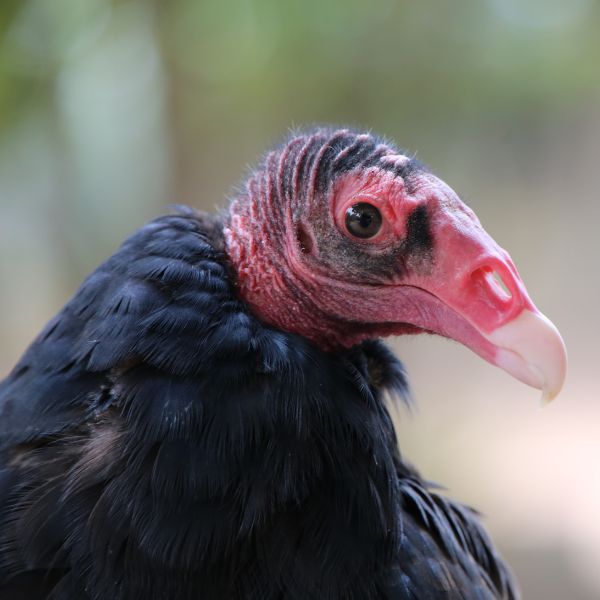
This majestic black bird, with its red, featherless head, is sometimes grouped into discussions with birds of prey because of its diet. Turkey Vultures eat roadkill and naturally deceased animals. They have weak feet and dull talons, which make killing nearly impossible.
Because of their habit of eating animal carcasses, many have dismissed the turkey vulture as a dirty or disease infested bird, but the opposite is true. The turkey vulture’s digestive system houses enzymes and acids capable of killing most bacteria and viruses that pass through it. Feces have been tested by the U.S. Department of Agriculture and found to contain no diseases. Their waste is also a sanitizer for their legs and feet. Regurgitated pellets consisting of hair, bones, and plant matter have also been tested, and have returned negative results for disease. The featherless head serves to protect the body from bacterial infection by eliminating a place for bacteria to collect while eating. Since these birds often place their heads into the bodies of deceased animals, exposure to skin rather than feathers makes for a much more sanitary meal. Turkey Vultures will spend up to 3 hours per day preening their feathers and have been observed bathing in water whenever possible.
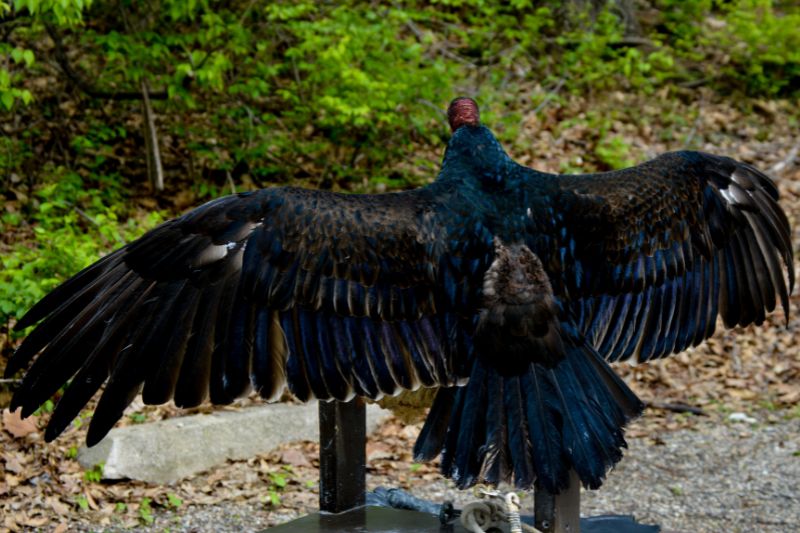
Turkey vultures can be found in Southern Canada all the way to the tip of South America. Because these species are found all over, their habitats are varied. Some areas these birds frequent include grasslands, foothills, deserts, wetlands, swamps, subtropical forests, prairies, shrublands, and more. While they will live in forested areas, they tend to avoid dense vegetation. These birds will also frequent urban areas, especially busy roads that offer lots of roadkill.
Their diet in the wild is carrion of almost any kind, such as raccoons, opossums, skunks, rabbits, snakes, deer. While in captivity they are generally fed rodents, fish and deer.
Help Feed Our Turkey Vultures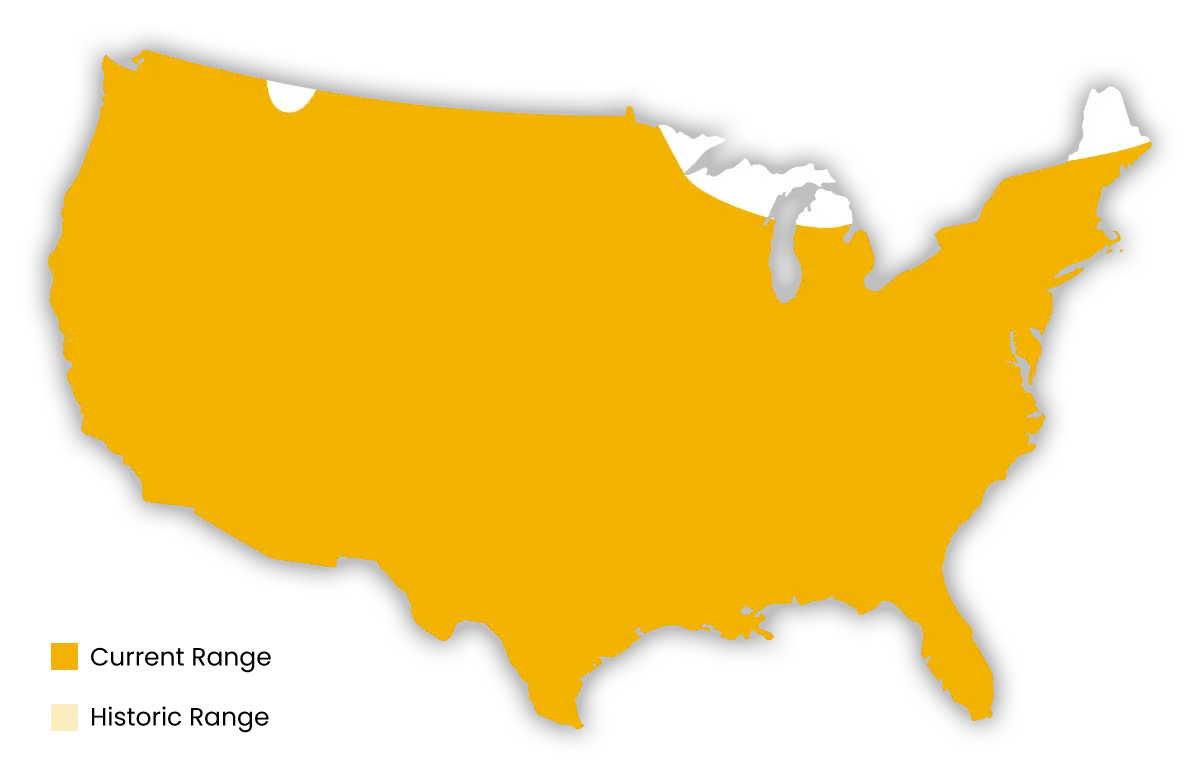
Turkey Vultures have sometimes been referred to as “nature’s clean up crew” since they clean up most of the carcasses left by motorists on roadsides which reduces diseases.
They are social animals and have been observed roosting in groups of 50 or more. A group of turkey vultures have different name depending on the activity. When perched a group of turkey vultures is call called a committee. When soaring they are called a kettle and when feeding on a carcass they are called a wake.
Turkey vultures are one of the only birds in North America with an excellent sense of smell.
Turkey vultures will vomit on a predator as a defense mechanism.