Class: Aves Order: Anseriformes Family: Anatidae Genus: Cygnus Species: buccinator
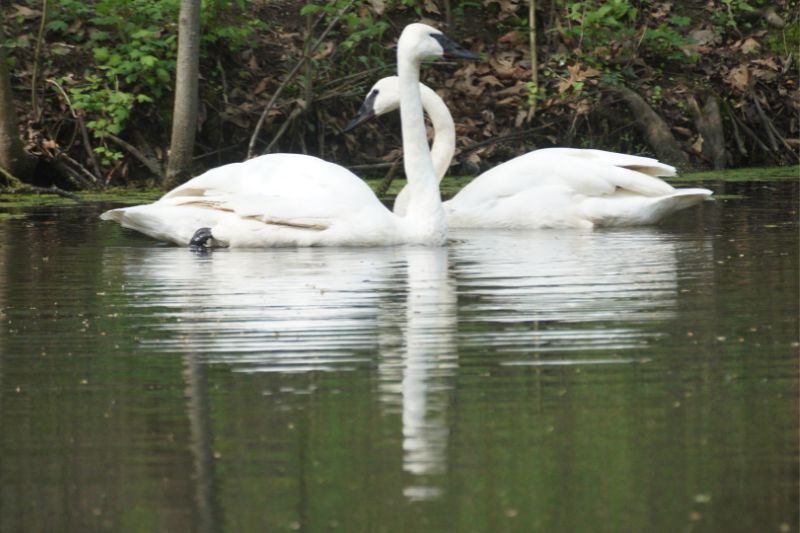
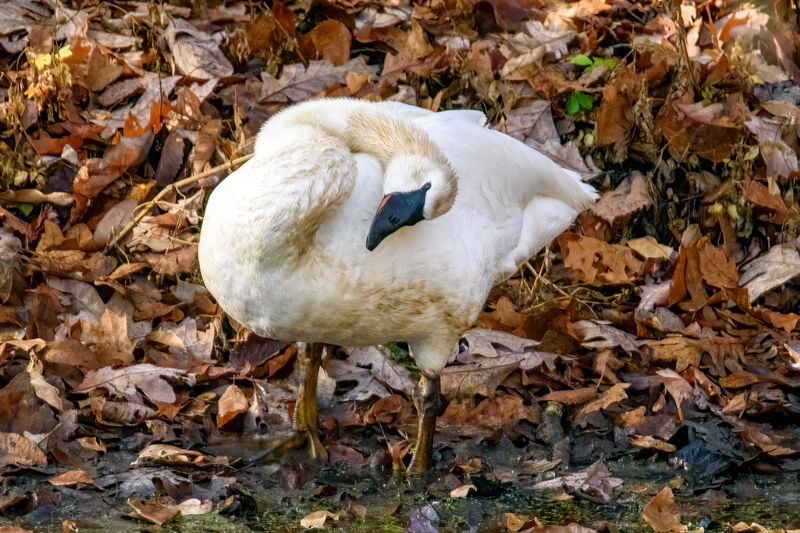
The trumpeter swan, with a graceful neck and snowy-white plumage, is the largest of the native waterfowl in North America, stretching to 6 feet in length and weighing more than 25 pounds. They were almost driven to extinction in the 20th century due to hunting and encroachment on their habitat. By the 1930’s, only 100 remained south of Canada. Now they have a status of Least Concern in North America due to stricter hunting laws and protection on wildlife refuges. There are now more than 35,000.
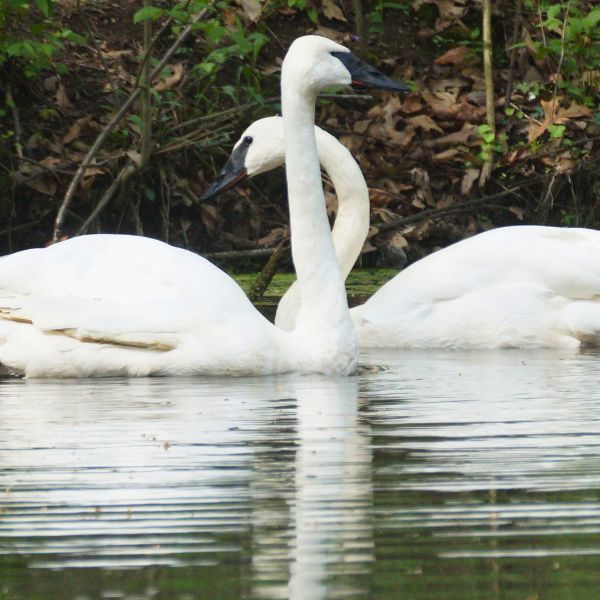
These swans live on lakes, ponds, and large rivers. They prefer large and shallow freshwater ponds as well as slow-moving rivers. In these bodies of water, they eat aquatic plants such as pondweed, sedges, rushes, arrow leaf, wild celery, and many more. The young will eat invertebrates in the first two weeks after hatching. Sometimes they must forage in the deeper parts of the water, which they do by extending their neck all the way under water and feeling with their bill. In captivity, they generally consume waterfowl pellets; cracked corn, and poultry crumbles.
Help Feed Our Trumpeter Swans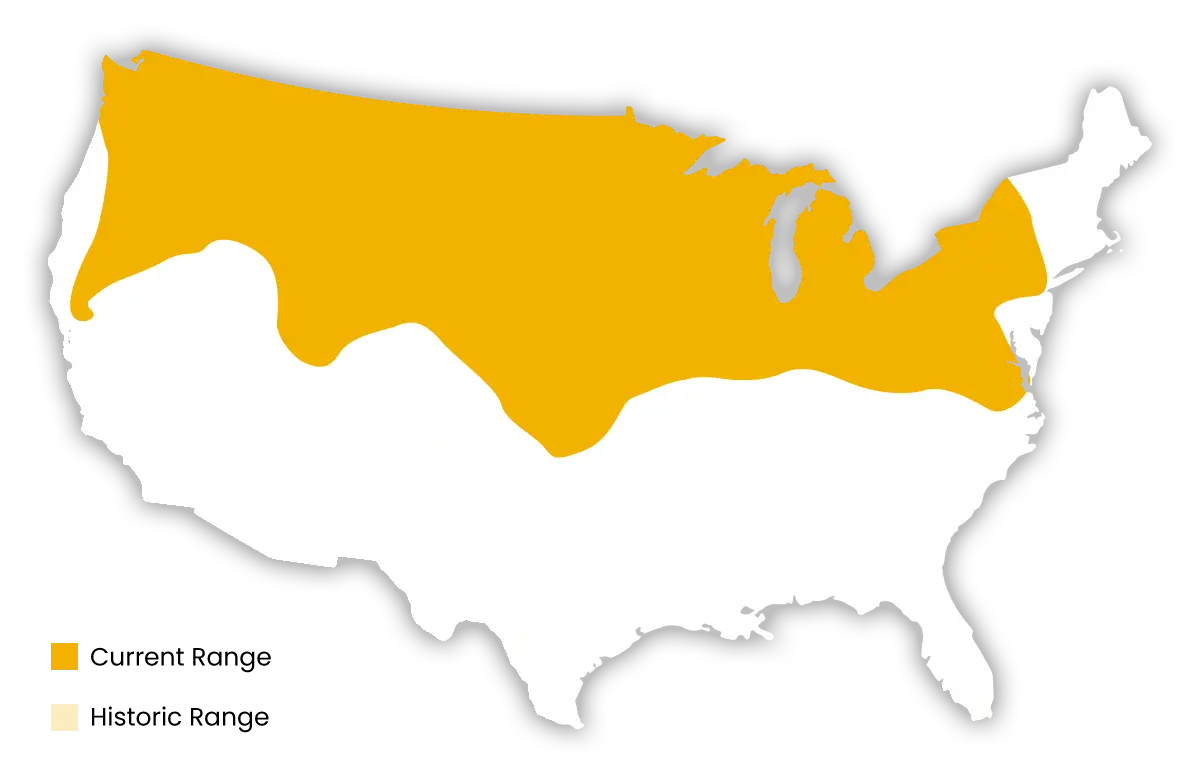
The young can swim as early as one day old, with both parents tending to the young. However, the cygnets cannot fly until around 3-4 months.
Adults need 100 yards of open water to take off in flight!
Although awkward on the ground due to short legs set behind their center of gravity, they can walk more than a mile at a time.