Class: Amphibia Order: Caudata (Urodela) Family: Ambystomatidae Genus: Ambystoma Species: tigrinum
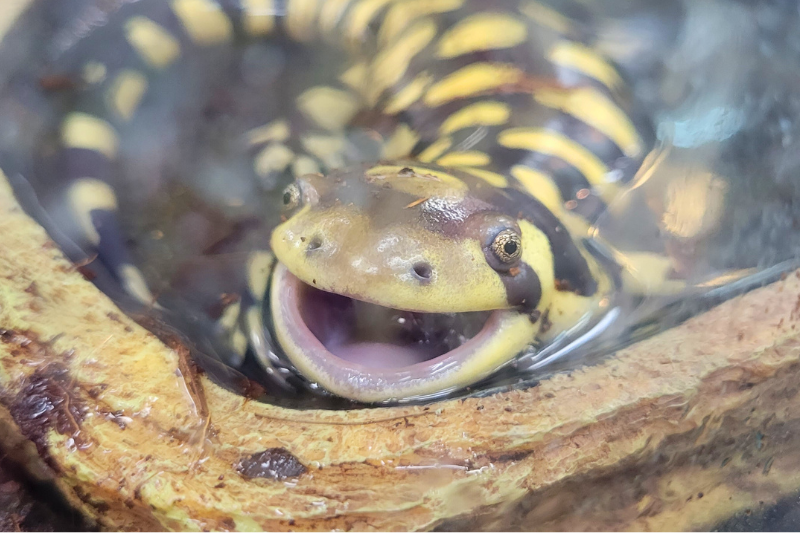
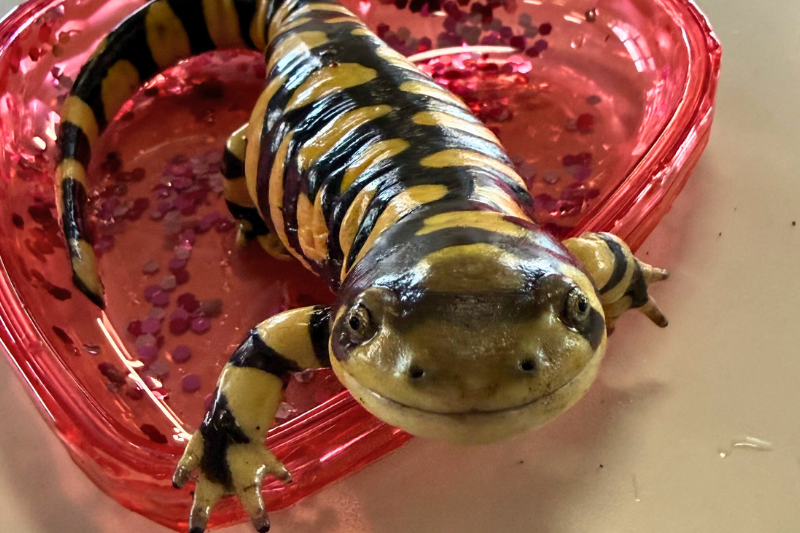
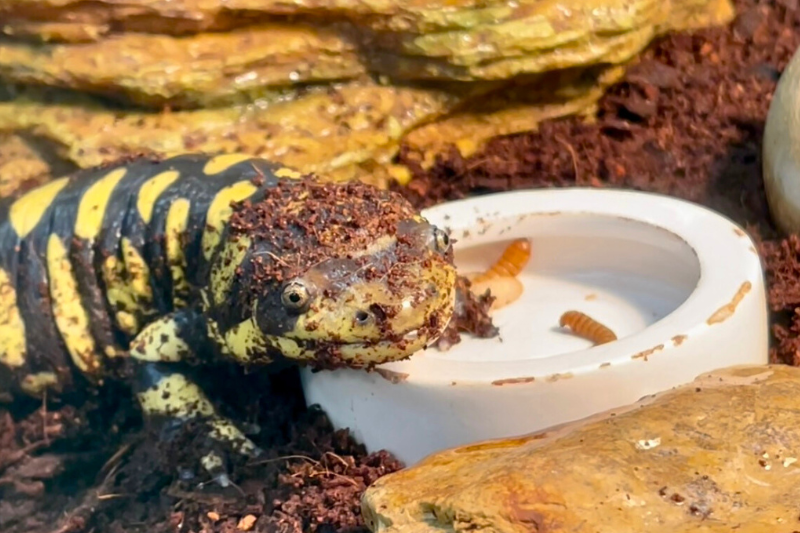
The tiger salamander averages 7 to 8.25 inches in length. Its body is blue-black or brown-black with random, small, yellow blotches. The olive-yellow belly has dark stripes. They have a broad head, sturdy limbs, and a long tail adapted for burrowing and swimming. Larvae have external gills and fins that disappear during metamorphosis.
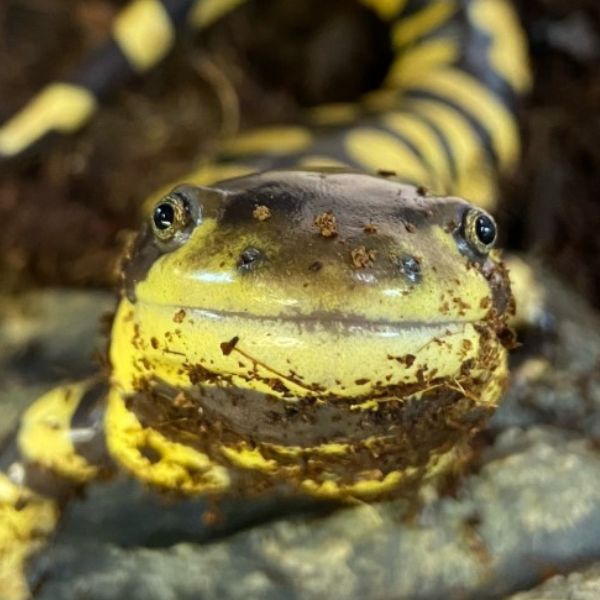
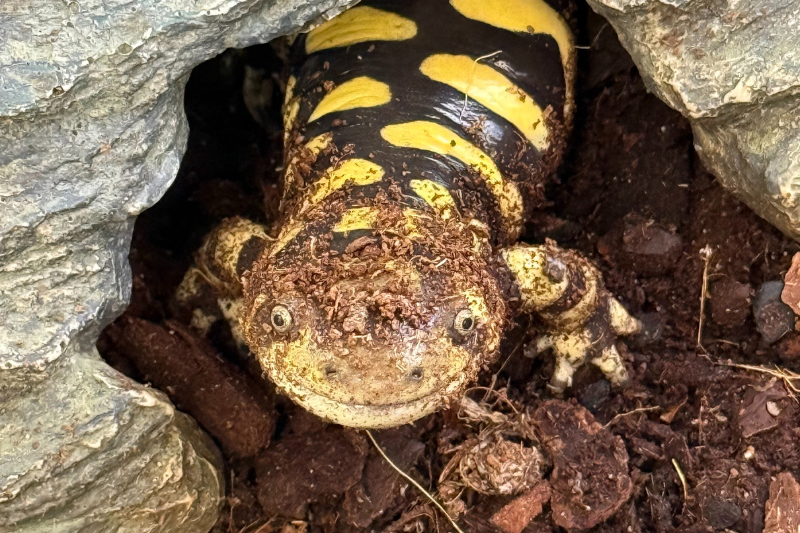
The tiger salamander lives in woodlands, swamps, prairies, urban areas, and farm fields. They dig their own burrows or use those of other animals. It spends most of its time underground, emerging mostly at night or after heavy rains.
In the wild they will eat insects, worms, and small fish. While in captivity they will consume a very similar diet of crickets, worms, and small fish.
Help Feed Our Tiger Salamander
The Tiger Salamander is the official state amphibian of Illinois and Wyoming. This recognition highlights its ecological importance and cultural significance in these states.
In rare cases, some Tiger Salamanders never metamorphose into terrestrial adults and remain in their larval, aquatic form for life. This condition is often linked to environmental factors like low iodine levels in water.
Breeding occurs in the spring, although migration to breeding ponds may occur in the fall. Clusters of 25 to 100 eggs are attached to objects on the bottom of a pond. A female may deposit about 1,000 eggs in a breeding season. Incubation depends on the temperature but averages three weeks. Larvae transform to the adult land-based form from July through September.
While most amphibians have relatively short lifespans, Tiger Salamanders can live up to 25 years in captivity, making them one of the longest-lived salamanders.