Class: Mammalia Order: Carnivora Family: Mephitidae Genus: Mephitis Species: mephitis
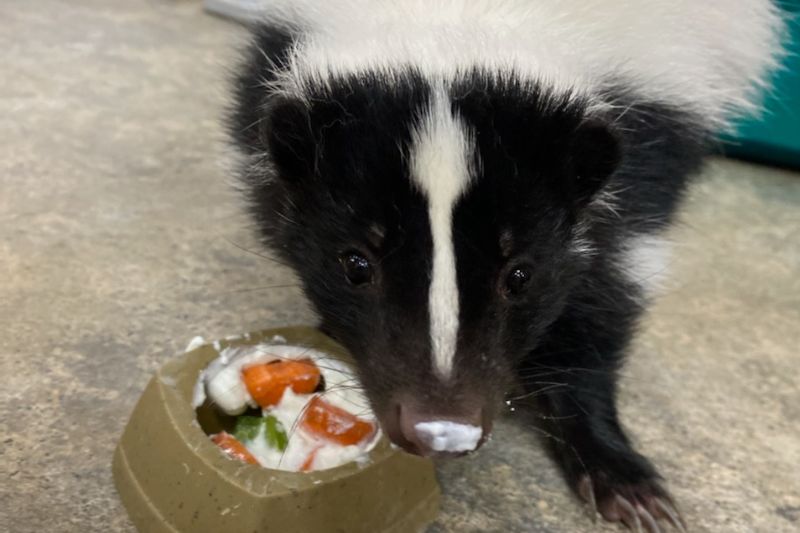
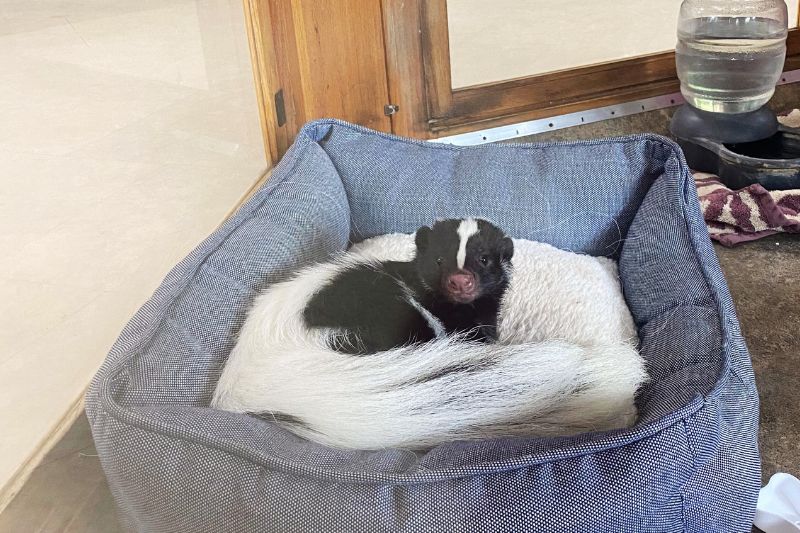
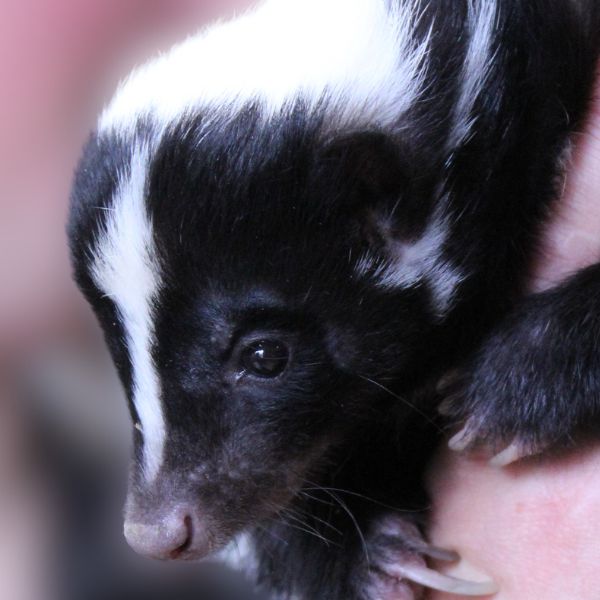
Striped skunks are easily recognizable by their black fur with a white stripe that is unique to each skunk running down along its back. Other identifying features include long claws for digging, bushy tails and their unmistakable musky odor. They are mostly slow moving and docile with poor eyesight, good hearing, and a very well-developed sense of smell.
In addition, skunks are best known for their defense mechanism. When cornered or threatened, a striped skunk will warn the intruder of what is to come by raising their tail, stamping their feet, then shuffling backward. The second step of this warning process is to turn the rear end toward the intruder, tail raised, and lookback to make sure the aim is correct. The third and final step is to discharge the foul scented musk from a special gland at the base of the tail. Striped skunks have remarkable aim, and are accurate up to 10 to 15 feet. They only have enough stinky fluid for about 5 sprays and can take up to two weeks to replenish, making spraying a last resort.
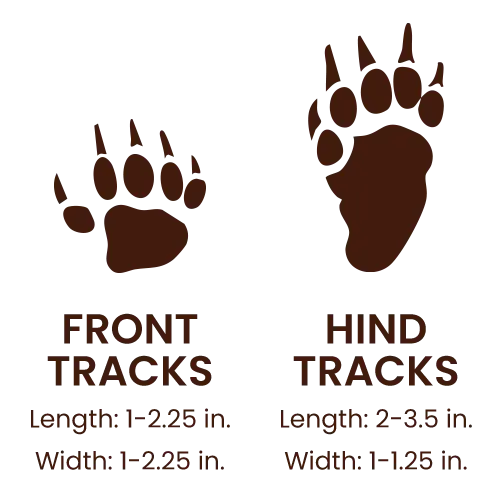
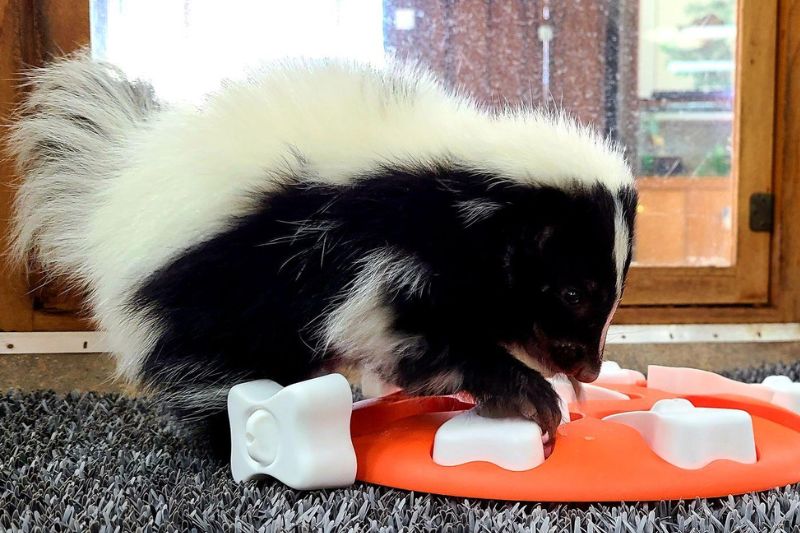
Striped skunks use a variety of habitats, but seem to prefer brushy areas, rocky outcroppings, or grassy fields close to woodlands. Skunks also require a constant, permanent local water source. In extensively cultivated areas, like central Illinois, cornfields may be an important habitat for these animals. Skunk dens are typically underground, but can also be found in stumps, cliff crevices, woodpiles, farm buildings, haystacks, or refuse dumps. Often, striped skunks will inhabit old badger dens rather than dig their own.
Skunks are omnivores. In the wild, skunks will eat small rodents, eggs, fruit, vegetables, insects, grubs, worms, tubers and snakes. In fact, they are immune or highly tolerant to the venom of wasp, bees, some pit viper species mainly rattlesnakes, copperheads, cottonmouths and some spiders. In captivity they will consume fruits, vegetables, and a commercially prepared insectivore diet.
Help Feed Our Skunk
In autumn, striped skunks put on a thick layer of fat and, as the weather gets colder, they start to spend more time in their dens. Although striped skunks are not true hibernators (all body processes do not drastically slow down for long periods of time), they will retreat to their dens to sleep intermittently when temperatures reach near freezing. The duration of these periods of inactivity is influenced by many factors including snow cover, rapid changes in temperature, and hunger.
Striped skunks are primarily active at night, although they have been seen at dawn, dusk, or extremely cloudy days. The home range of a striped skunk may be up to 7.4 square miles, but they rarely travel that far in a night. Most skunks spend the majority of their lives in a small area.