Class: Aves Order: Columbiformes Family: Columbidae Genus: Columba Species: livia
Pigeons are not native to the Illinois area, but they were introduced from Europe in the 1600’s and escaped domestication to become one of the most widespread and common avian species in North America. Domestication is believed to have occurred over 5,000 years ago. They are common in cities and urban areas and are often seen in small flocks.
There are four main plumage variations with the species including natural, checkered, dark, or brown. Birds with scattered white feathers occur frequently in all variations, and all white birds are scarce. All have pink legs with a white cere which is the fleshy, waxy and brightly covered covering at the base of a bird’s upper beak where their nostrils are located.
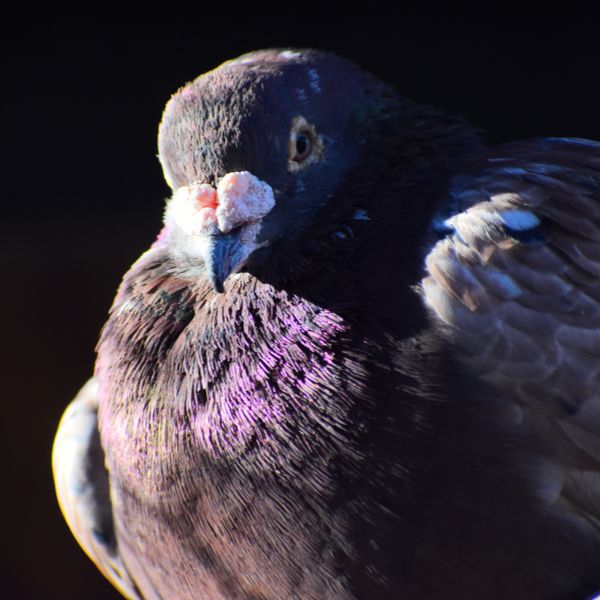
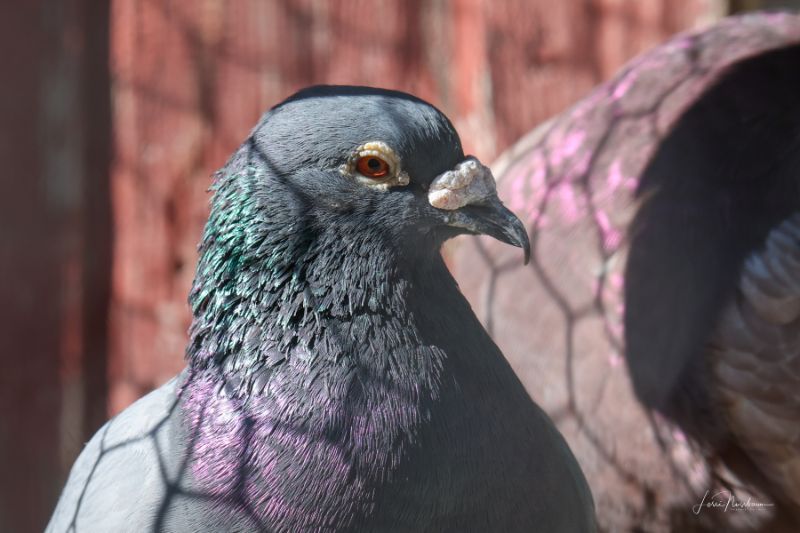
Rock Pigeons crowd streets and public squares, living on discarded food and offerings of birdseed. City pigeons' nest on buildings and window ledges. In the countryside they also nest on barns and grain towers, under bridges, and on natural cliffs. In captivity and in the wild, their diets consist of insects, seeds, fruits, and grains as well.
Help Feed Our Pigeons
These birds carried messages for the U.S. Army Signal Corps during World War I and II, saving lives and providing vital strategic information. France and Austria maintained military pigeon companies into the 1990s.
The pigeon is a quite intelligent bird in comparison to some other avian species. Pigeons have the extraordinary ability to find their way home, even if released from a distant location blindfolded. They can navigate by sensing the earth’s magnetic fields, and perhaps also by using sound and smell. They can also use cues based on the position of the sun.
Domestic and feral pigeons are among the most intensively studied of all birds. Knowledge of areas such as avian flight mechanics, sensory perception, orientation and navigation, and general learning, just to name a few have depended heavily on research using domestic and feral Rock Doves.