Class: Mammalia Order: Carnivora Family: Procyonidae Genus: Procyon Species: lotor
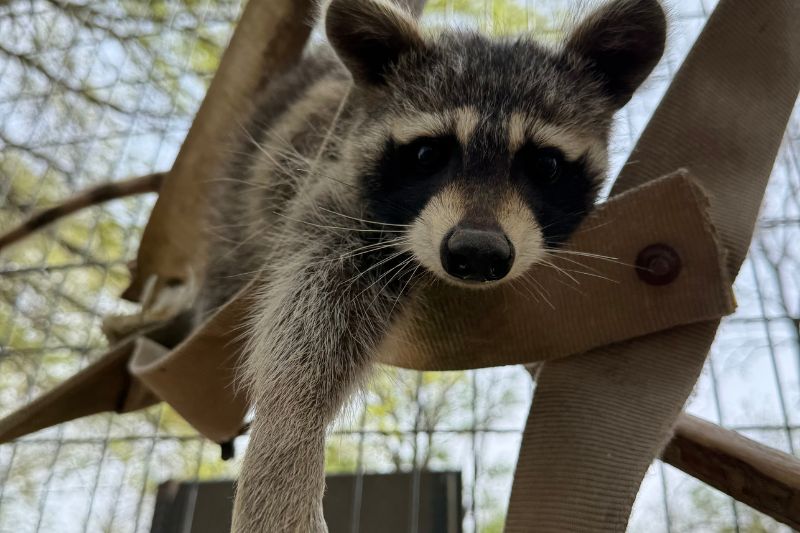
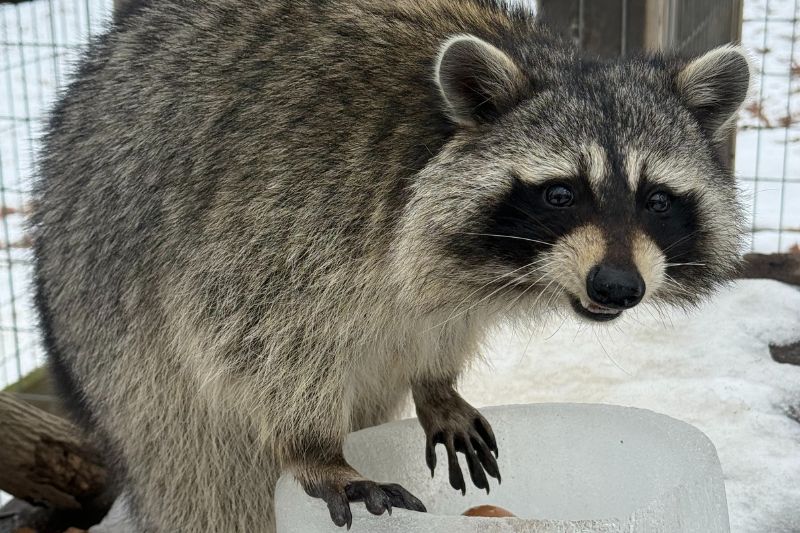
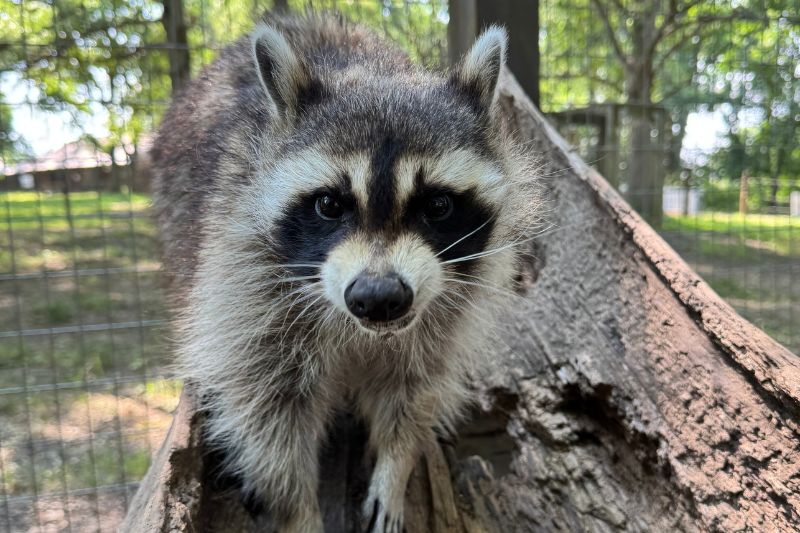
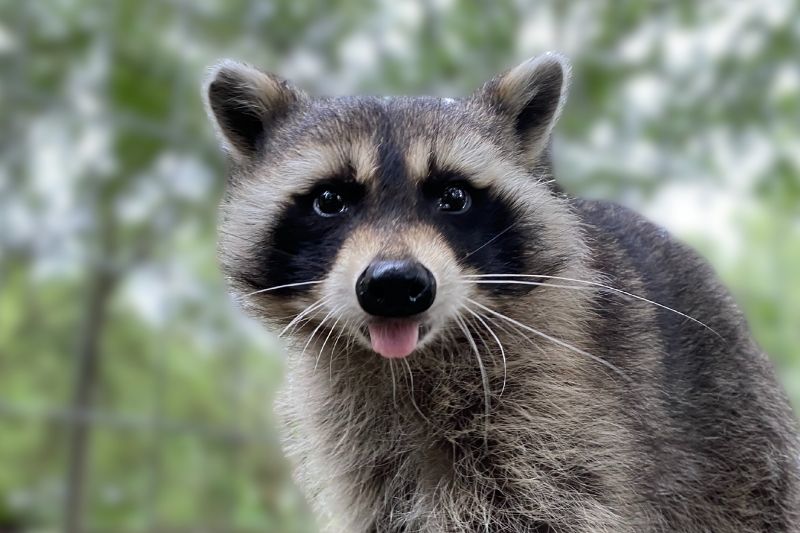
The word raccoon comes from the Algonquin word ‘aroughcoune’ which means “he scratches with his hands". Their scientific name " Procyon lotor" means before-dog washer in latin from when raccoons were thought to be members of the canine family. Raccoons are the largest of the 18 species of the Procyonidae family. Raccoons are excellent climbers, terrific swimmers, extremely intelligent, highly adaptable and can manipulate objects. They are identified by brown and black fur, black fur on their face that looks like a mask, and dark colored rings on their tail.


Raccoons will live in a variety of habitats if certain habitat requirements are met such as water, food, and shelter including woodlands, riparian zones, and urban habitats. Raccoon dens are often found in the cavity of a tree; although, raccoons will also nest in several places including under logs, in a dry brush pile, or in a rock crevice. Their nesting technique differs from other animals, since raccoons do not attempt to alter or add nesting material to their den site. Other places raccoons may decide to call home are attics, chimneys, or hay lofts.
Raccoons are opportunistic omnivores, eating anything that they can find. The will eat fruit, seeds, nuts, eggs, plants, and rodents but due to their excellent swimming capabilities, they will also hunt fish, frogs and crayfish.
Help Feed Our Raccoons
Raccoons, like squirrels, have a unique skeletal adaptation that allows them to rotate their hind ankles up to 180 degrees. This means they can climb down trees headfirst without falling—a skill most tree-climbing animals lack. This ability also helps them navigate fences, walls, and even rooftops with ease, making them notorious urban explorers.
The famous black “mask” around a raccoon’s eyes isn’t just for looks—it serves a functional purpose. The dark fur absorbs light and reduces glare, improving their night vision. This adaptation is similar to how athletes use black stripes under their eyes to reduce glare during games. For raccoons, this feature is essential for nocturnal foraging and predator detection.
Raccoons’ front paws are incredibly sensitive, packed with thousands of nerve endings. This tactile sensitivity is so advanced that raccoons can identify objects in complete darkness just by feeling them. Interestingly, they often dunk their food in water before eating because moisture enhances their sense of touch, making their paws even more effective for exploring and manipulating objects.
Raccoons are among the most intelligent mammals in North America. In controlled studies, they’ve solved complex puzzles like unlocking multiple latches to access food. Even more impressive, some studies have shown they can remember the solutions for over three years, rivaling primates in problem-solving and memory retention. This intelligence helps them adapt to urban environments, where they often figure out how to open trash cans and doors.