Class: Reptilia Order: Squamata Family: Colubridae Genus: Lampropeltis Species: calligaster
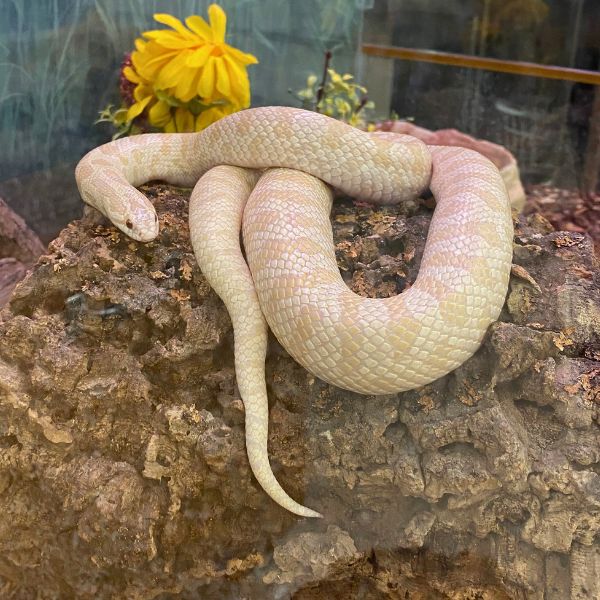
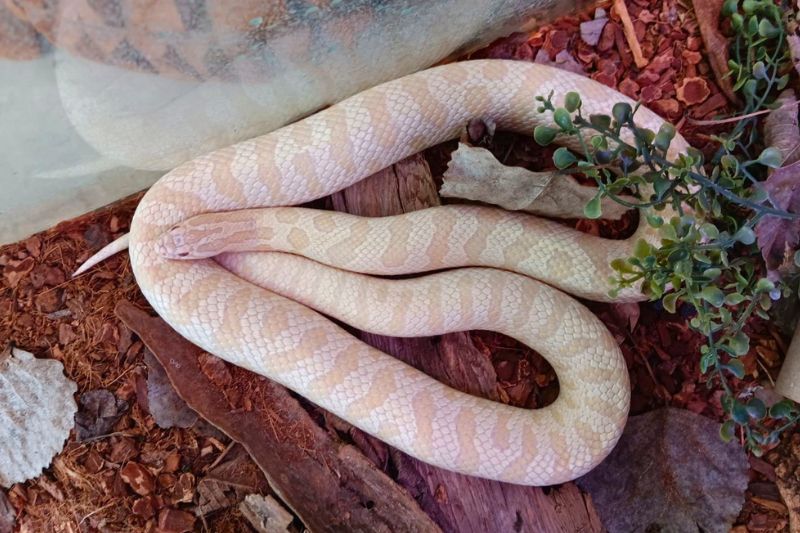
This is a blotched snake and one that may be troublesome to identify. Typically, the back and tail are patterned with about 60 brown, reddish, or greenish, black-edged markings. Occasionally these are split in two down the back. There are two alternating rows of smaller dark markings on each side, but pairs of these may fuse together. In many older specimens, the ground color of brownish gray to tan darkens, and the pattern becomes quite obscure, producing the dark variant that often is further characterized by the development of four longitudinal dusky stripes. They have a yellowish belly marked with squarish brown blotches, and their scales are smooth with a single anal plate. Young snakes are especially striking, covered in bold spots and measuring about 9 to 12 inches when they hatch.
They can be found in grasslands from high-quality remnant prairie to degraded brushy fields. They are less common in heavily farmed black-soil prairie, and more common in the southern half of the state.
Their diet in the wild will consist of small mammals, birds, amphibians, reptiles, and insects. While in captivity, they will eat rodents.
Help Feed Our Kingsnake
Their main predators are mammals and other snakes. When first encountered, they may vibrate their tail rapidly or hiss and strike. They are known to eat other snakes, including rattlesnakes, hence the name “King”. They are evidently immune to the venom of native venomous snakes.
They may become active on warm days even in November and December. Generally, they are active in daylight during spring and autumn, but they become nocturnal during hot summer months.