Class: Reptilia Order: Testudines Family: Emydidae Genus: Chrysemys Species: picta
The painted turtle is the most widespread native turtle species in North America. It is easily recognized by its smooth, dark shell with bright red or orange markings along the edges and yellow stripes on its head and neck. Adults typically measure 4–10 inches in length. Painted turtles are diurnal and spend much of their time basking on logs or rocks near water. They are cold-tolerant and can survive harsh winters by brumating underwater for months, even in ice-covered ponds.
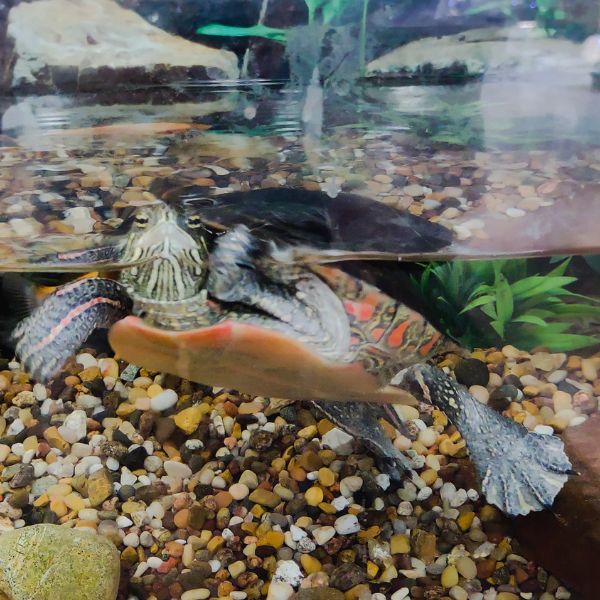

The painted turtle is found in shallow water bodies with many aquatic plants and a muddy bottom. Typical locations include ponds, marshes, ditches, lakes, streams, and river pools. Although aquatic, the painted turtle is frequently found on land.
In the wild their diets consist of snails, worms, fish, frogs and plant materials. In captivity, they will consume a commercial diet and fish.
Help Feed Our Painted Turtles
For some, these turtles take you back to the days of the Five and Dime and Woolworth. In 1976, the FDA ruled that the risk of salmonella was too great, and turtles with the carapace length, or top shell length of under four inches were illegal for sale. The thought was that young children were placing the small, quarter-size turtles into their mouths. While, in July of 2005, legislation was passed making the Painted Turtle the state reptile.
The male courts the female in a ritual involving stroking her head with the back of the long claws on his front feet. The female in turn strokes his front legs with her claws. After mating, the female digs a nest in soil a few feet from the edge of the water. Four to 10 eggs are deposited in the nest during the middle of the day. Hatchlings may be found after two to two and one-half months. If the eggs were laid late in summer, hatchlings may not emerge until spring.