Class: Mammalia Order: Artiodactyla Family: Bovidae Genus: Capra Species: aegagrus hircus
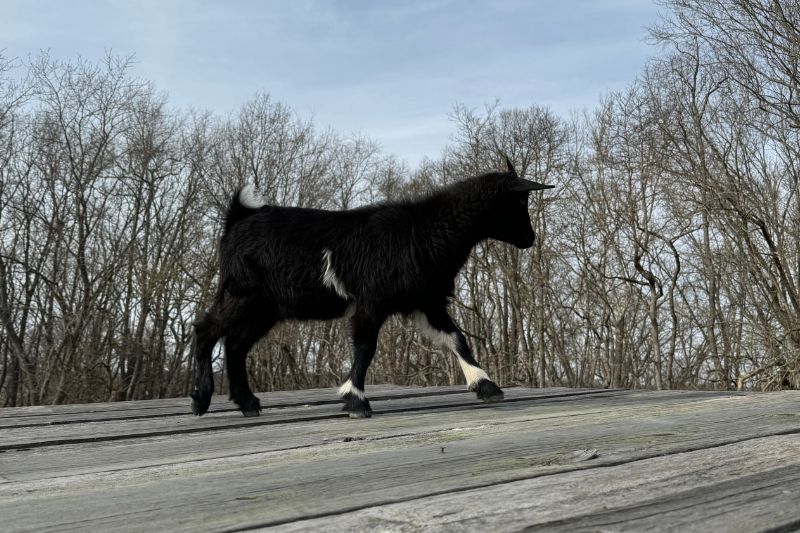
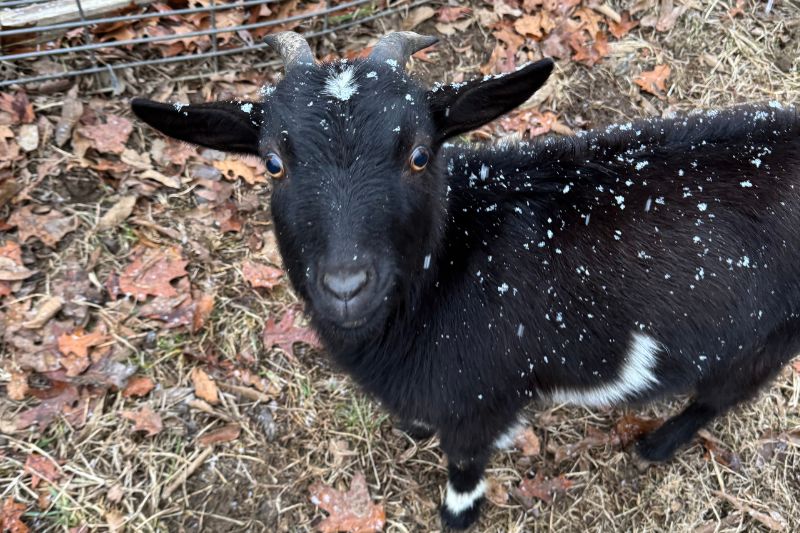
Nubian goats are domesticated animals and are not found wild in Illinois. There are 210 breeds of goats existing in the world. Nubian goats originated in England, through the cross breeding of African and Indian heritage, and are now one of the most popular goats found throughout the world. Nubian goats get their name from Nubia in northeastern Africa. Goats from Africa and India were long legged, hardy goats that England breeders crossed with their shorthaired goats to get what we call today Anglo-Nubian goats. However, in the United States, these goats are often simply referred to as Nubian goats. Nubians come in a variety of colors and color mixes including tan, brown, black, red, and white. They are larger goats with characteristic floppy ears and short hair.
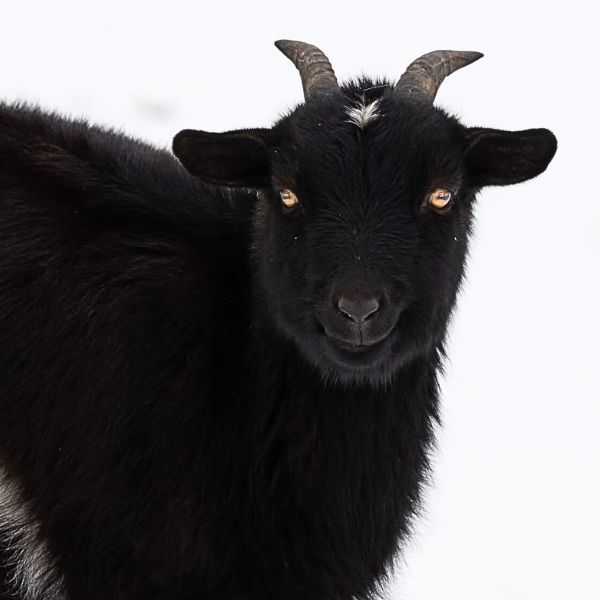
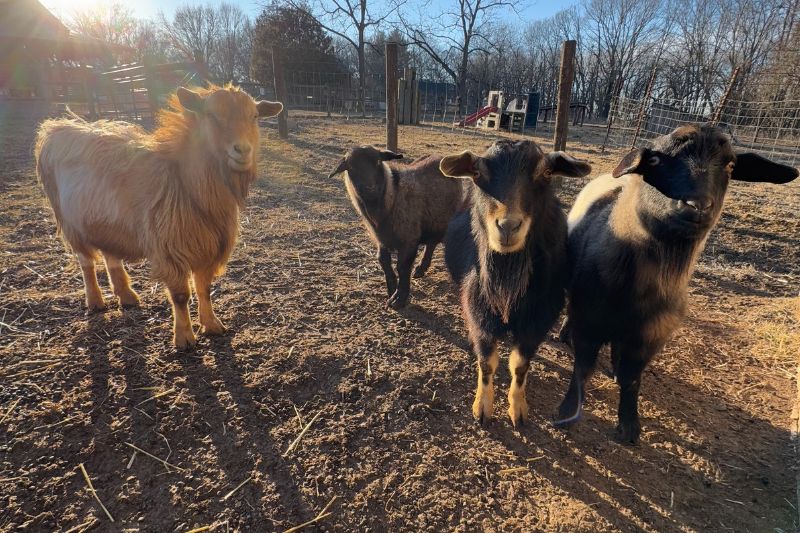
Domestic goats are highly adaptable and can live in a wide range of habitats, including grasslands, scrublands, Rocky Mountains, and semi-arid regions. Goats have spread globally and are now found on every continent except Antarctica. They are often kept in managed pastures but can also survive in feral populations on islands and rugged terrains. Their sure-footedness and specialized hooves allow them to navigate steep slopes and rocky outcrops with ease.
Goats are herbivorous browsers rather than grazers, meaning they prefer shrubs, leaves, bark, and weeds over grass. They have a four-chambered stomach that enables them to digest fibrous plant material efficiently. This digestive system allows goats to thrive on low-quality forage that many other livestock species cannot utilize. In captivity, their diet often includes hay, grains, and supplemental minerals. Goats also play an ecological role in vegetation management, as they are frequently used for clearing invasive plants and reducing wildfire risks.
Help Feed Our GoatsWorldwide, goat milk is the most consumed type of milk. Nubians are capable of producing between three quarts and a gallon of milk per day. Both goat and cow milk have similar amounts of protein, fat and iron, as well as vitamins C and E. However, goat milk contains more vitamin A and B and less lactose than cow milk. Also, Nubian goats’ high butter fat content makes the milk excellent for yogurt, cheese, ice cream, and butter making.
Goats have horizontal, rectangular pupils that give them a panoramic field of vision—up to 320–340 degrees. This adaptation helps them spot predators and navigate uneven terrain while maintaining awareness of escape routes.
Goats are highly social and intelligent animals. They can learn their names, solve problems, and even communicate with humans when they need help. Studies show that goats look people in the eye when seeking assistance which is similar to dogs.
Goats were among the first animals domesticated by humans, around 10,000 years ago. Archaeological evidence shows they were kept for milk, meat, and hides long before cattle or horses, making them a cornerstone of early agriculture.