Class: Mammalia Order: Perissodactyla Family: Equidae Genus: Equus Species: Equus asinus x Equus caballus
A hinny is a hybrid equine resulting from the crossbreeding of a male horse (stallion) and a female donkey (jenny). It is the reciprocal cross to the mule, which comes from a male donkey and a female horse. Hinnies are less common than mules due to the biological challenges of breeding a stallion with a jenny. They share traits from both parents, often appearing more horse-like than mules, with shorter ears and a refined head. Like mules, hinnies are almost always sterile because they inherit 63 chromosomes, an odd number that prevents normal reproduction. Historically, hinnies have been valued for their strength, endurance, and calm temperament, making them useful for light farm work and as pack animals in rugged terrain.
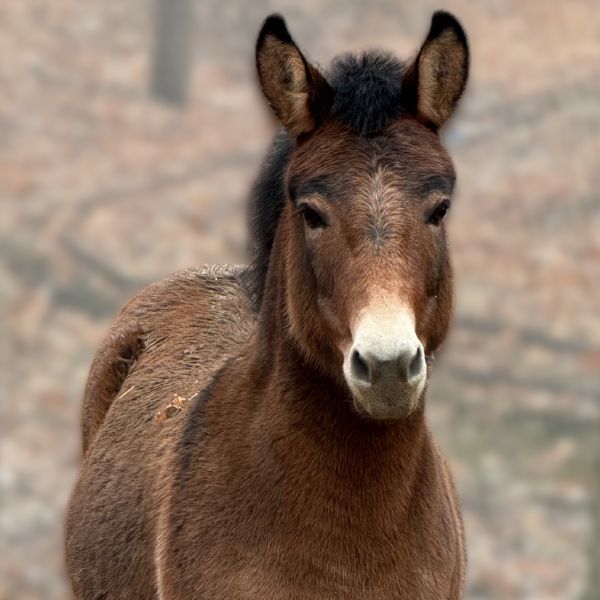
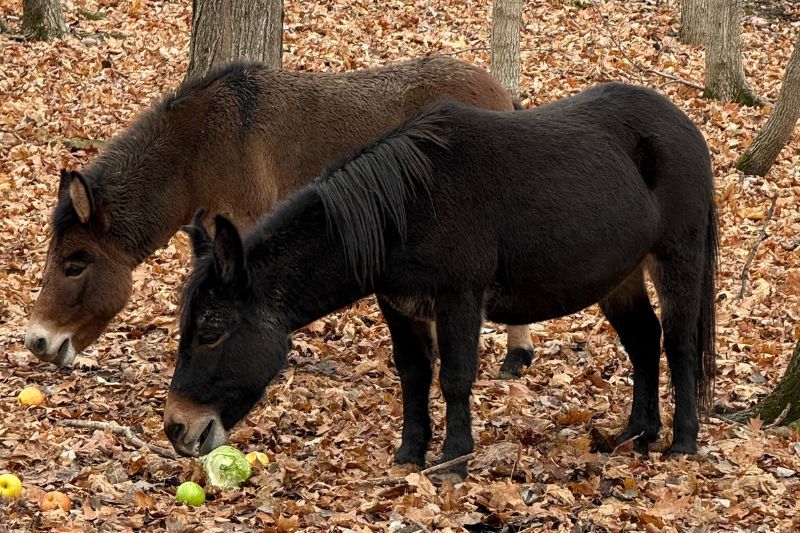
Hinnies do not have a natural habitat because they are human-created hybrids. They are typically found on farms, ranches, and agricultural regions worldwide, especially in countries like Brazil, Colombia, and Portugal where they are used for ranching and pack work. Their adaptability allows them to thrive in environments ranging from grasslands and pastures to mountainous and semi-arid regions.
Hinnies are herbivores, like their horse and donkey parents. Their diet consists mainly of forage such as grasses, hay, and fortified forage pellets. They require about 1.5–2% of their body weight in forage daily. Compared to horses, hinnies are more efficient at utilizing low-quality forage, making them well-suited for areas with limited resources. Occasional supplements like joint health products may be recommended for older hinnies.
Help Feed Our HinniesHinnies are significantly rarer than mules because of the biological challenges involved in breeding. A stallion’s sperm is less compatible with a jenny’s reproductive system compared to a jack (male donkey) with a mare. Jennies have smaller reproductive tracts, making conception and gestation more difficult. As a result, successful hinny births are uncommon, and breeders often prefer producing mules, which are easier to achieve and more predictable in size and temperament.
Hinnies, like mules, exhibit “hybrid vigor,” a phenomenon where crossbreeding between two species results in offspring with enhanced traits. This means hinnies often have better disease resistance, stronger muscles, and greater endurance than either parent species. Their hybrid genetics combine the donkey’s hardiness and the horse’s athleticism, making them resilient animals capable of thriving in challenging environments.
Hinnies can live 30–40 years, which is longer than many horses (typically 25–30 years) and comparable to donkeys. This extended lifespan is partly due to their hybrid vigor and the donkey’s genetic influence, which tends to favor longevity. Proper care, including balanced nutrition and regular veterinary attention, can help hinnies reach the upper end of this range.
Hinnies are generally calmer and more cautious than mules. This temperament comes from their donkey mothers, who are naturally more deliberate and less reactive than horses. While mules often inherit the horse’s spirited nature, hinnies lean toward the donkey’s thoughtful approach, making them less likely to panic in stressful situations. This makes hinnies excellent for working in rugged terrain where sure-footedness and patience are essential.