Class: Mammalia Order: Rodentia Family: Sciuridae Genus: Marmota Species: monax
Marmota monax, commonly known as the groundhog or woodchuck, is a large rodent belonging to the squirrel family (Sciuridae). It is the most widespread marmot species in North America, ranging from Alaska and Canada to the eastern and central United States. Groundhogs are primarily terrestrial and fossorial, meaning they spend much of their time underground in burrows. They are well adapted to temperate climates and are known for their role in popular culture through “Groundhog Day.”
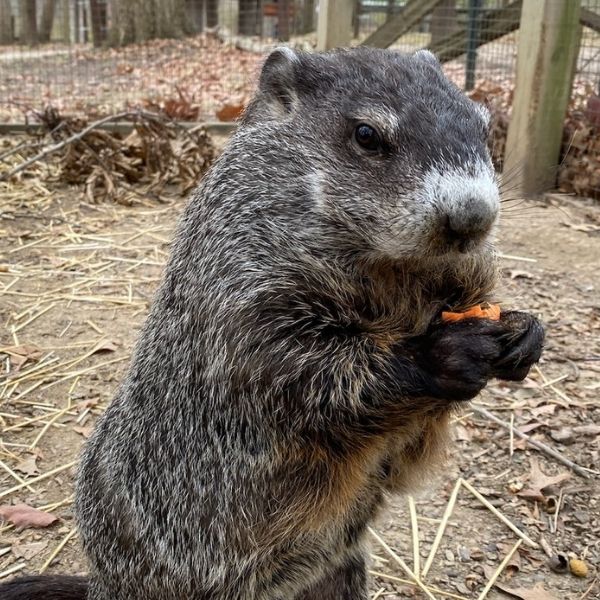

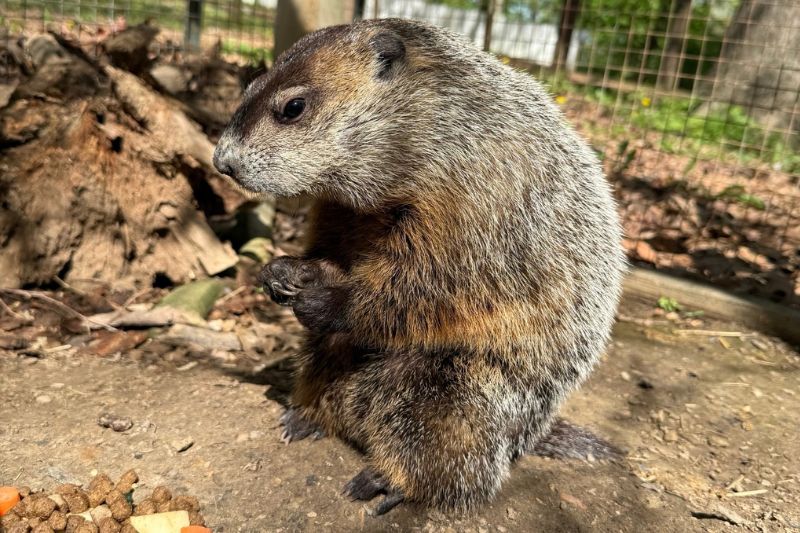
Groundhogs inhabit low-elevation forests, woodland edges, fields, pastures, hedgerows, and even suburban areas. They prefer well-drained soils for burrow construction and often create separate summer and winter dens. Their range has expanded westward into parts of the Great Plains, following wooded river corridors. Human-altered landscapes, such as agricultural fields and roadsides, have provided abundant food and shelter, allowing groundhogs to thrive near human settlements
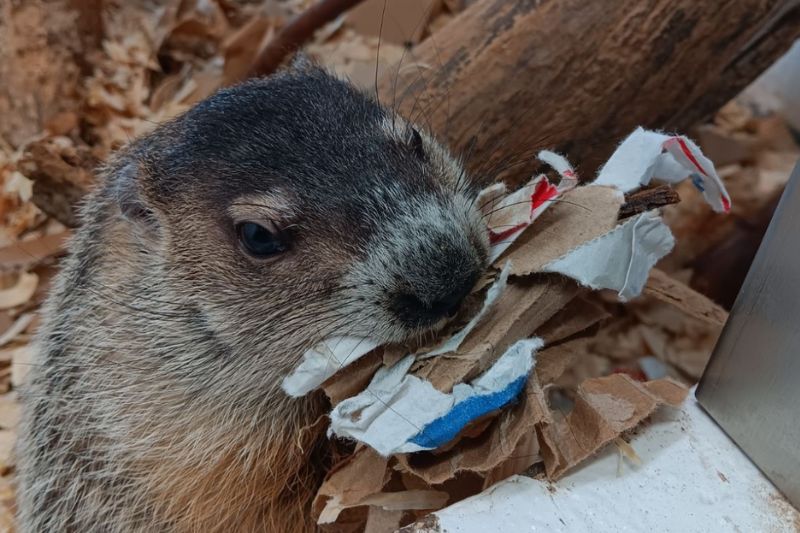
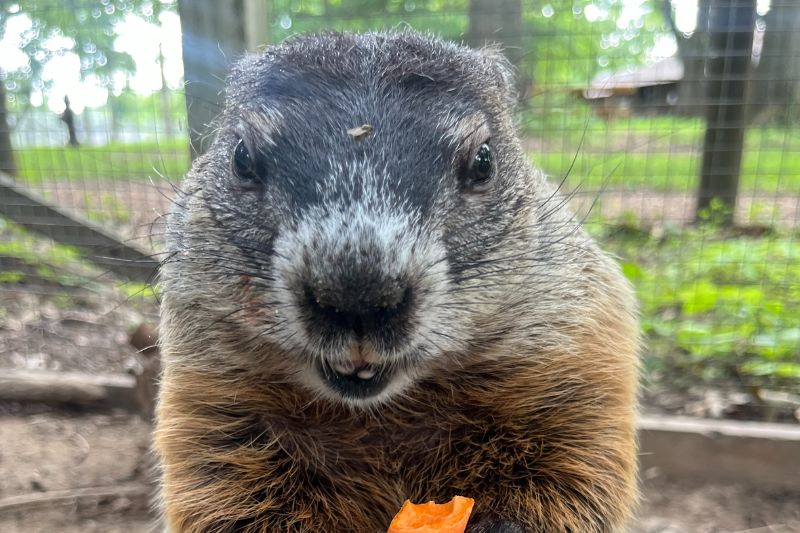
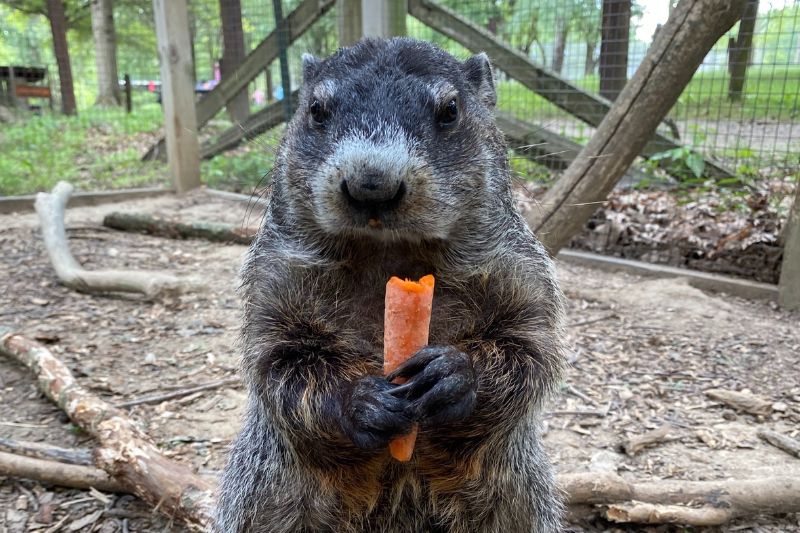
Groundhogs are strict herbivores, feeding on grasses, clover, leaves, flowers, and garden crops. They occasionally consume fruits and tree bark. Before hibernation, they increase food intake to build fat reserves for winter survival. Their incisors grow continuously, requiring constant gnawing on vegetation to maintain proper length. In captivity, their diet is very similar with fruits and vegetables as well as having enrichment activities with tree bark.

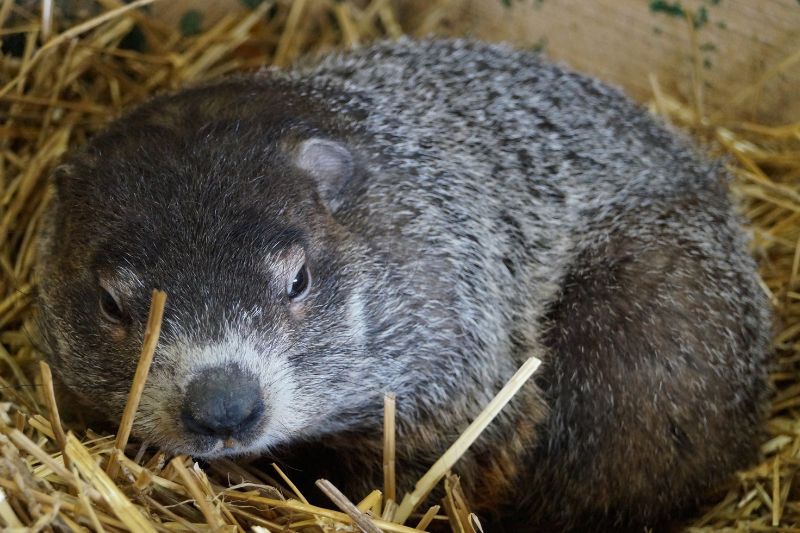
Groundhogs are one of the few mammals that undergo true hibernation. During winter, they retreat to their burrows and dramatically slow their metabolism. Their heart rate drops from about 75 beats per minute to as low as 4, and their body temperature falls close to the surrounding soil temperature. This adaptation allows them to survive months without eating or drinking. Even here at Wildlife Prairie Park our groundhogs will hibernate.
Every February 2nd, the groundhog takes center stage in a popular U.S. tradition. According to folklore, if the groundhog sees its shadow, winter will last six more weeks; if not, spring will arrive early. This custom originated from European Candlemas traditions and became a cultural phenomenon in the United States in the late 19th century.
Wildlife Prairie Park’s Gertie the Groundhog is nationally rank for her prognostications!
Groundhog burrows are complex systems that can extend 30 feet or more, with multiple entrances and specialized chambers for sleeping, nesting, and waste. These burrows not only provide shelter but also aerate the soil and improve nutrient cycling, making groundhogs important ecosystem engineers.
Despite their stocky build, groundhogs are excellent climbers and swimmers. They can scale trees to escape predators or forage for food and swim across streams when necessary. This versatility helps them survive in diverse habitats.