Class: Reptilia Order: Testudines Family: Emydidae Genus: Graptemys Species: pseudogeographica
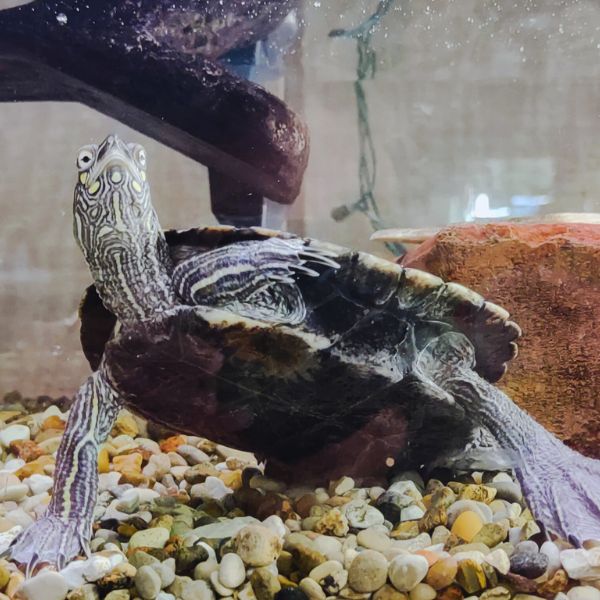
This medium-sized freshwater turtle features an olive to brown carapace or upper shell adorned with intricate yellow lines and a distinct serrated or saw‑toothed rear edge and central keel. Males typically grow to 3.5–6 inches, while larger females reach 5–10.75 inches in shell length.
The False Map turtle thrives in clear or slow-moving freshwater systems such as rivers, bayous, oxbows, marshes, and lakes while enjoying the aquatic vegetation and basking opportunities. They are comfortable in both deep water and shallower backwaters.
In the wild, they are omnivorous by eating aquatic vegetation, insects, worms, crayfish, snails, and small fish. In captivity, they require a varied diet of aquatic turtle pellets, aquatic plants, small fish, snails, and insects.
Help Feed Our False Map Turtle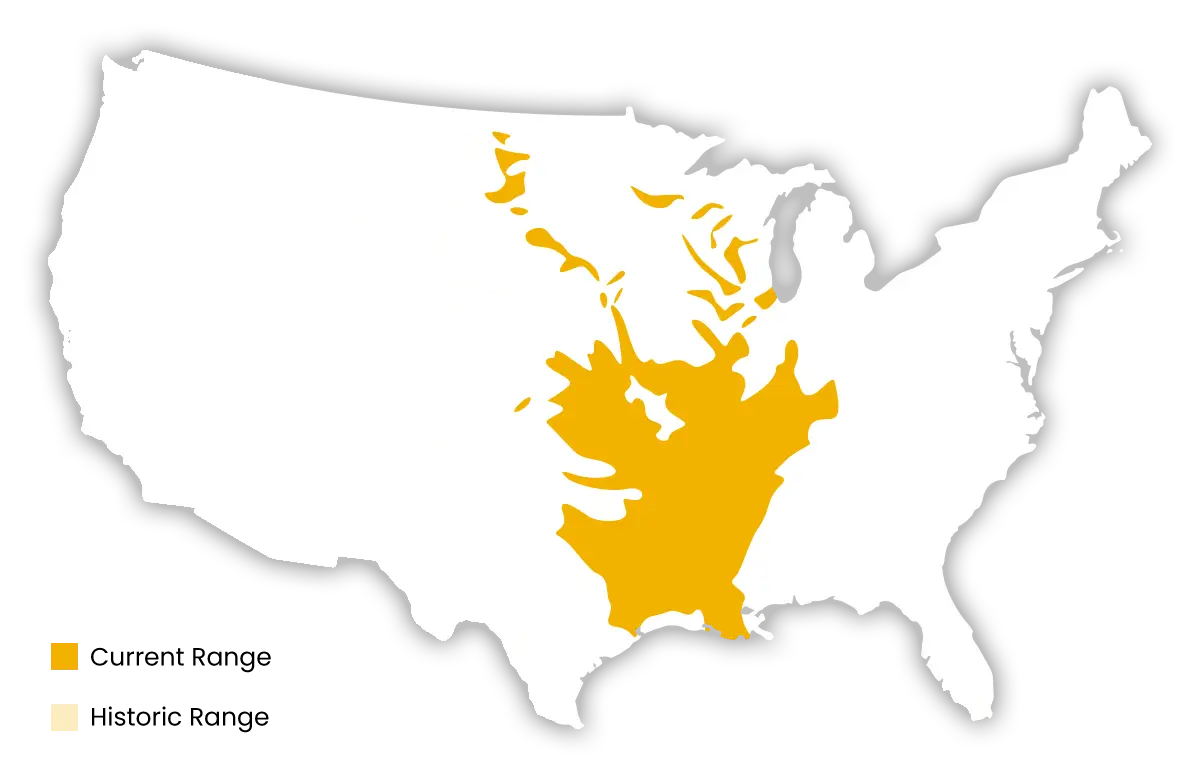
The False Map Turtle acquired a nickname of a sawback turtle because of the jagged shell edge, but that raised keel isn’t just for looks. It serves practical purposes. These features help break up the turtle’s outline in the water, providing camouflage among submerged branches and debris. The serrations also make the shell harder for predators to grip, offering extra protection.
Interestingly, the sharpness of these ridges fades as the turtle ages, so juveniles appear “spikier” than adults. This change may reflect a shift in vulnerability, as younger turtles rely more on physical defenses while older ones depend on size and experience to avoid threats.
False Map Turtles are typically solitary, but like other turtles they become surprisingly social when it comes to basking. On warm, sunny days, you’ll often see several turtles sharing the same log or snag, stacked like a living pyramid. This behavior isn’t just about comfort. It’s vital for survival. Basking helps them regulate body temperature, absorb UV rays for healthy shells, and dry out to prevent infections. Gathering in groups also provides safety in numbers, as multiple eyes can spot predators more quickly than one.
When winter arrives in colder regions, these turtles enter a state called brumation, like hibernation but less intense. Instead of remaining active, they slow down their metabolism and seek shelter underwater, often burying themselves in mud or hiding beneath submerged logs. This adaptation allows them to survive months of cold temperatures without feeding, emerging again when conditions warm in spring.