Class: Reptilia Order: Testudines Family: Kinosternidae Genus: Sternotherus Species: odoratus
The eastern musk turtle, also known as a “stinkpot,” is a small aquatic turtle native to North America. Adults typically measure between 2 and 5 inches in length and have a dark, highly domed shell that often appears covered in algae. They are easily recognized by the yellow stripes on their head and the barbels on their chin and throat.
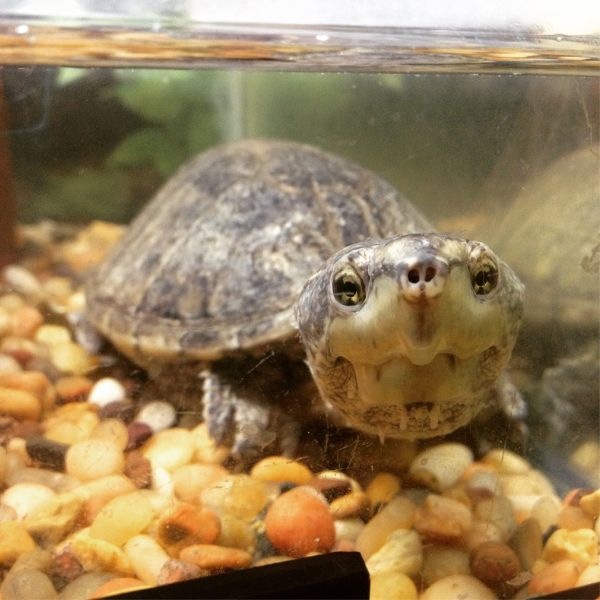
Musk turtles prefer slow-moving, shallow waters with muddy bottoms and plenty of vegetation. They are commonly found in ponds, lakes, marshes, and sluggish streams. Unlike many other turtles, musk turtles rarely bask and spend most of their time hiding under debris or buried in soft substrates.
These turtles are omnivorous and feed primarily at night. Their diet includes aquatic insects, snails, crayfish, tadpoles, seeds, algae, and occasionally fish carrion. They forage along the bottom of water bodies, using their keen sense of smell to locate food. While in captivity, they will mainly eat reptile sticks and insects.
Help Feed Our Musk Turtle
Musk turtles earned the nickname “stinkpot” because they release a strong musky odor from glands near their shell when threatened.
Despite their small size, they are surprisingly good climbers and can sometimes be found resting on logs or even low branches above water.
They are also long-lived, with females maturing around four years and males around two years, and they rarely bask compared to other turtle species.
The musk turtle is most active from before sunrise through early morning and again from late evening until shortly after dark. It buries itself in mud to overwinter.