Class: Amphibia Order: Anura Family: Hylidae Genus: Dryophytes Species: versicolor
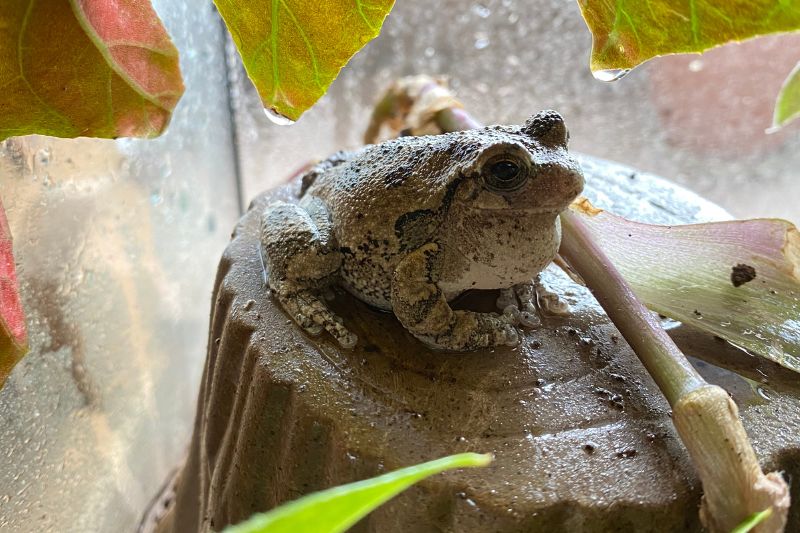
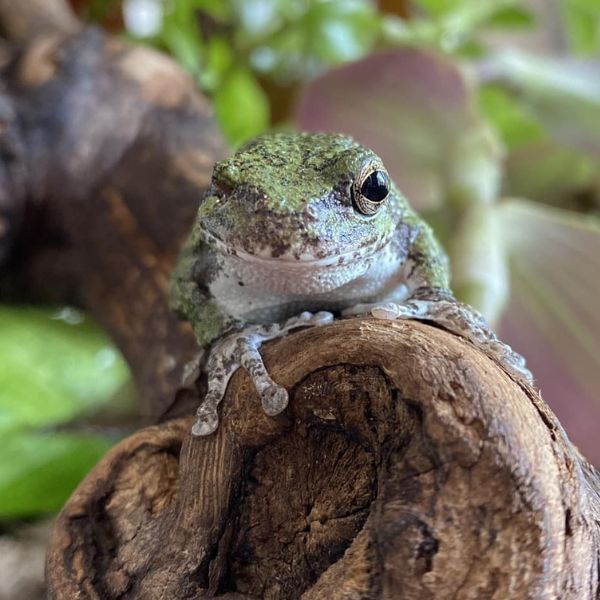
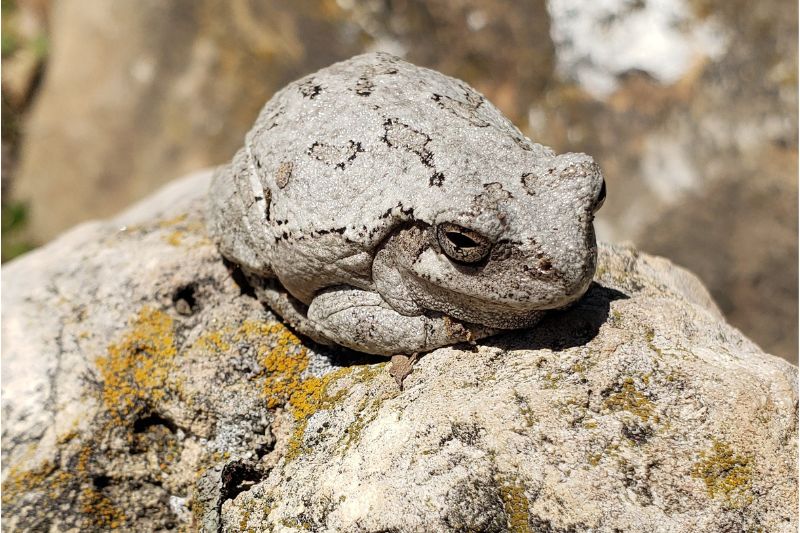
The eastern gray tree frog measures 1.25 to 2 inches (3-5cm) in length. The record length is 2.25 in. (6 cm). There is no sexual dimorphism meaning the males and females look the same. The dorsal (back) surface of the gray treefrog species is rough and lightly sprinkled with warts, more than most frogs but less than the average toad. The large toepads produce mucous to adhere to smooth bark or man-made structures near light sources and are characteristic of the family Hylidae.
Its scientific name is Dryophytes versicolor; however, it was previously classified as Hyla versicolor so you may see either name.
Eastern gray tree frogs are native to much of the eastern United States and southeastern Canada, ranging from southern Ontario and Maine west to central Texas and Manitoba, and south to northern Florida, with isolated populations in New Brunswick. They are largely tree-dwelling and thrive in forested areas, including deciduous and mixed forests, swamps, wooded suburban neighborhoods, and farm woodlots. They require access to trees and water sources for survival.
In the wild they will exist on a variety of insects. While in captivity, they will mainly eat crickets.
Help Feed Our Tree Frogs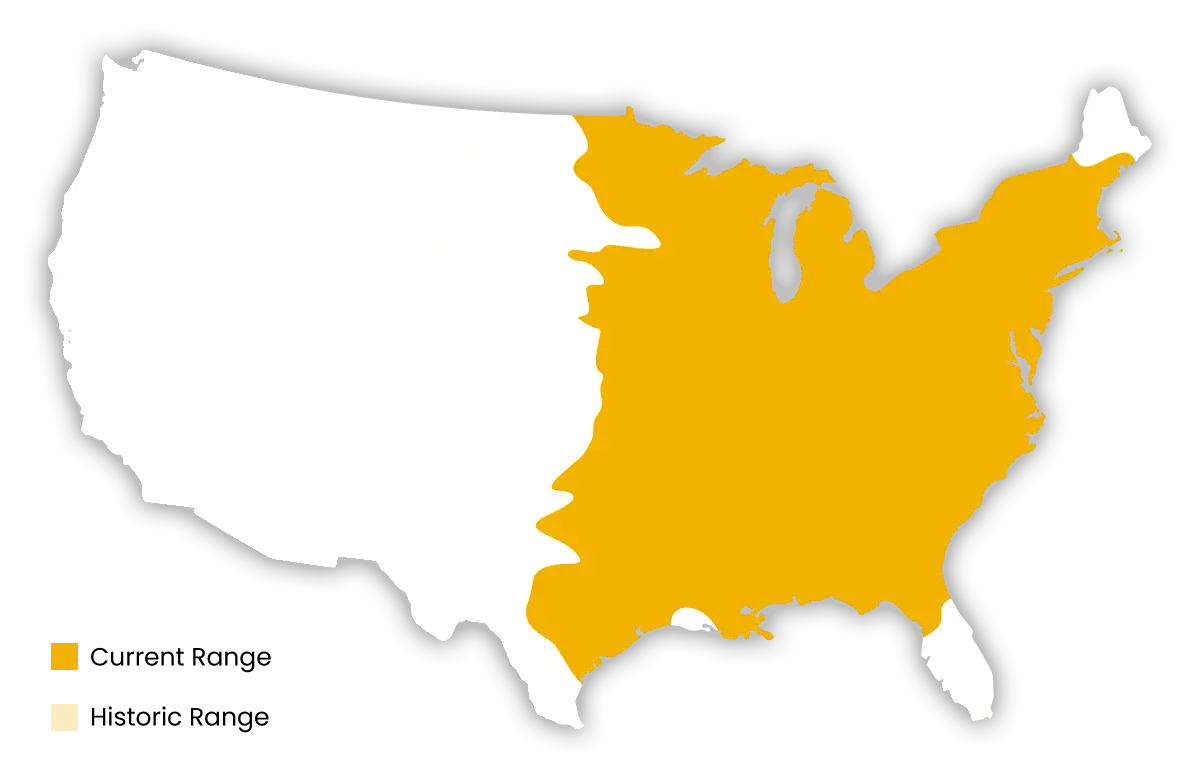
The colors of a gray tree frog vary with the colors of its background and environmental factors such as season and humidity, but shades of gray are most common with black blotches on the back. Variations of brown, green, and pearl-gray colors have been noted. Green colors are more prominent during the breeding season and in yearling frogs. Usually, there is a white mark beneath the eye. The ventral skin on the hind legs, in the groin region, may appear orange to golden yellow with black speckles and the belly is white.
Eastern gray tree frogs adapt well to suburban and agricultural areas, provided there are trees for climbing and water for breeding. They can even be found near porch lights catching insects.