Class: Reptilia Order: Squamata Family: Crotalidae Genus: Agkistrodon Species: contortrix
Eastern Copperhead snakes have a heat-sensitive pit on each side of the head between the eye and the nostril. The head is somewhat flattened and much wider than the neck, giving the copperhead its triangular-shaped head. The pupil of its eye is vertically elliptical. Scales are weakly keeled (ridged). Not all copper heads possess a truly copper-colored head. Some are actually quite a bit paler. Its body is red-brown or yellowish-brown and distinguishing hour-glass markings lay across the back (when viewed from above). This snake is venomous but rarely bites unless provoked. The bite, though painful, is seldom fatal to humans.
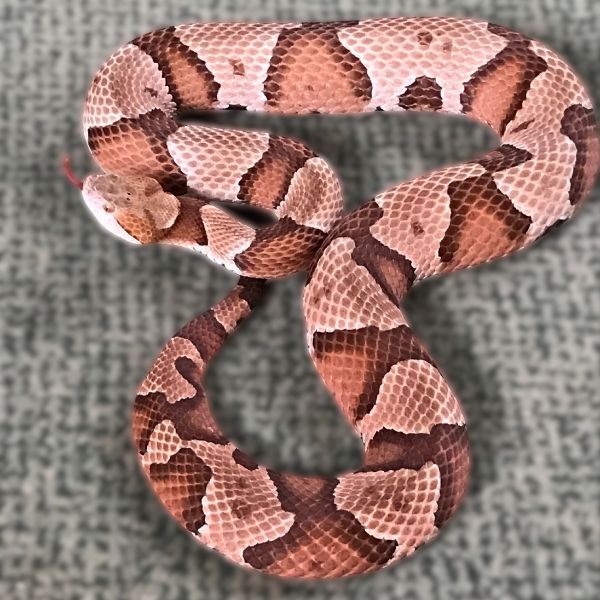
The copperhead lives in rocky, wooded hillsides, abandoned sawdust piles and swamps. This snake is active during the day in spring and fall, becoming nocturnal in the hottest summer months. When disturbed, it will attempt to run away. If trapped, it rapidly vibrates the tip of the tail, making noise against whatever the tail hits.
In the wild, this venomous snake injects prey with venom then waits for it to succumb before eating it. Their diet would consist of mice, small birds, lizards, snakes, amphibians and insects. While in captivity they are generally fed mice and rats.
Help Feed Our Copperhead Snake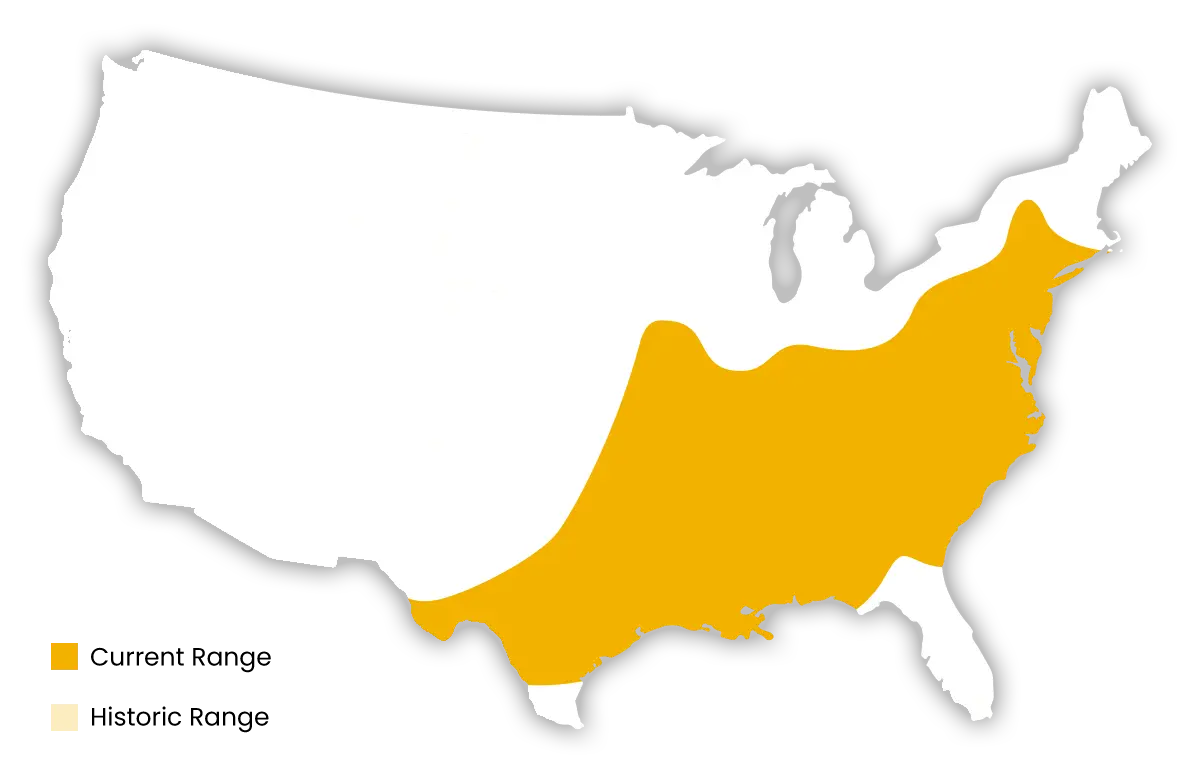
This snake may be found in groups, particularly in fall when moving to brumation dens. Mating occurs in the spring. The female gives birth to a brood of between one and 14 young in August or September. Each female may produce young only every other year.
About 25% of copperhead strikes are “dry bites,” meaning they inject no venom. This is a defensive strategy to conserve venom, which is metabolically expensive to produce and primarily used for hunting rather than defense.