Class: Mammalia Order: Artiodactyla Family: Suidae Genus: Sus Species: scrofa domesticus
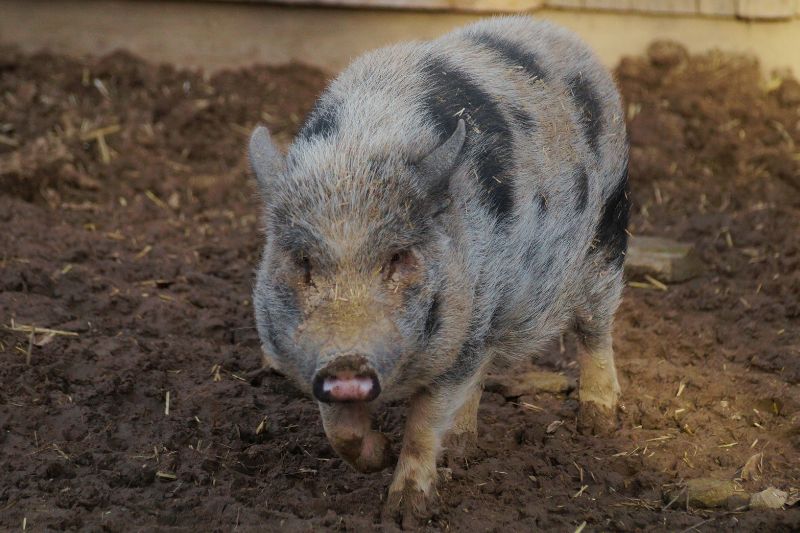
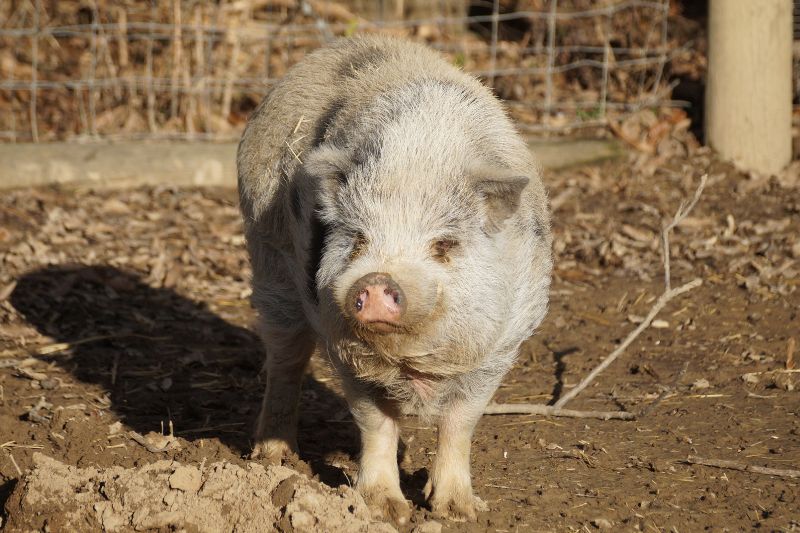
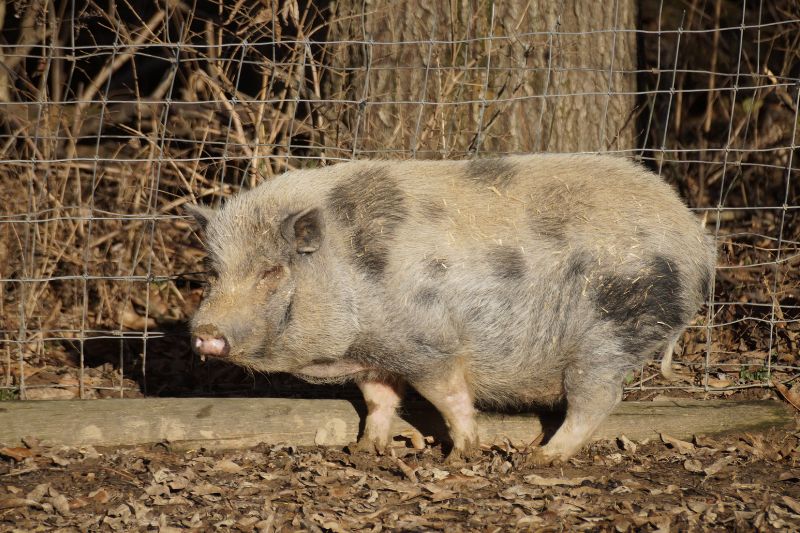
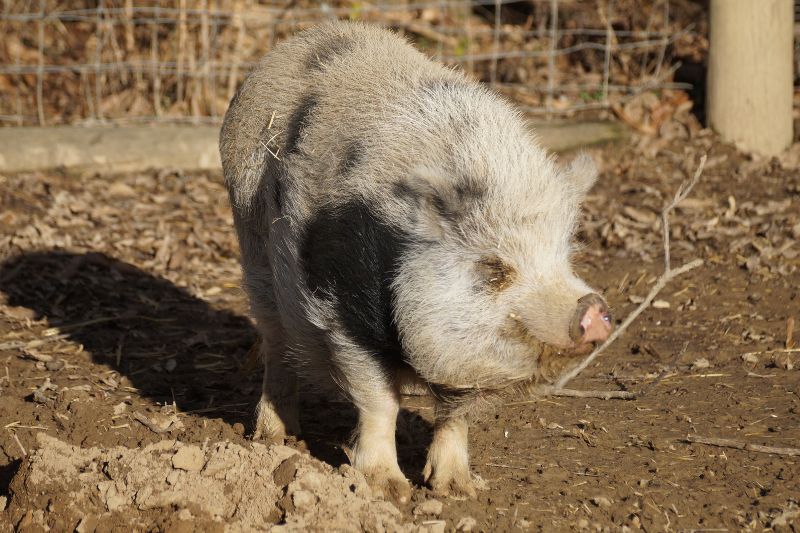
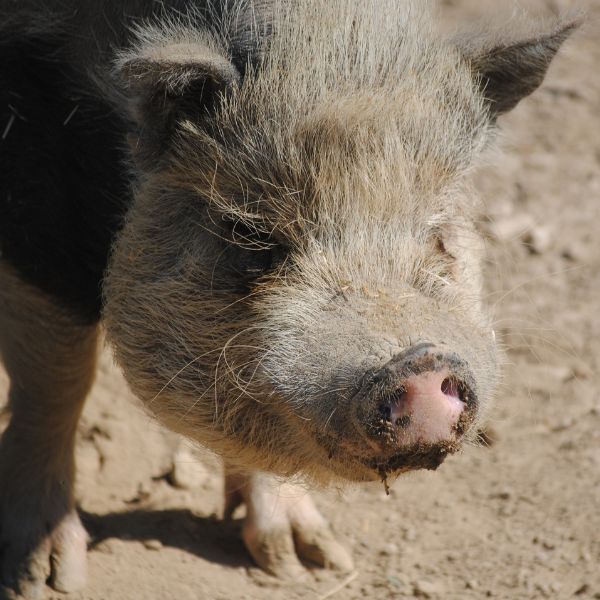
The mini-Juliana pig is a small, colorful domestic breed that originated in Europe. They more closely resemble a small version of a large hog or feral pig than it does the Pot Belly Pig. The fur is always spotted, but the base color can range from brown to red to silver. They have long, strong snouts used for rooting around and digging up food. A pig’s sense of smell is about 2,000 times stronger than humans. This ability is so refined that pigs are trained to detect truffles, drugs, and even landmines. Their snouts are specialized for rooting and exploring underground food sources. Also, physically though their tails are straight, when excited or in motion, their tail may curl or twist. Overall, Mini-Juliana pigs are generally outgoing.

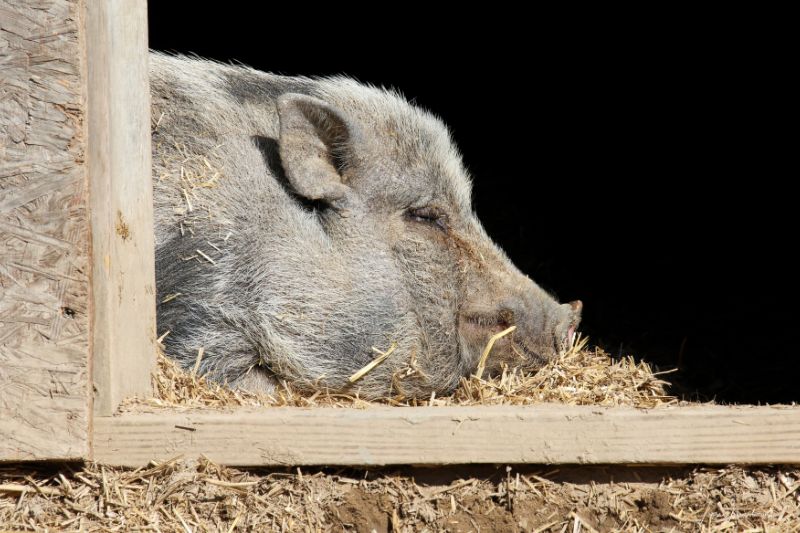
Domestic pigs are found globally in agricultural settings, ranging from small farms to large-scale industrial operations. They thrive in temperate and tropical regions and require access to water and shelter. While wild boars inhabit forests, grasslands, and wetlands, domestic pigs are typically kept in barns, pens, or pastures and sometimes within a household. In feral conditions, pigs adapt to diverse habitats, including woodlands and scrublands, often near water sources.
Pigs are omnivores with a monogastric digestive system, similar to humans. Their diet includes grains, vegetables, fruits, and protein sources. In farming systems, pigs are commonly fed corn, soybeans, and fortified feeds to promote growth. Naturally, pigs root for roots, tubers, and small animals. A balanced diet is essential to prevent obesity and maintain health
Help Feed Our PigsPigs are highly intelligent and very vocal, emitting a variety of squeals and grunts. This complex system to communicate with each other includes the use of body language, vocal communications, and scent/pheromones. Vocalizations can be grunts, squeals, barks, huffs, “hot panting”, screams, “arfs,” and a whole lot that are hard to type! Body Language includes posture, movement, lack of movement, direction of movement, expressions, head movements, physical contact, closeness, eye contact, etc.
Pigs rank among the smartest domesticated animals, comparable to a three-year-old child. They can learn tricks, recognize themselves in mirrors, and even play simple video games using joysticks. Their cognitive abilities make them excellent problem-solvers and highly trainable.
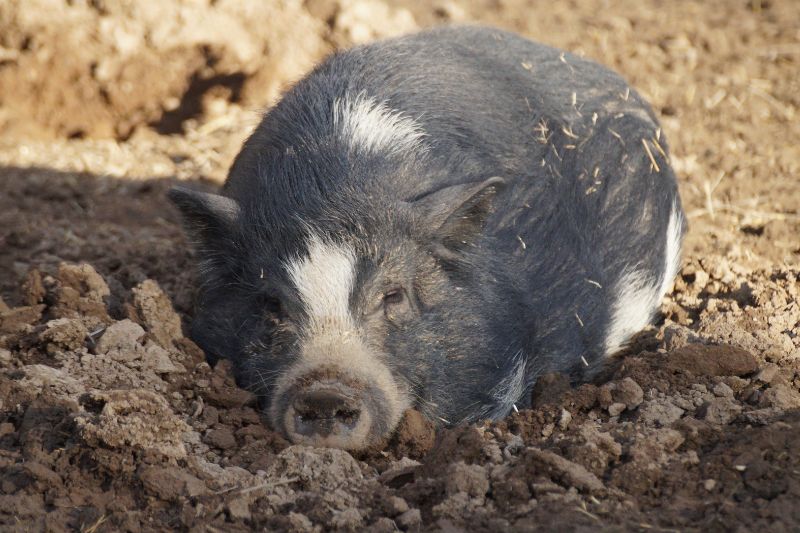
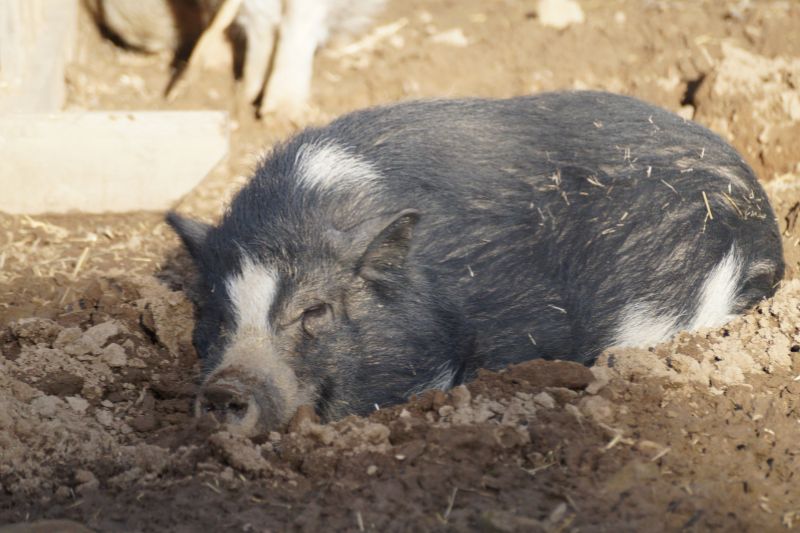
Contrary to popular belief, pigs are clean animals. When given enough space, they designate separate areas for eating, sleeping, and defecating. Their habit of wallowing in mud is not due to dirtiness but to cool down, protect their skin from sunburn, and deter parasites.
Pigs share many anatomical and physiological similarities with humans, making them valuable in medical research. They are used in studies of cardiovascular diseases, organ transplantation, and diabetes. Pig heart valves are commonly used in human surgeries.