Class: Mammalia Order: Carnivora Family: Canidae Genus: Canis Species: latrans
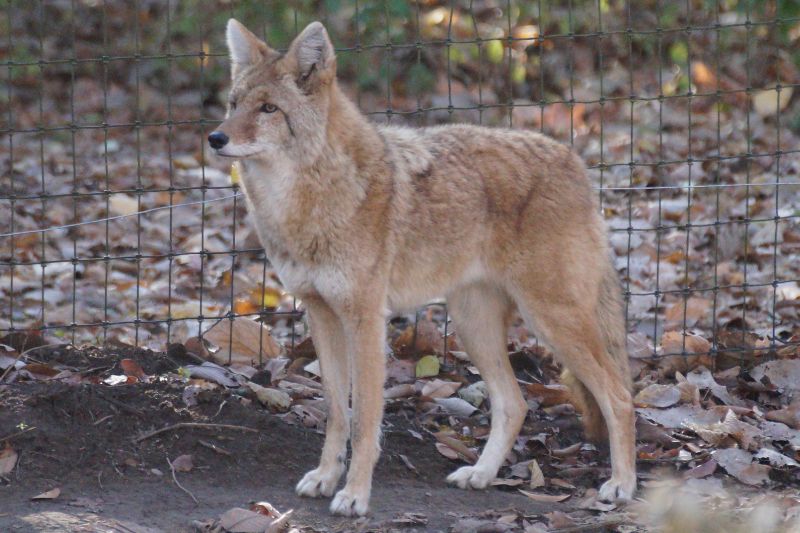
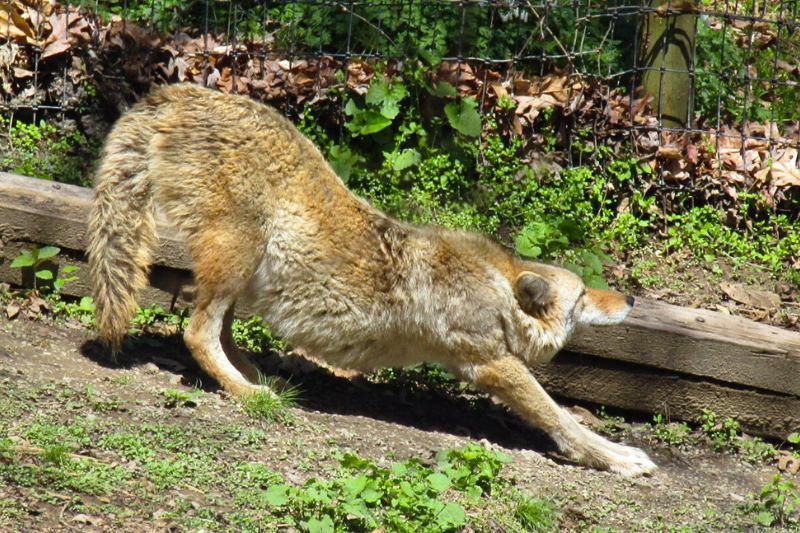
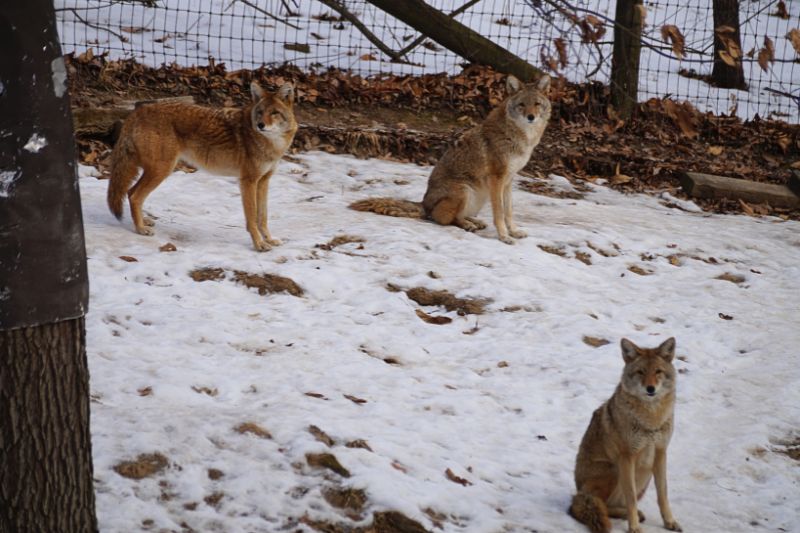
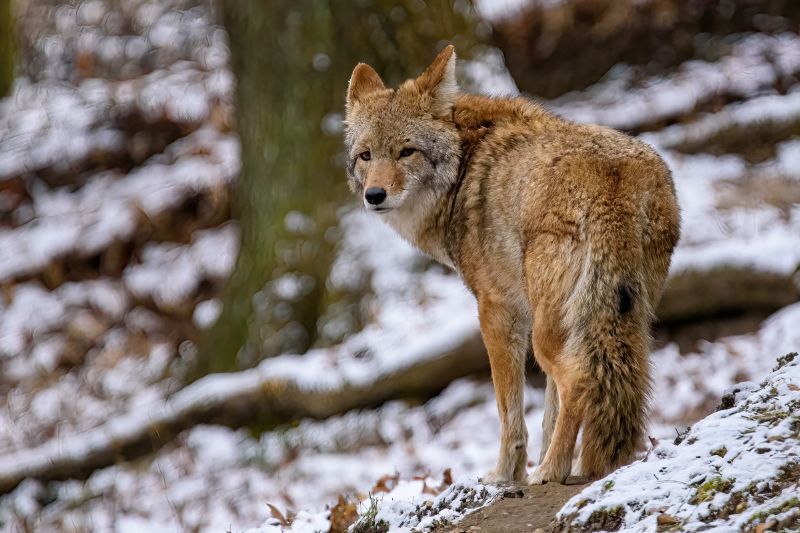
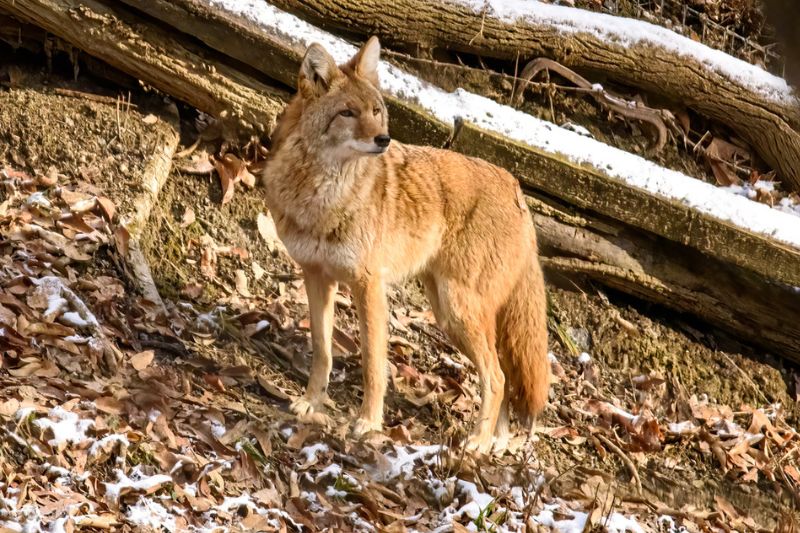
Coyotes are grayish coated, medium sized, omnivores, who are known for their pointed ears and bushy, black-tipped tails. The average male weighs 18 to 44 lbs. with the female weighing around 15 to 40 lbs. They are intelligent hunters who will hunt alone or in small family groups. To Native Americans, the coyote is known as the “trickster,” and through time, has escaped widespread loss in numbers because of its ability to adapt to new surroundings.
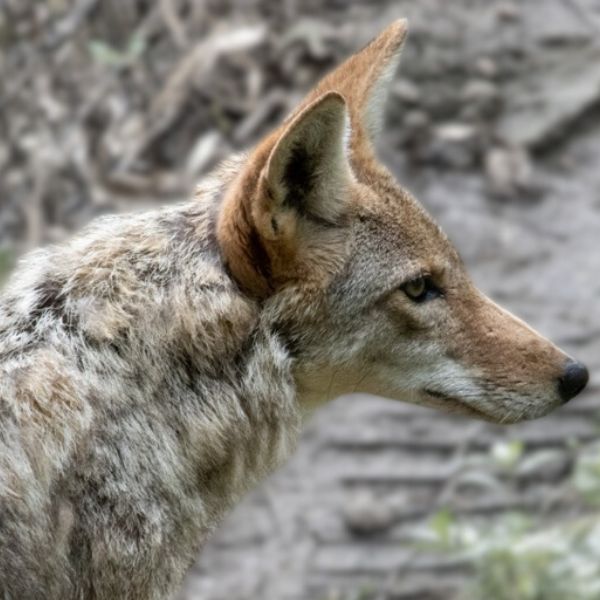

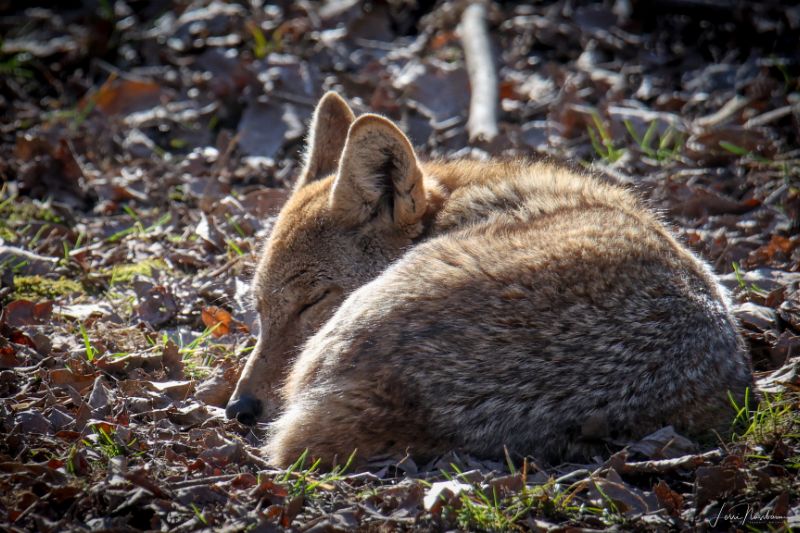
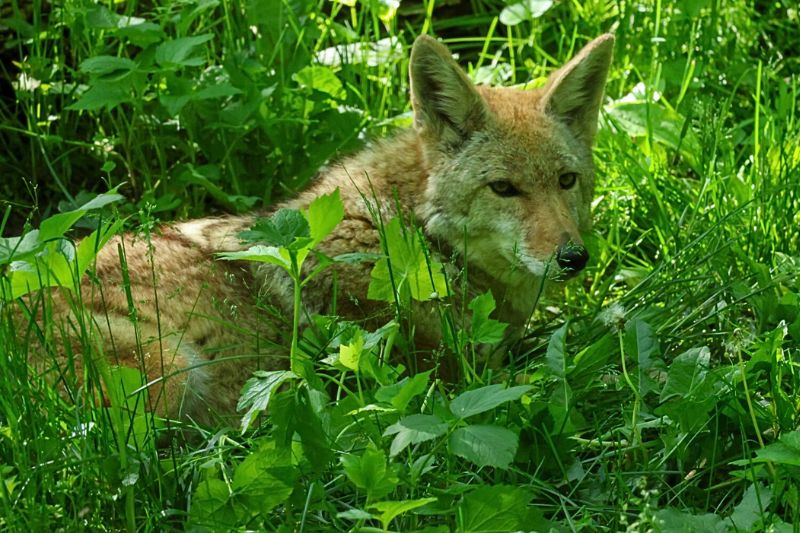
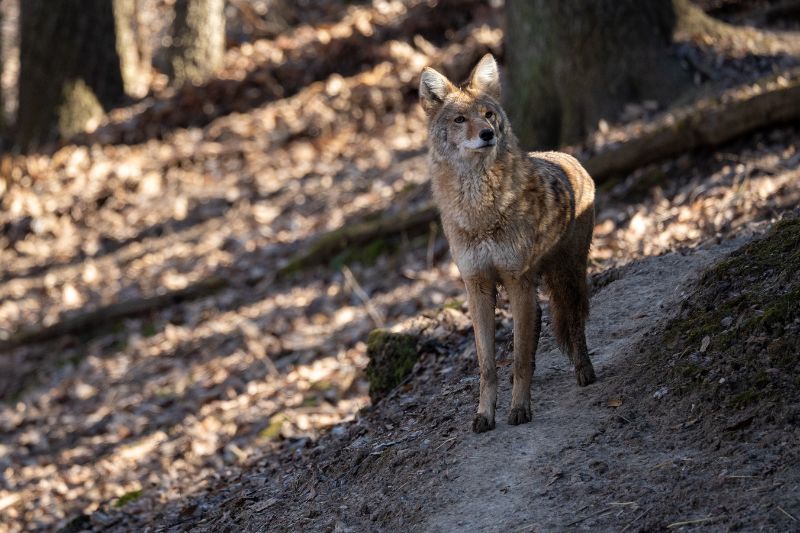
Coyotes live in brushy areas, along forest edges, open farmlands, suburban areas, and even urban areas. During most of the year, they have no home site and often sleep on the ground in a concealed, protected spot. During breeding season, however, the female will provide one or more dens for her young. These dens may be remodeled fox, skunk, badger or woodchuck den, but may also be found in rock crevices, brush piles, hollow trees or abandoned buildings.
They are highly opportunistic and adaptable hunters with a varied diet consisting of rodents, birds, snakes, insects, fruit, carrion, and will take advantage of garbage or pet food left outside. In captivity, they are fed a canine diet of raw meat supplemented with dry dog food.

Although coyotes are opportunistic hunters which can give them a bad reputation, they are critical in maintaining a healthy ecosystem. In some areas, coyotes are the only large predators that remain, as early settlers forced out other predators such as wolves and cougars. Coyotes help control rodent and small mammal populations which results in disease control, minimizes crop damage, and increases the diversity and abundance of birds. They assist in controlling the deer population in urban areas by taking small fawns as prey. Coyotes also clean up carrion, including animals hit by cars, as one of nature’s clean-up crew.
Coyotes are very vocal using a combination of yips, barks, yip-howls, growls and more, to communicate. In fact, their scientific name Canis Latrans means “barking dog”. It can be hard to judge how many coyotes are in a group by sounds alone due to the “beau geste” effect. It may seem like coyote vocalizations are coming from multiple directions, when really it is an auditory illusion of the variety of sounds produced and the distortion of the sound through the environment.
Coyotes are digitigrade, meaning they stand or walk on their toes. One fictional anthropomorphic coyote character, Wile E. Coyote, is known for a natural coyote behavior - tip toeing around trying to capture Road Runner.
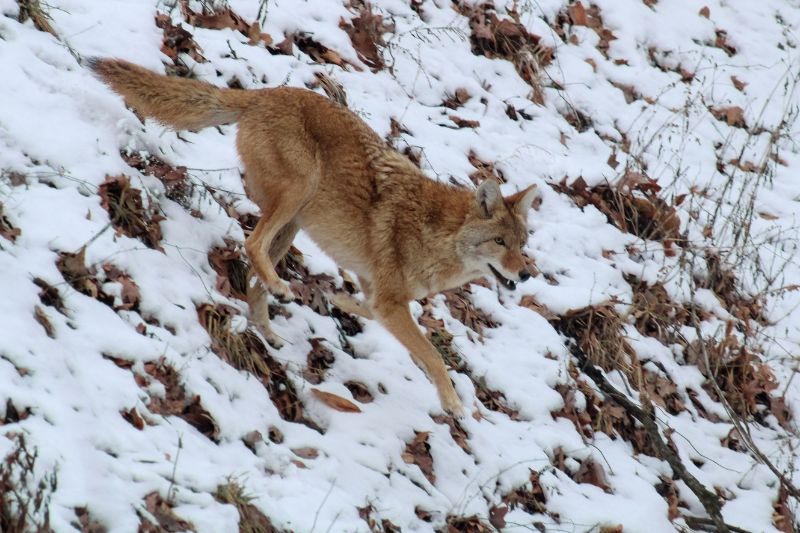
Also, in real life coyotes are faster than road runners. Coyotes can run as fast as 43 mph where road runners only reach speeds of 20 mph.
Both coyote parents take the role as caregivers for the young pups. While the pups are very young, the male will hunt and scavenge to bring back food to feed the female. The pups learn to hunt when they are 8 to 12 weeks old and then leave the den at about 5 months old to establish their own home range.