Class: Reptilia Order: Squamata Family: Colubridae Genus: Pantherophis Species: guttata
Corn snakes are a moderately large snake reaching 4 to 5 feet in length. They are a blotched snake with a gray or light brown back sporting 25 to 50 black-bordered, nearly square, dark brown or red-brown blotches. They are considered a beautiful red or orange snake, but they are also subject to considerable individual variation in color. Native Illinois corn snakes have a gray or light brown back with dark brown or red-brown blotches. The nickname corn snake comes from the similarity of the snake’s belly markings looking like the checkered pattern of the kernels of Calico or Ornamental corn.
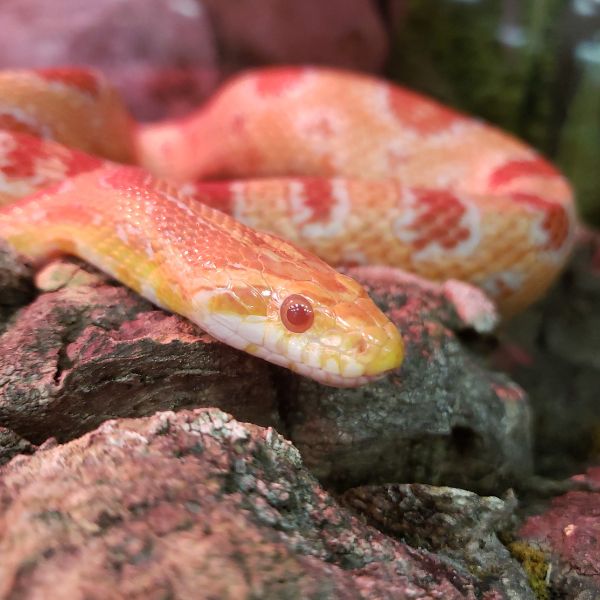
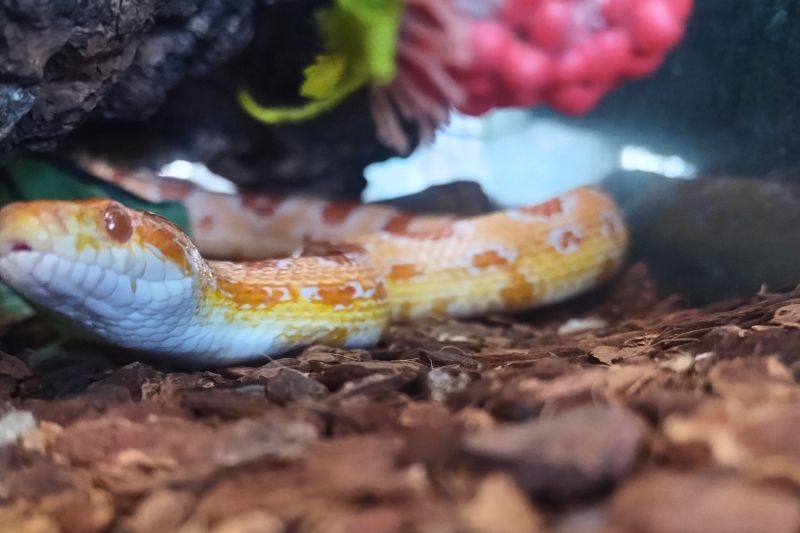
Their habitat consists of rocky, wooded hillsides, hill prairies, bluffs, and adjacent brushy fields. They are considered a threatened species in Illinois and are found only in the southwestern corner of the state.
Their diet in the wild would consist of rodents, mammals, birds, bird eggs, and frogs. They will also consume bats. In captivity, they mostly eat rodents.
Help Feed Our Corn Snake
They are primarily nocturnal. They are good climbers but are mostly likely to be found in terrestrial habitats. They spend much of their time underground resting in or prowling through rodent burrows or other subterranean passageways.
Corn snakes are remarkable escape artists. Their slender bodies allow them to squeeze through gaps as small as a pencil's width, and they can push against loose lids or climb vertical surfaces. This behavior stems from their natural instinct to explore and find hunting grounds.
When alarmed, corn snakes will vibrate their tails rapidly against dry leaves, creating a sound similar to a rattlesnake’s rattle. This defensive mimicry helps deter predators by making them appear more dangerous than they really are.