Class: Reptilia Order: Squamata Family: Colubridae Genus: Pituophis Species: catenifer sayi
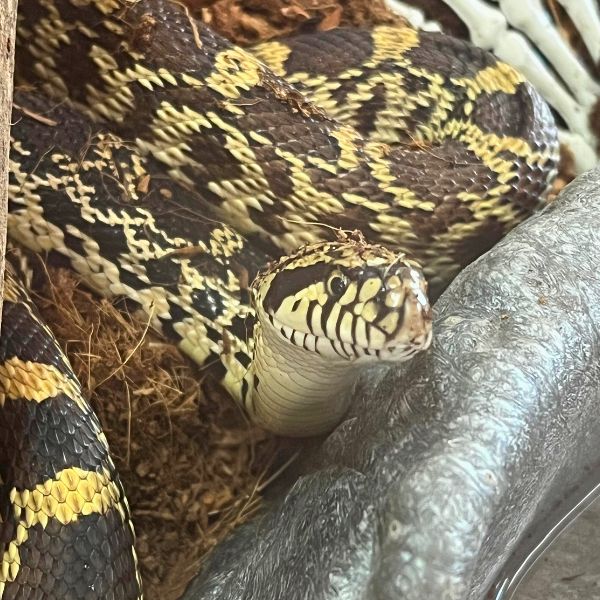
Bull snakes are a non-venomous, large, stout snake with a disproportionately small head. They are a yellowish snake marked with a series of black, brown, or reddish-brown dorsal blotches, which are darkest and in strongest contrast with the ground color at both the head and tail ends of the snake. Some specimens, especially those from the eastern part of the range, will have dark blotches; while in arid regions the general appearance is more pallid. The middorsal row of body blotches will number usually 41 or more. Belly is yellow with bold black spots, especially toward sides. They have a distinctive dark stripe that extends from the eye to the jaw, accompanied by a yellow band directly above it. Their scales are keeled, giving them a textured look, and they have a single anal plate.
Their general habitat consists of sand prairies, grasslands, and old fields in former prairie. They are absent from the black-muck prairies. Overall, bull snakes favor open, dry habitats with sandy or loose soil, which allows them to burrow easily. They are terrestrial but can climb when necessary, and they are commonly found in areas where rodents are plentiful. Bull snakes also often thrive near human-modified landscapes because of abundant rodent prey.
Their diet in the wild will consist of small rodents, birds, eggs, and rabbits. In captivity, they are fed rodents.
Help Feed Our Bullsnake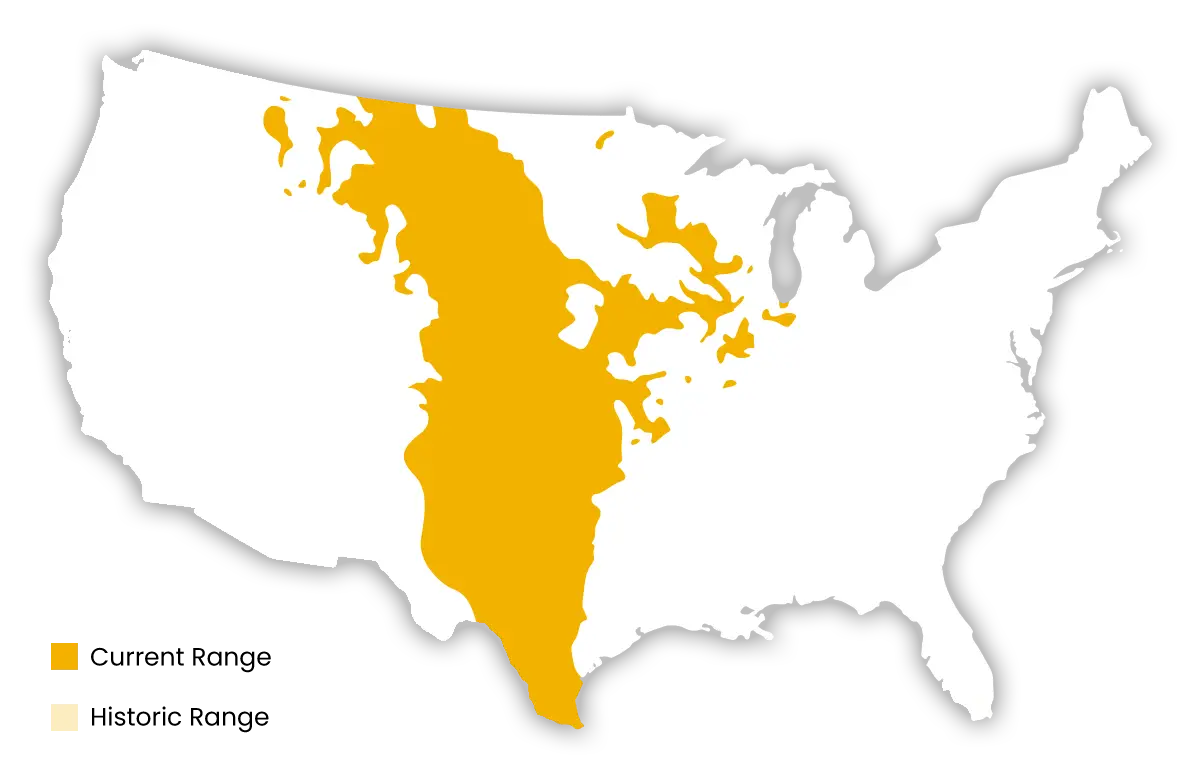
They are well known for their defensive display, which includes tail vibrating, loud hissing, and repeated lunging with the mouth partially open. It Is one of the only North American snakes that can hiss loudly.
Despite their large, heavy bodies, bull snakes can climb trees and shrubs to hunt eggs or small birds, and they are also proficient swimmers when needed.
Males are usually longer and heavier than females. This is unusual among snakes, as only about 14% of snake species exhibit this trait. It is considered Illinois’ longest snake.