Class: Amphibia Order: Anura Family: Ranidae Genus: Lithobates Species: catesbeianus
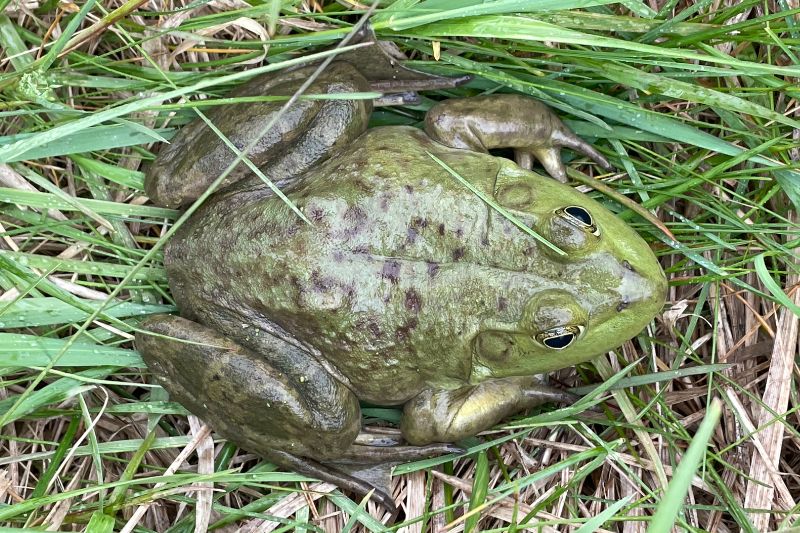
The Bullfrog is the most recognized and largest frog in the United States. They are dispersed almost everywhere in North American east of the Rocky Mountains. Even though the Bullfrog is large; the size of the frog is not a good way to judge the age of it. Environmental situations usually create the size and color. However, they are typically greenish brown. Bullfrogs are primarily nocturnal.
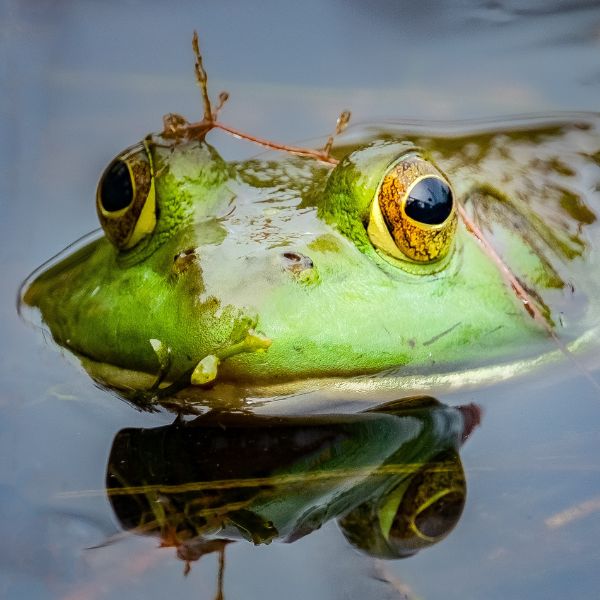
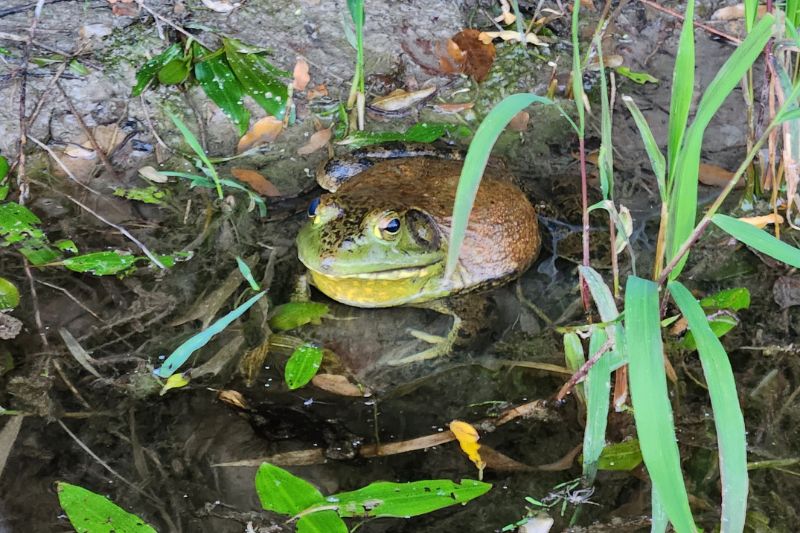
Bullfrogs are primarily aquatic, spending most of their time near water edges. They live in permanent bodies of water such as ponds, lakes, marshes, slow-moving streams, and reservoirs. Bullfrogs adapt well to man-made habitats like farm ponds and reservoirs, which has contributed to their spread. Warm, shallow water with abundant vegetation is required for cover and breeding. They often hibernate underwater in mud during winter months.
Bullfrogs are ambush predators. They will wait for prey to cross their path and then lunge at the prey, sticking their long tongue out before swallowing anything they can fit in their mouth whole. Their diet in the wild will consist of snakes, worms, insects, crustaceans, frogs, aquatic eggs, other bullfrogs, and small birds. While in captivity, they will feed on crickets, earthworms, and other invertebrates.
Help Feed Our Bullfrogs
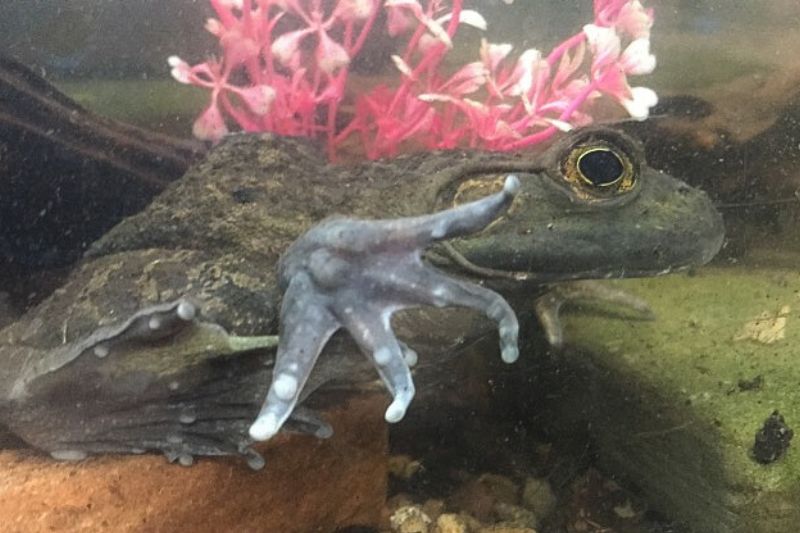
The Bullfrog is also an excellent swimmer. Webbed feet and strong legs play a huge role in their good swimming. They have eyes that sit on their head but can lower them into the socket to close or protect them. Special skin that acts like gills, and tightly closed nostrils help the frog stay under water for long periods of time. They also use their skin to help them during brumation, a state of torpor, since they spend the winter at the bottom of a lake in the mud and leaf litter.
A female bullfrog can lay up to 20,000 eggs at a single time that will create a thin floating sheet on top of the water. The male will then release sperm on them. After fertilization, eggs will hatch about 3-6 days later as tadpoles. Tadpoles are large, reaching 4 – 6 3/4”, are green olive in coloration, and may take up to 3 years to metamorphize into an adult. They live about 8 -10 years.
Bullfrogs make a deep-pitched jug o’rum that can be heard for more than a quarter mile on a quiet day.
Bullfrogs have eardrums (tympanum) that help them detect calls and vibrations in water. In males, the tympanum can be twice as large as their eyes, whereas females have a tympanum that is similar in size to their eye.