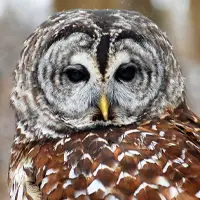
Class: Aves Order: Accipitriformes Family: Accipitridae Genus: Buteo Species: platypterus
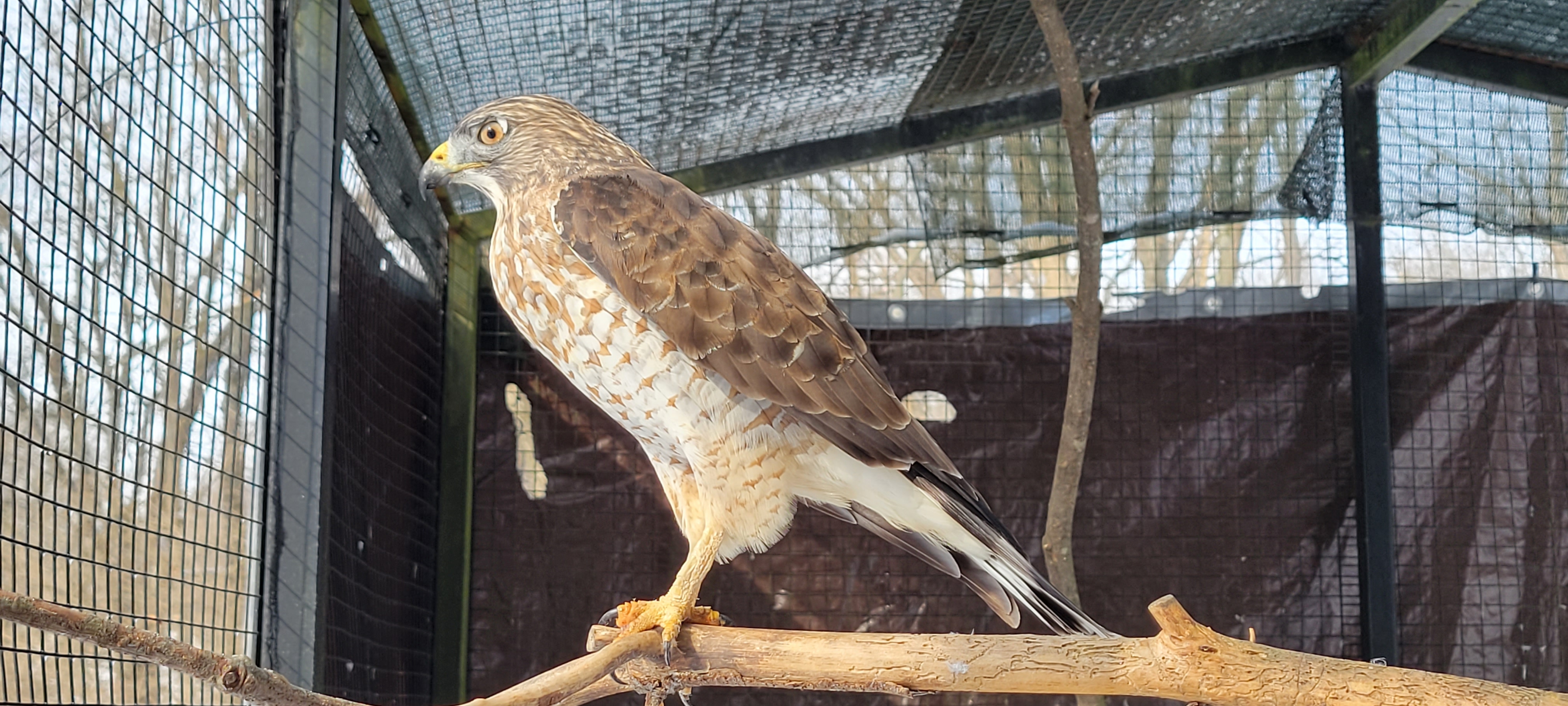
The broad-winged hawk is the smallest in its genus Buteo. This genus consists of raptors that have broad wings and robust bodies. Other examples of birds in this genus include the red-tailed hawk, common buzzard, Swainson’s hawk, red-shouldered hawk, and rough-legged hawk.
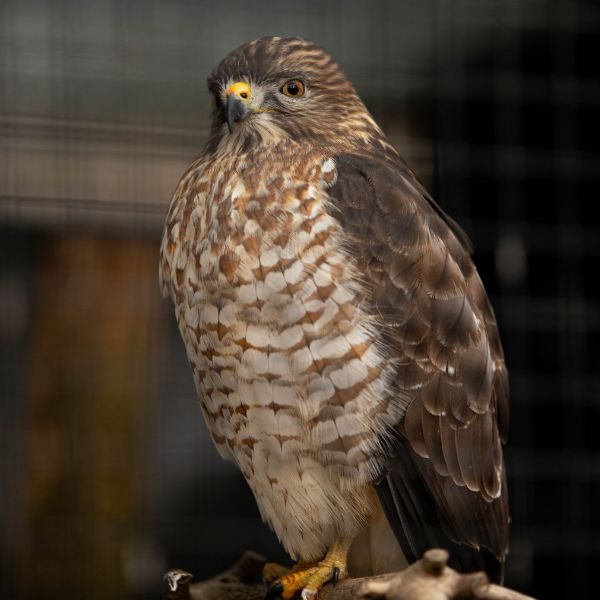
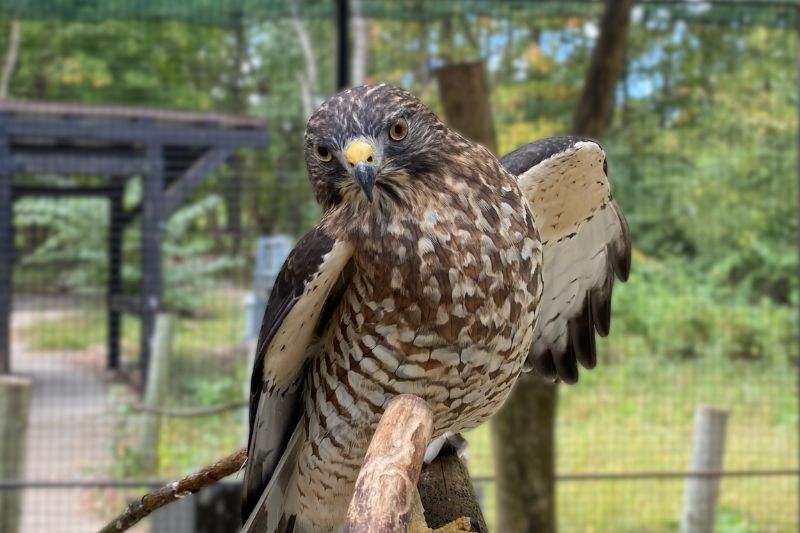
Little Bo Peep came to Wildlife Prairie Park from Wildside Rehabilitation after it was determine she was non-releasable from an eye injury caused by a vehicle collision. She was named Little Bo Peep by Park staff because she made peeping sounds (like a baby bird) all the way back from Eaton Rapids, MI. When the injury occurred in 2018 she was an immature hawk, therefore, we know she hatched that same year.
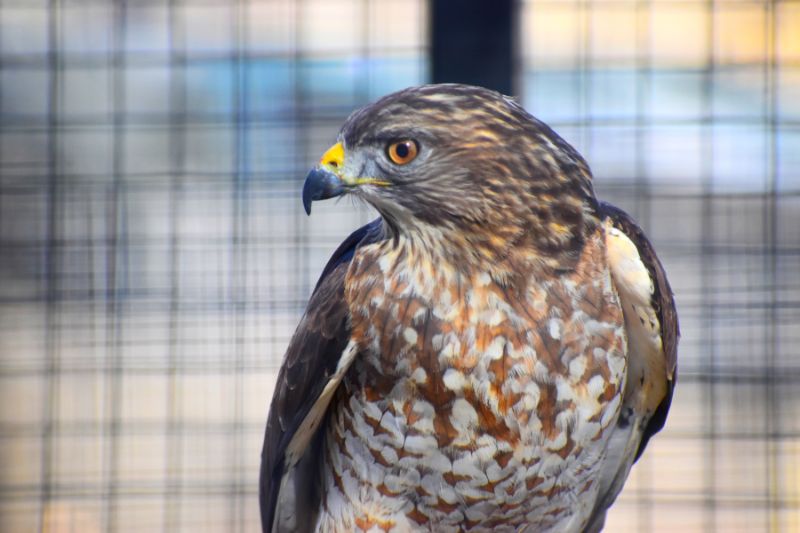
These hawks have a wide distribution in North and South America ranging from southern Canada to southern Brazil. Their breeding range is in northern North America, and they migrate south in the winter as far as northern parts of South America. There are five sub-species that exclusively live in the Caribbean and do not migrate or are endemic to that area. When they migrate, they form huge numbers called ‘kettles’ and are the reason why hawk-watching started.
Broad-winged hawks eat a variety of animals depending on the time of the year. During nesting season, the parents will feed their chicks mostly small mammals such as mice, voles, shrews, and chipmunks, but will also prey on frogs, lizards, and other bird nestlings. In the winter they have been observed eating insects, frogs, snakes, crabs, and some small mammals. In captivity, they generally eat mice. These birds, and most raptors, do not need to drink much water and survive on what liquid is present in their prey.
Help Feed Our Broad-winged Hawk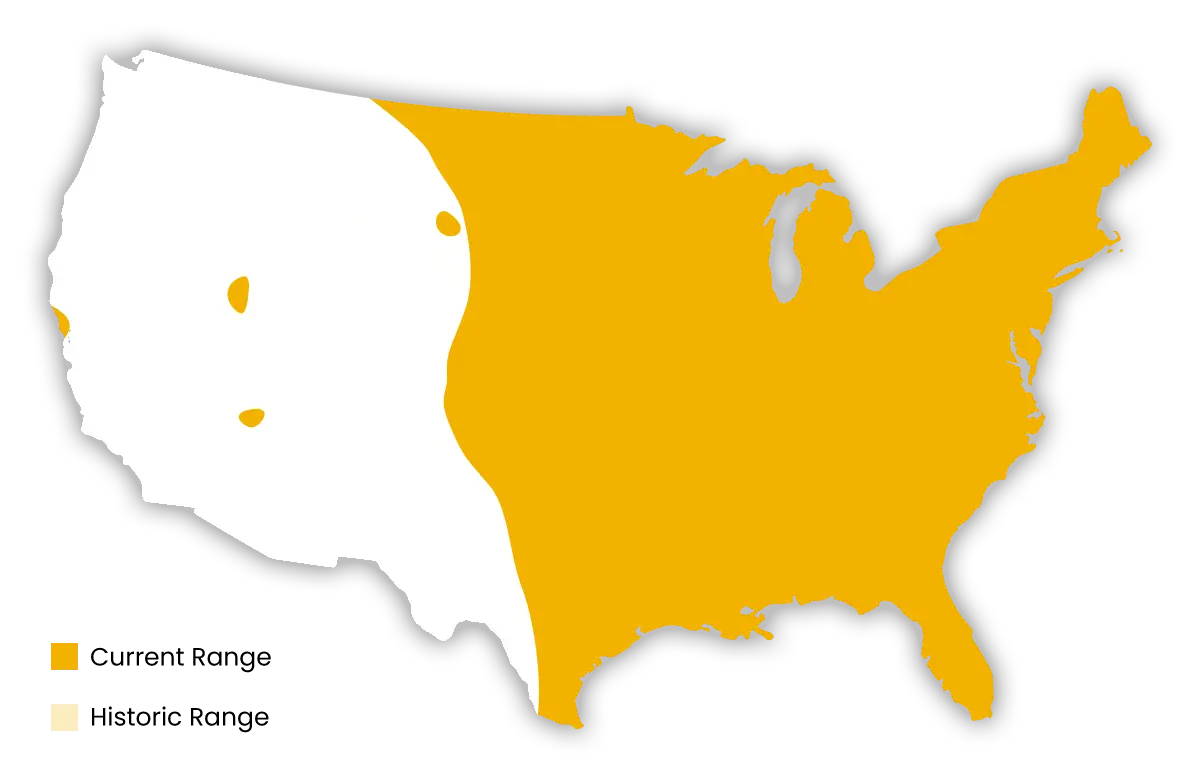
Male and female Broad winged hawks preform a courtship dance in the Spring and after they get together, they build a nest of twigs and branches.
When they migrate, their groups can grow up to 10,000 hawks.
The oldest Broad-winged Hawk on record was a male and was recorded at just over 18 years old.