Class: Mammalia Order: Carnivora Family: Felidae Genus: Lynx Species: rufus
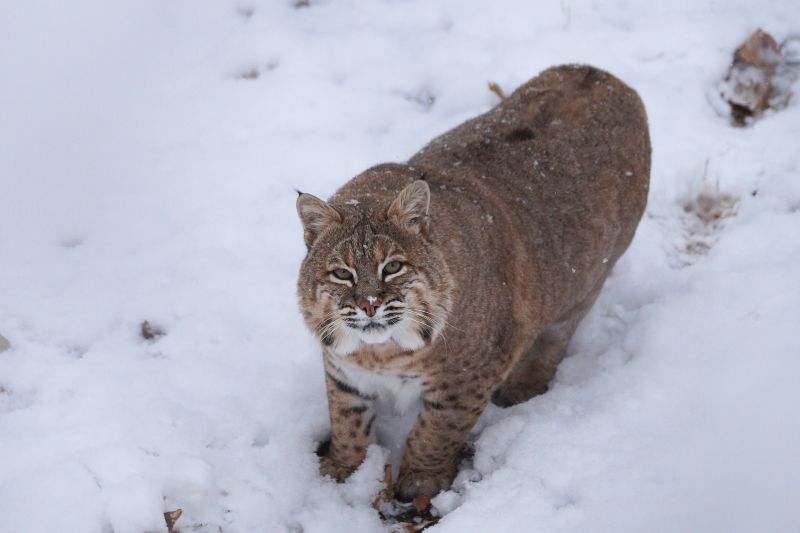
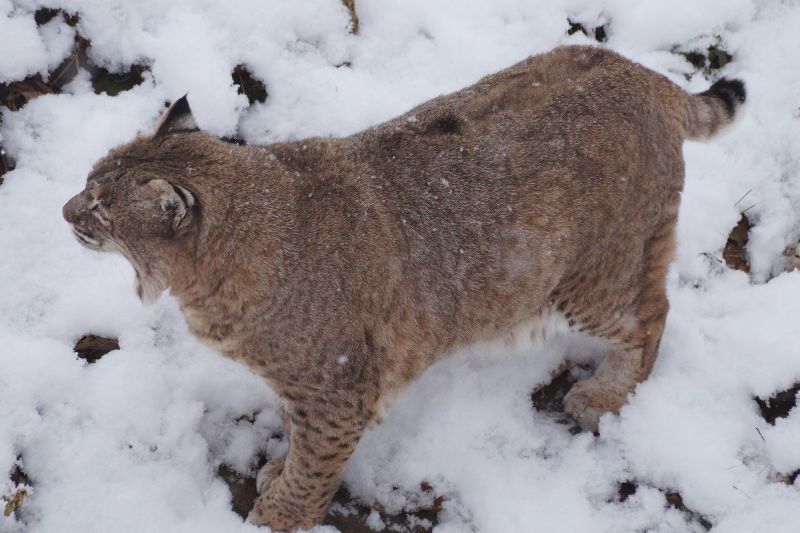
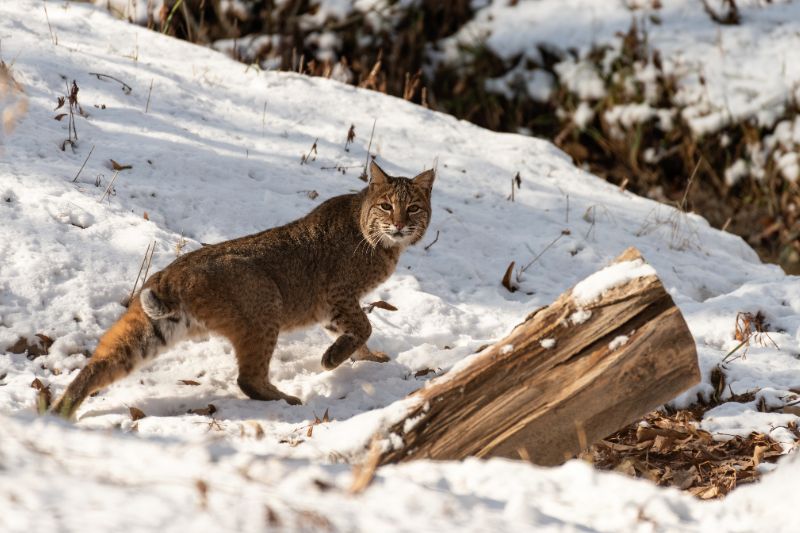
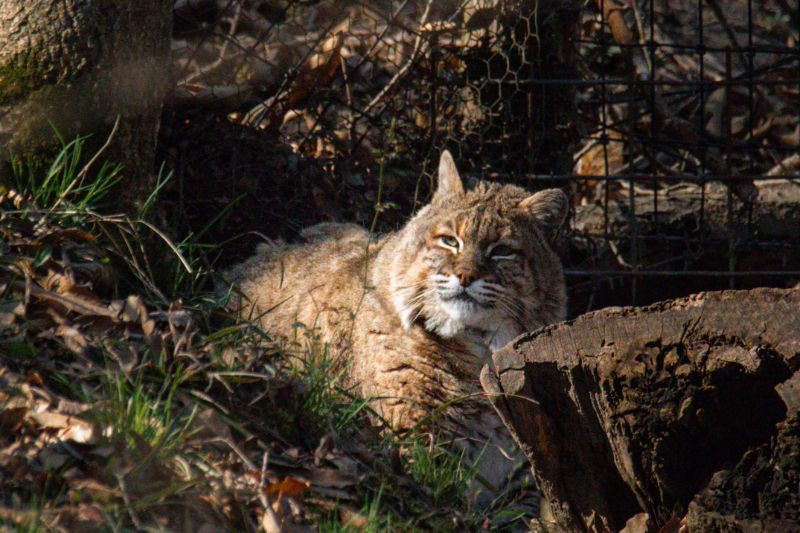
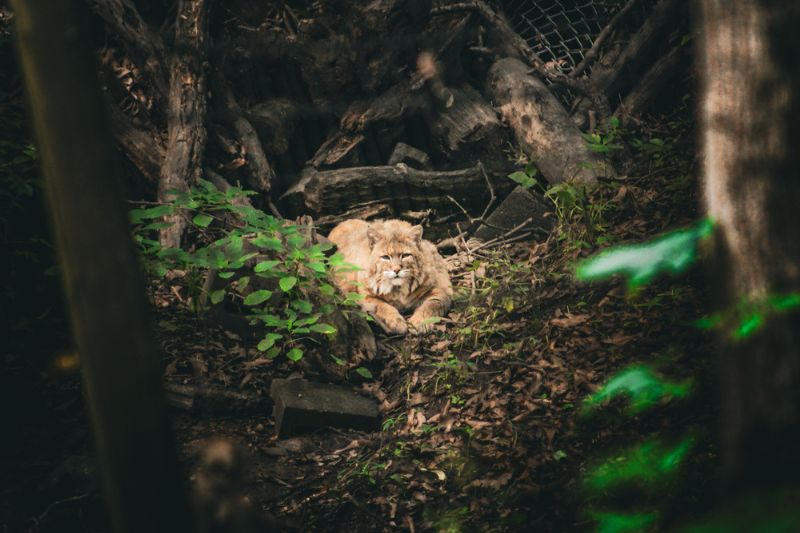
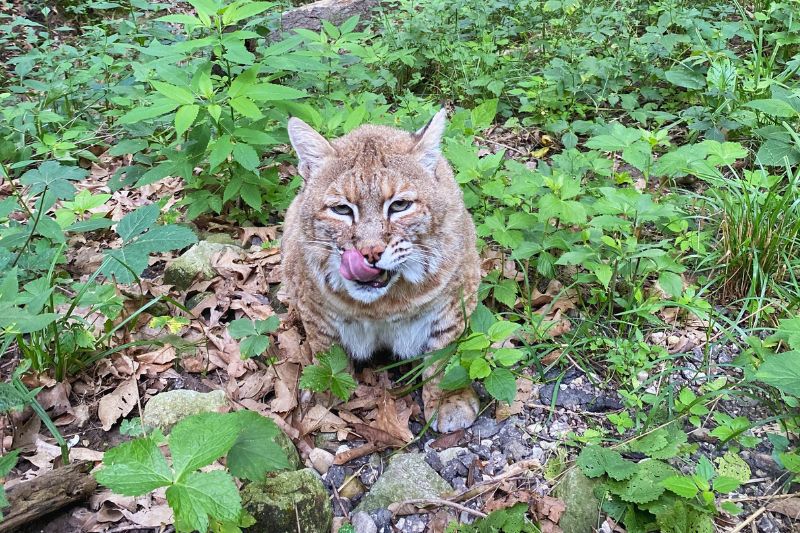
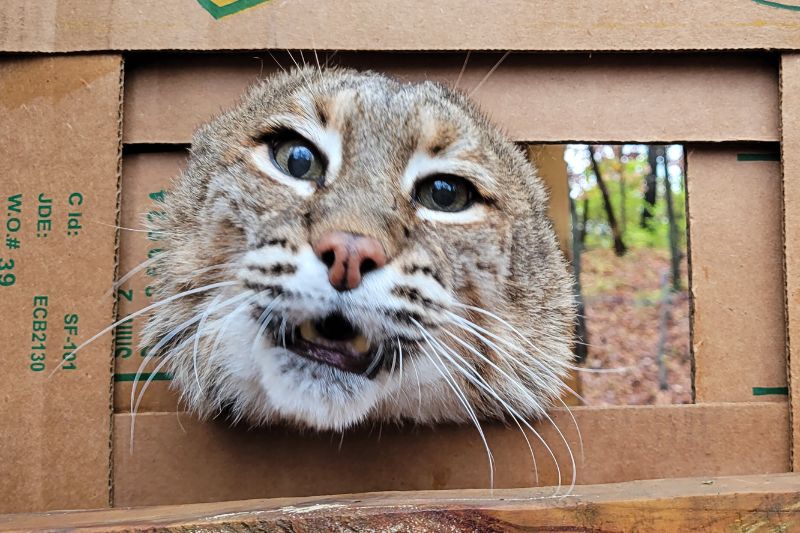
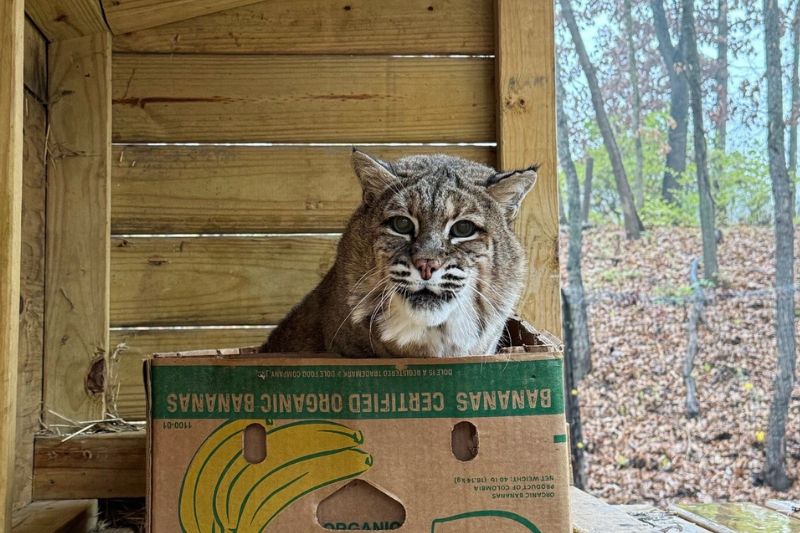
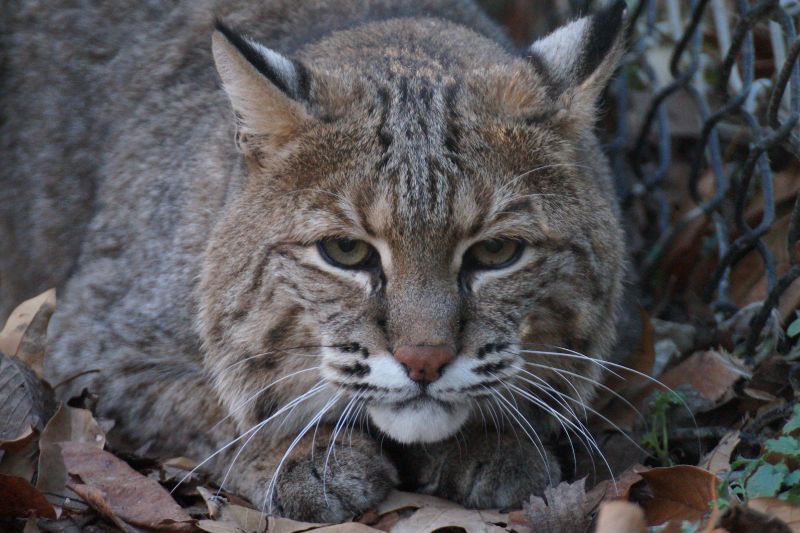
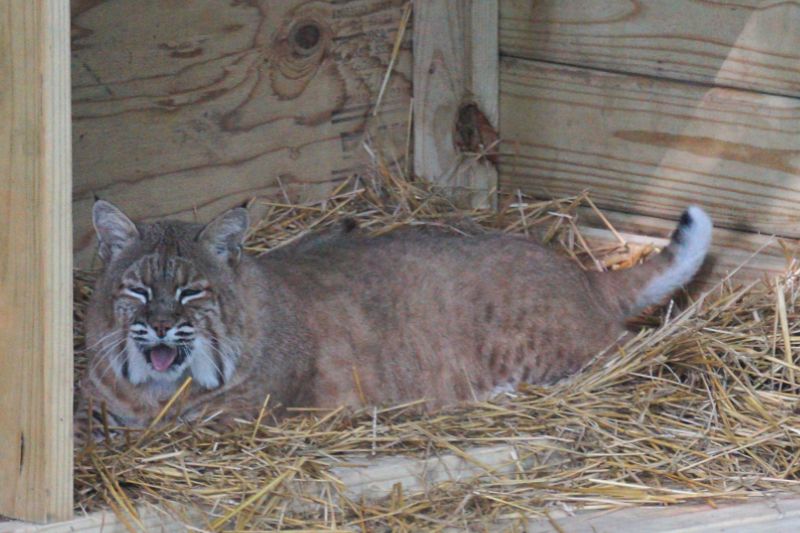
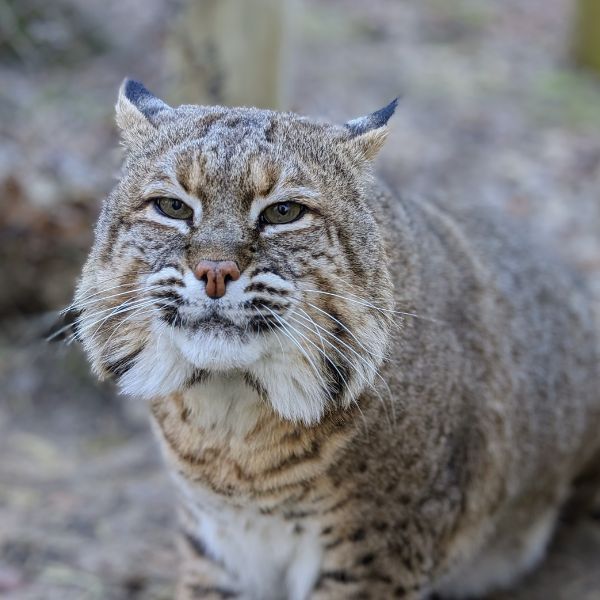
Bobcats, which may only be slightly larger than a house cat, have short "bobbed" tails, facial ruffs, tuft ears and are highly adaptable. Their black spotted, brown coat provides great camouflage and allows them to blend in with the surrounding environment. They are active year-round and are crepuscular, meaning they hunt normally at dusk and dawn. These solitary cats will travel inside their own territory, stopping to investigate signs of prey, listening for sounds and watching for movement. They zig-zag from place to place looking for prey and moves on if nothing is available.

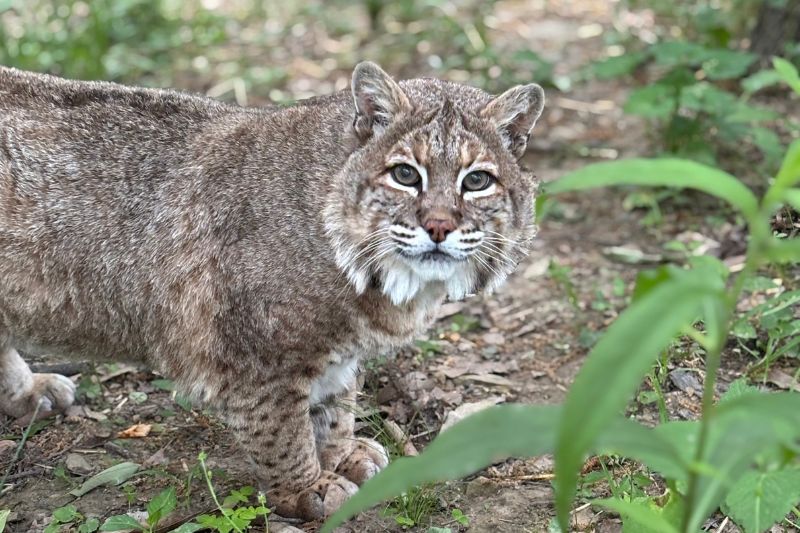
Bobcats make dens in protected thickets, hollow trees, or rock caves, depending on what their territory offers. Territories for females may cover 10 square miles, while male territories may cover more than 30 square miles. Male territories may include several female territories. Territories of both sexes may overlap with each other, but it rarely causes conflict.
In the wild, bobcats mostly eat rabbits and hares, but will also consume rodents, snakes, insects, fish, birds, carrion, amphibians and skunks. In captivity, they will generally eat what is called a feline diet or a raw meat diet.

A bobcat seldom tracks its prey, so it depends more on its keen eyesight and hearing than its sense of smell. Its sense of hearing is very sensitive, and its sense of sight is much better than many of its carnivore counterparts. When it spots a potential meal, it patiently stalks as close as it dares, then pounces on it. If the prey escapes, a bobcat will not pursue it for more than a few bounds. To a bobcat, success or failure depends on the initial attack.
On the backs of their ears are white spots, which act as part of the bobcat’s own defense against predators. Since a predator prefers to attack a prey from behind, these “eye spots” confuse and usually deter a potential predator.
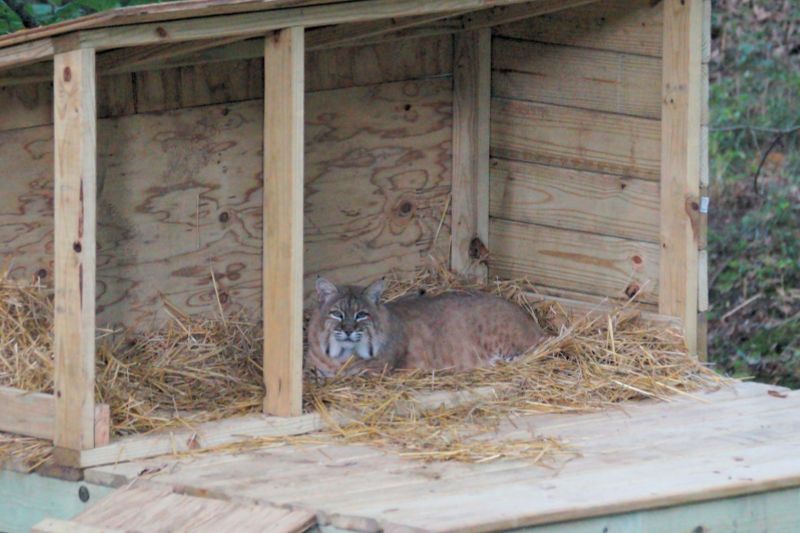
Bobcats are capable swimmers and can run up to 30 miles per hour. They are excellent climbers and often take refuge in trees. At Wildlife Prairie Park, the bobcats spend much of their time on the elevated platform inside their habitat.
Bobcats are often mistaken for other lynx species - the Canada lynx, Iberian lynx and Eurasian lynx. Bobcats are smaller and live in warmer climates than the lynx. They also have bare footpads, shorter legs, and longer tails, which are not as well suited for deep snow and extremely frigid temperatures.