Class: Mammalia Order: Artiodactyla Family: Bovidae Genus: Bison Species: bison
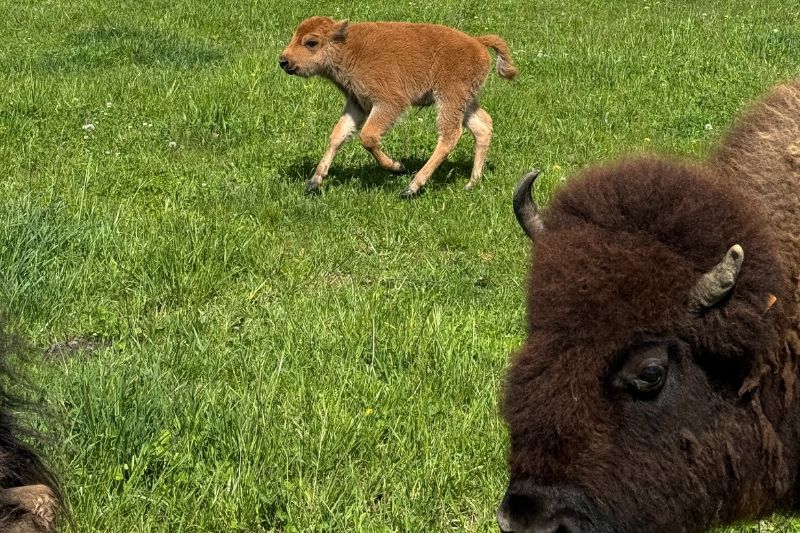
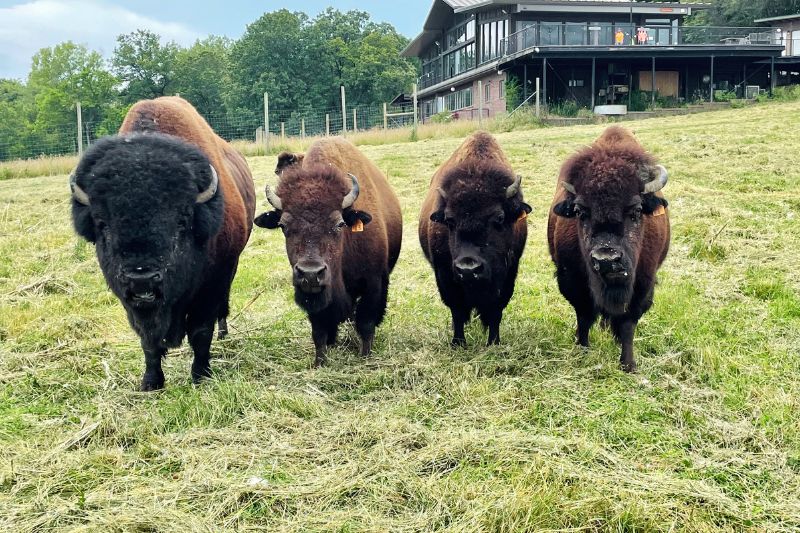
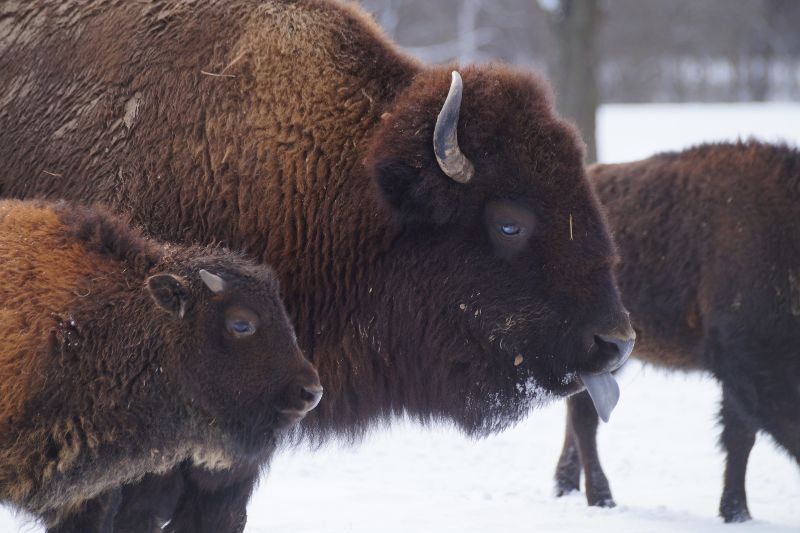
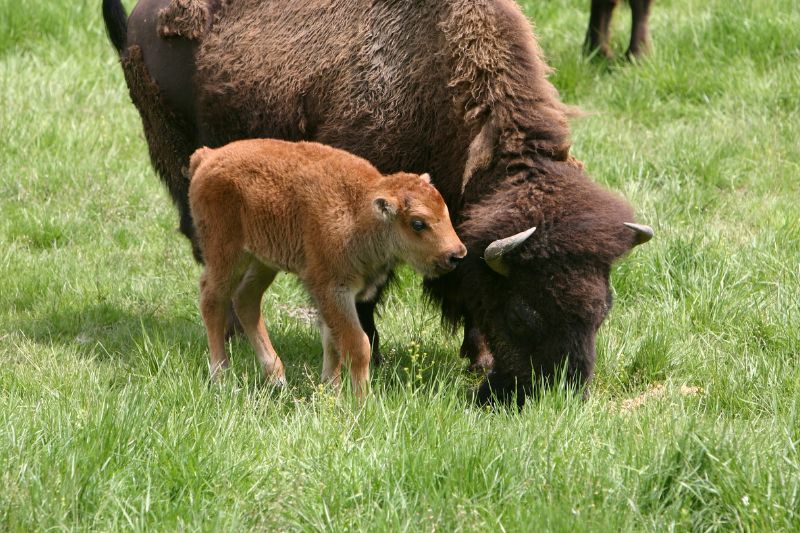
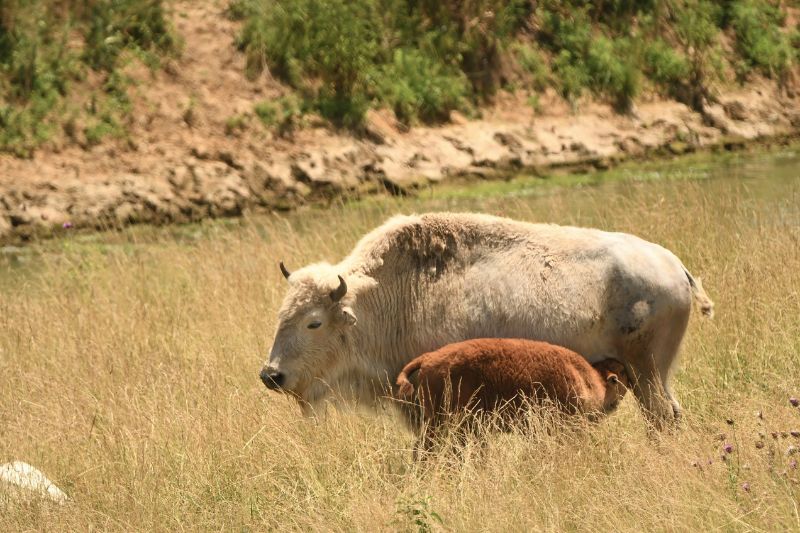
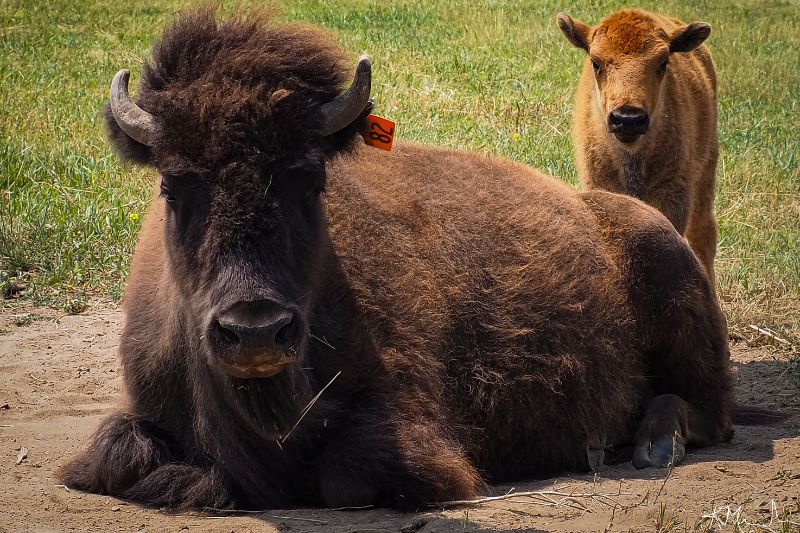
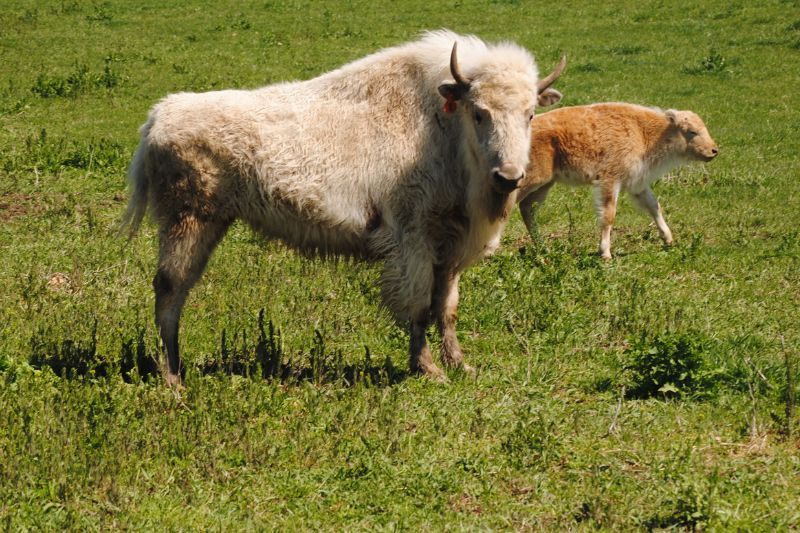
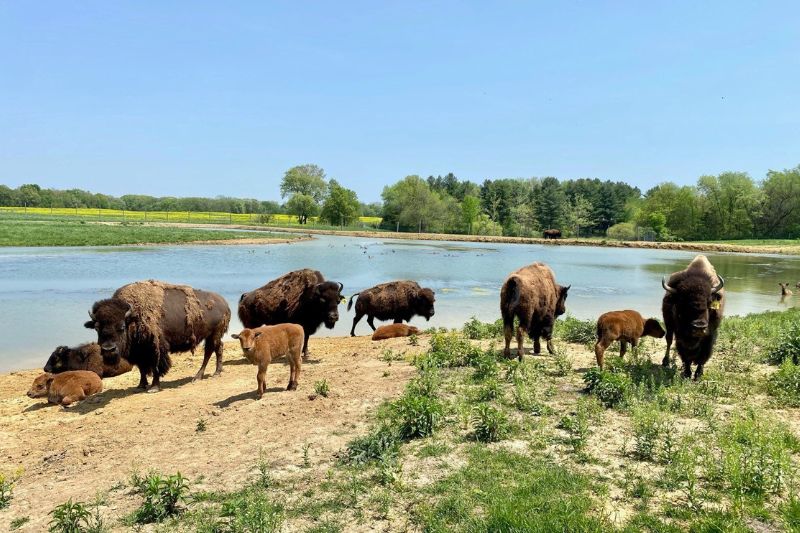
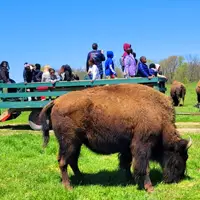
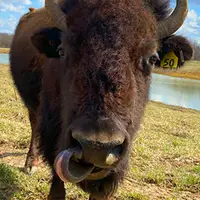
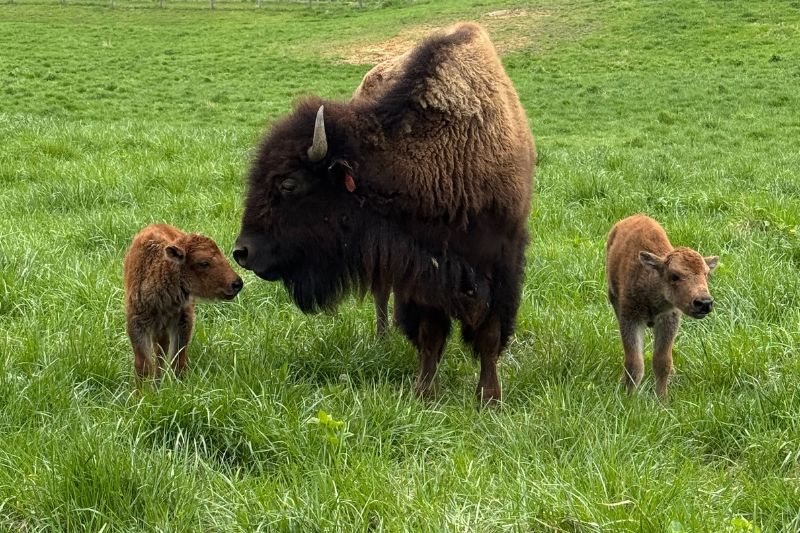
Bison are the largest land animal in North American and are considered the National Mammal of the United States. Both male (bull) and female (cow) bison are very similar in appearance with a hump over their front shoulders, hollow horns, and thick shaggy hair on their head and front parts of the bison. Bulls are considerably larger than their female counterparts at around 5.5 to 6.5 feet (1.9 meters) high at the hump and nine to 12.5 feet (2.7 to 3.8 meters) in length. Cows range from 7 to 10 feet in length (2.2 to 3.2 meters) and 5 feet high at the hump (1.5 meters). Bison can weigh 1,800 to 2,400 pounds (816 to 1,088 kilograms).


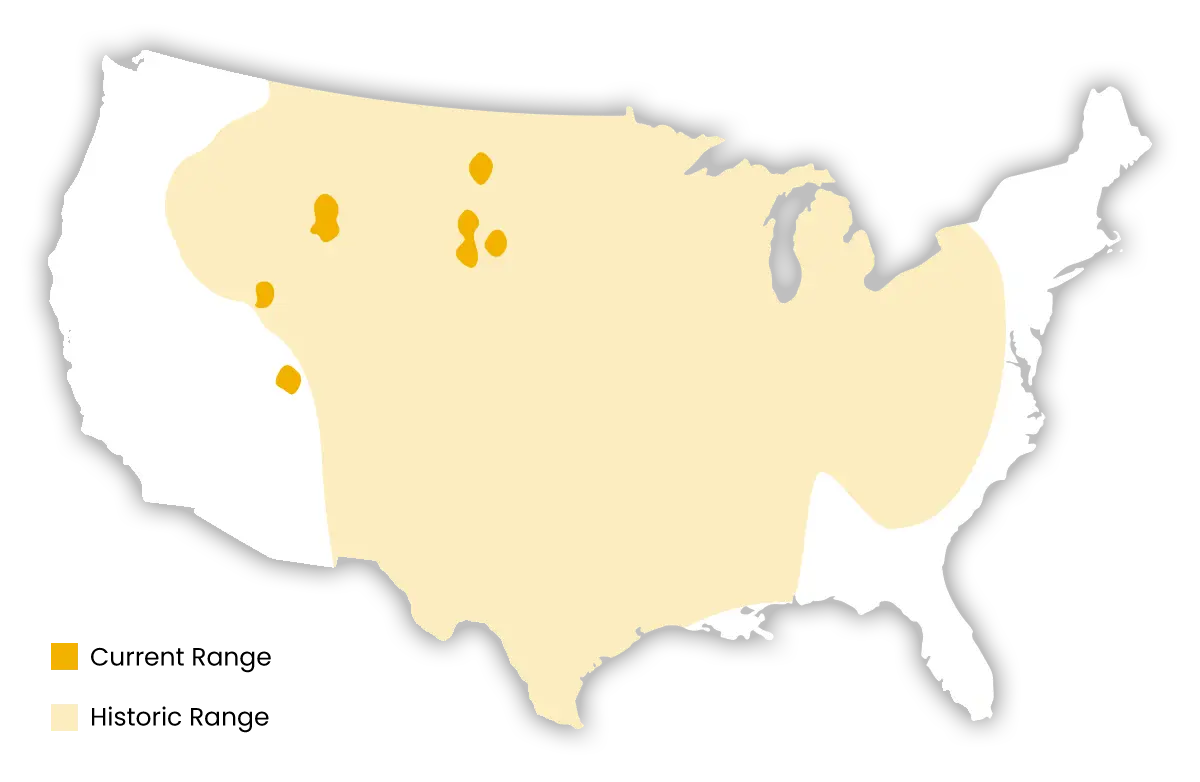
The bison habitat before human intervention included most of North America, including central Canada and most of the interior United States. The only places that did not have bison were the coastal and desert areas. However, today bison are only wild in national parks, state parks, and reserves.
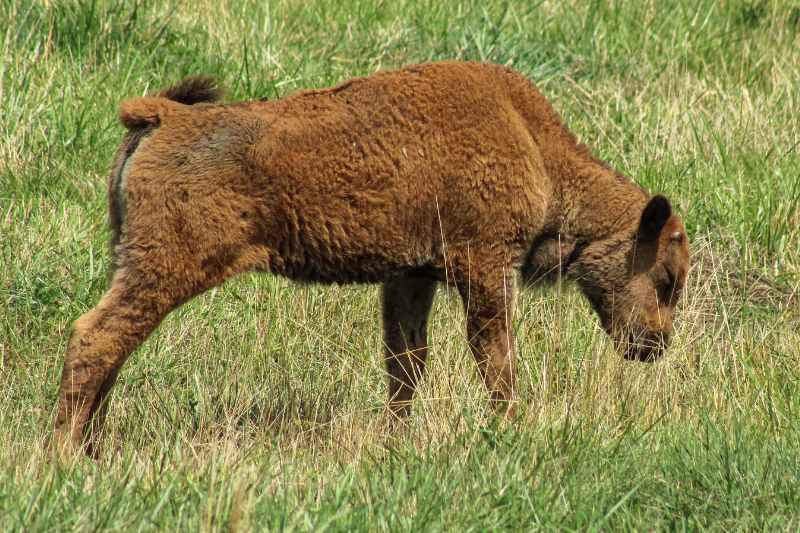
Bison are herbivores. Diet in the wild consists of grasses, sedges, and forbs. In captivity, their diet will still contain grass but may also be supplemented with hay and a grain mixture. Bison are constantly on the move and may even move while they eat.
Bison are often call buffalo by mistake, but they are not closely related to the buffalo species of African and Asia.
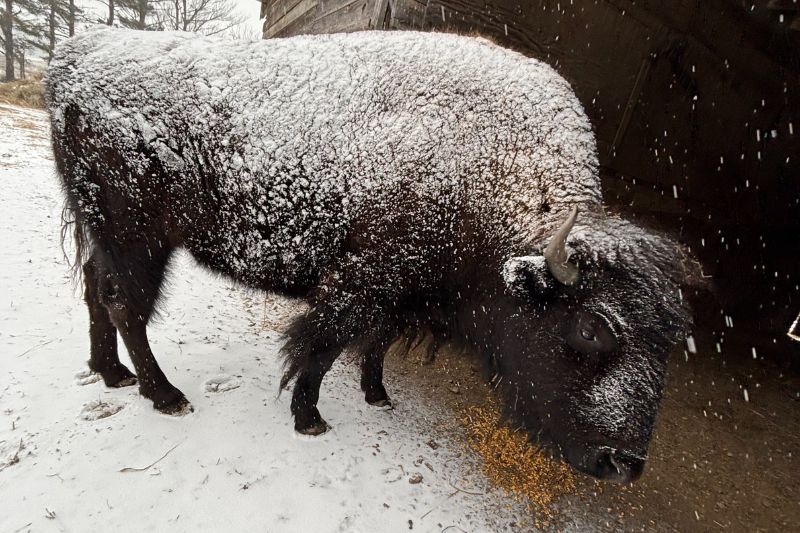
Bison have a good sense of smell, and it is suggested that they do not have very keen eyesight. They can smell and locate water from great distances and locate grass even under a thick blanket of snow. Bison have earned a well-deserved reputation for surviving even the harshest of plains winters.
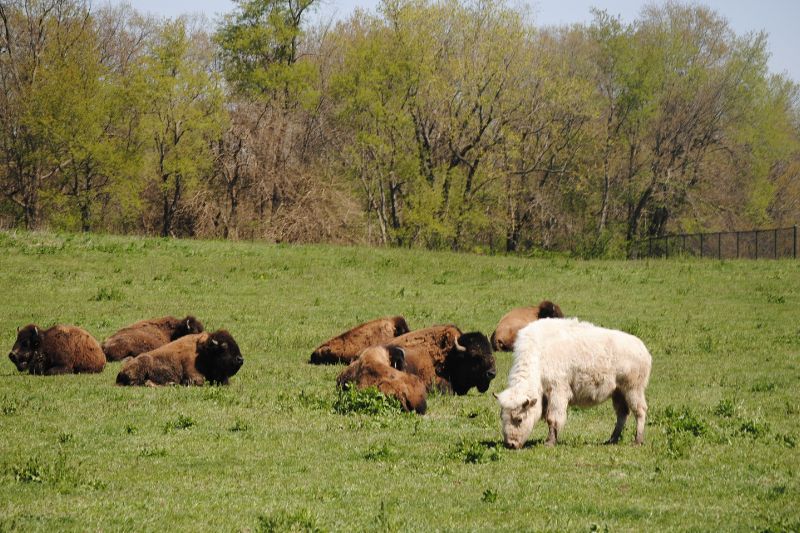
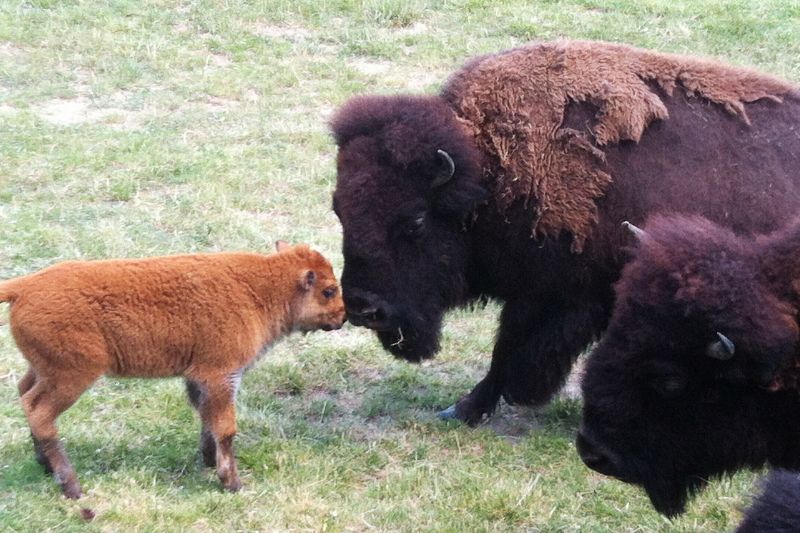
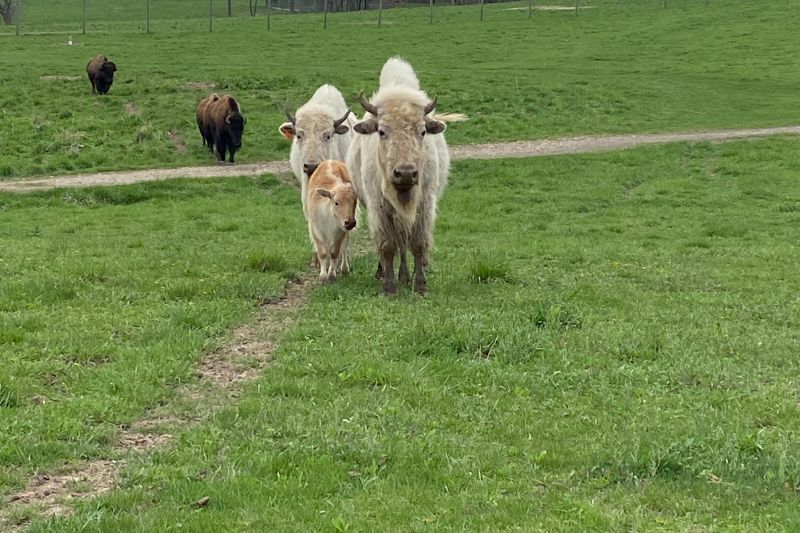
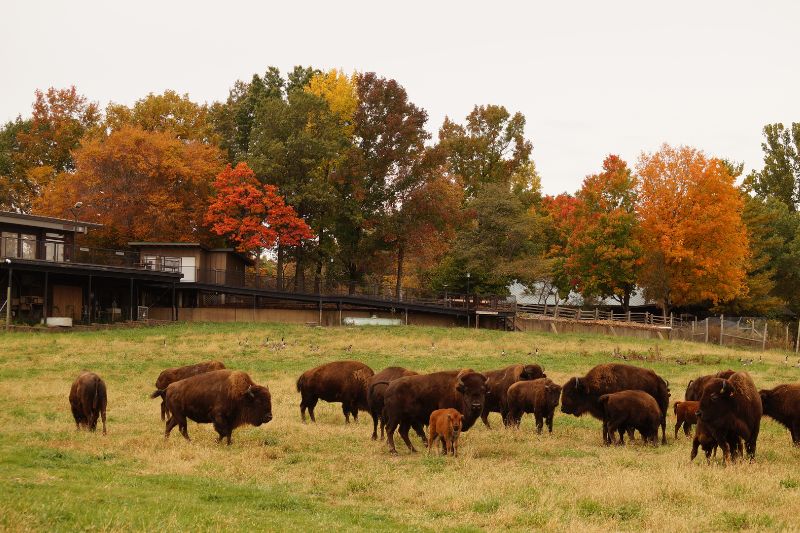
Bison are social animals, and before the inundation of settlers to the Midwest, were found in herds sometimes exceeding 200. With such a large herd size, communication is very important. A constant variety of sounds communicates many different signals that keep the herd alert and informed of their surroundings.
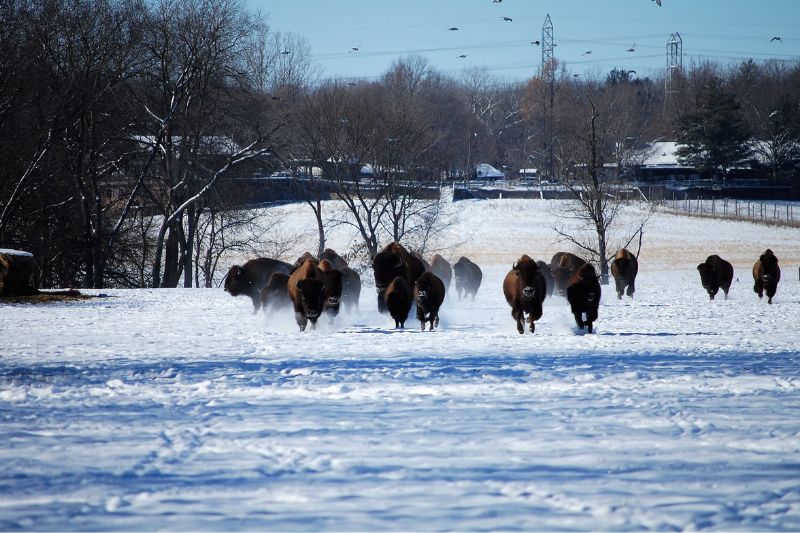
Though their size and shoulder hump may make them appear clumsy, they are fast runners and can reach up to 35mph, are agile, have great endurance, can jump up to 6 feet high and are good swimmers. Their large shoulder hump is actually a powerful muscle, enabling their speed and head-swinging ability that acts as a snowplow to clear snow in the winter to find vegetation.