Class: Aves Order: Strigiformes Family: Strigidae Genus: Strix Species: varia
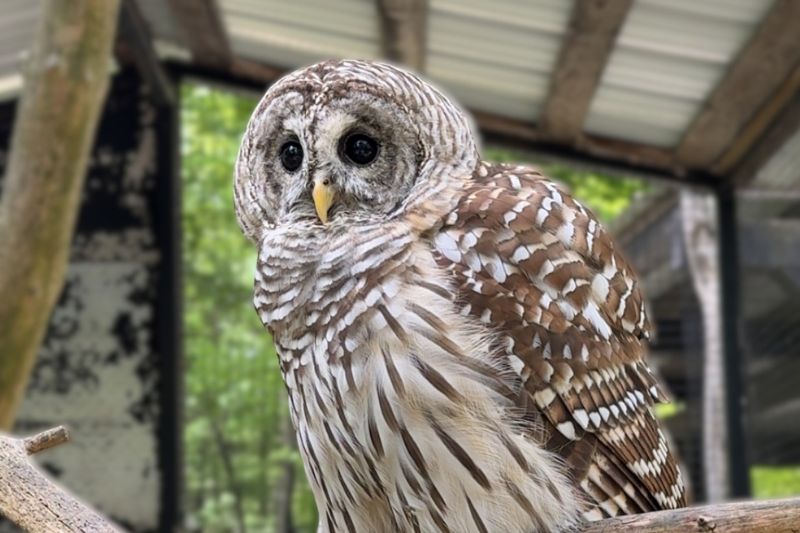
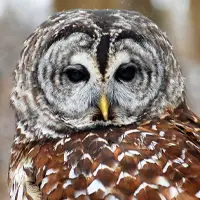
One of the most common owls of the deep woods, the barred owl is often seen at dawn and dusk hunting for prey. With large brown eyes, this genus (Strix) is set apart from other owls in North America. With the exception of the barn owl, all other species have yellow eyes.
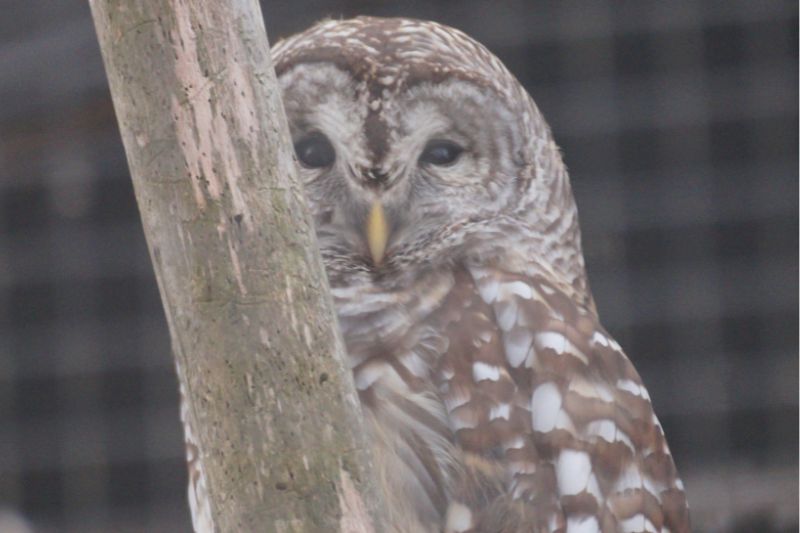
The common name of this bird reflects the markings on the chest. Dark brown bars on a gray background are an easy identifying characteristic. The large eye discs are also marked with dark brown bars and are outlined by dark brown rows of feathers.
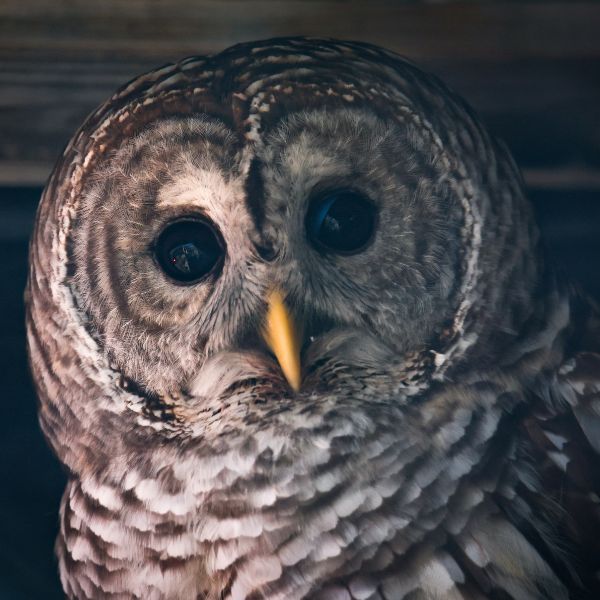
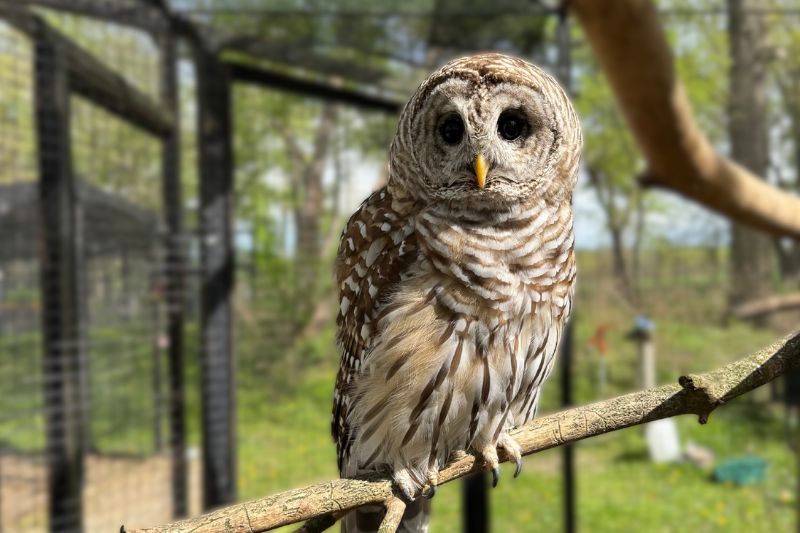
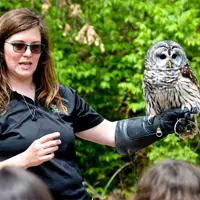
Blathers came to Wildlife Prairie Park from From Fox Valley Wildlife Center in Elburn, Illinois. Because of the trauma to Blather's right eye, she is not releasable. We know that Blathers is a female because she laid an infertile egg while living at the Park!
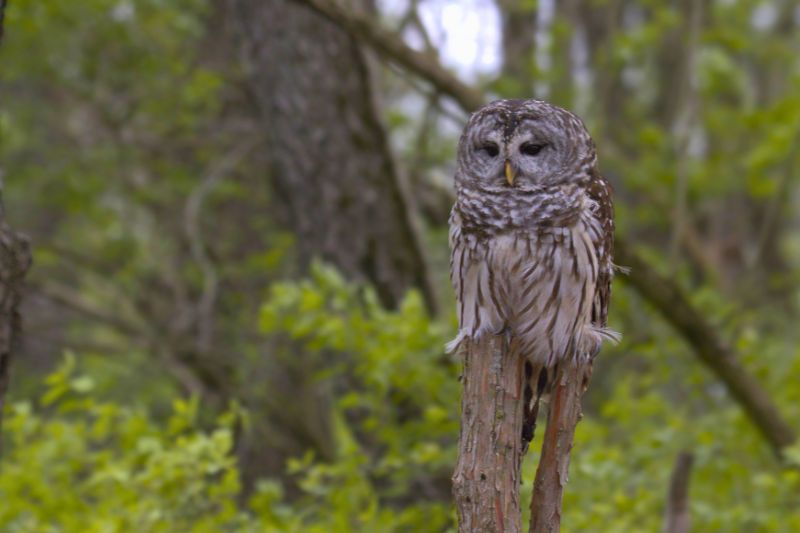
Typical of other owl species, barred owls rarely build their own nests. They will commonly occupy hollow tree cavities, old hawk nests, squirrel nests, and occasionally man-made owl boxes. If a barred owl does construct its own nest, it is often poorly constructed and flimsy. Any eggs laid in the nest may not be secured and may fall to the ground.
In the wild, barred owls will eat mostly rodents, birds, frogs, crayfish, and small rabbits, but in captivity they will generally consume mice, rats, chicken, and quail.
Help Feed Our Barred Owl
The barred owl call is easily recognized as eight accented hoots ending in “oo-aw” often described as sounding like “Who cooks for you...Who cooks for you all.”
Although mostly active during the night, the barred owl is known to call and hunt during the day.
Fossils of Barred Owls, at least 11,000 years old, have been dug up in Florida, Tennessee, and Ontario.
The oldest recorded Barred Owl was at least 26 years, 7 months old. It was banded in North Carolina in 1993 and caught due to injury in 2019.