Class: Aves Order: Accipitriformes Family: Accipitridae Genus: Haliaeetus Species: leucocephalus
The Bald eagle gets its common name from the all-white head of the adult bird, which reminded settlers of the white wigs or “baldes” worn by British men at that time. It was designated as our national bird in 1782, instead of the Wild Turkey proposed by Benjamin Franklin.
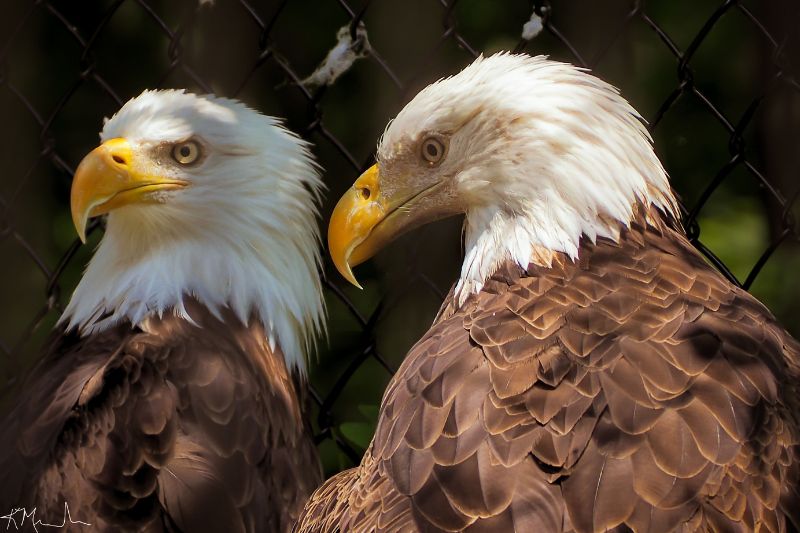
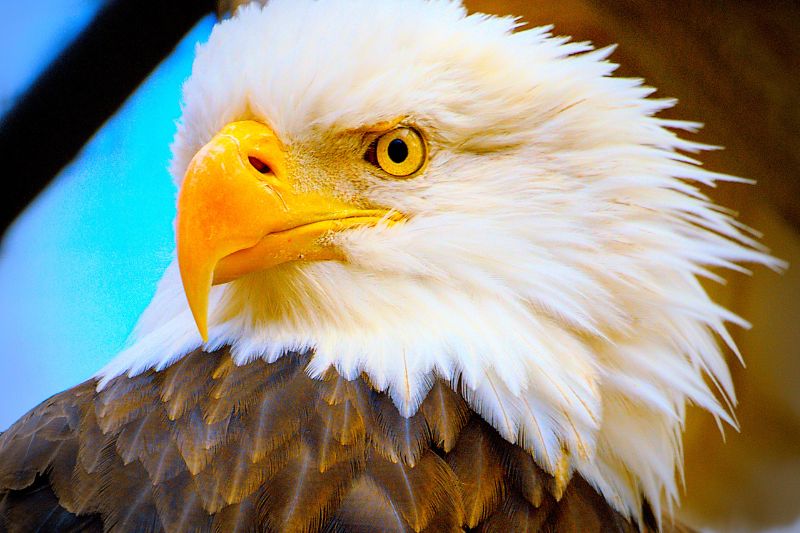
Their pure white heads and white tail feathers easily distinguish the adults from all other birds. The remainder of the body is covered in dark brown, nearly black feathers. Both males and females exhibit the same color pattern. Immature bald eagles are dark brown with small white patches on the body and under the wings. This coloration gradually changes to the full dark body with white head and tail feathers as the bird becomes sexually mature. The beak, feet and eyes also change color as they reach maturity. The beak turns from brown to bright yellow, the feet change from lemon-yellow to bright yellow, and the eyes change to bright yellow as well.
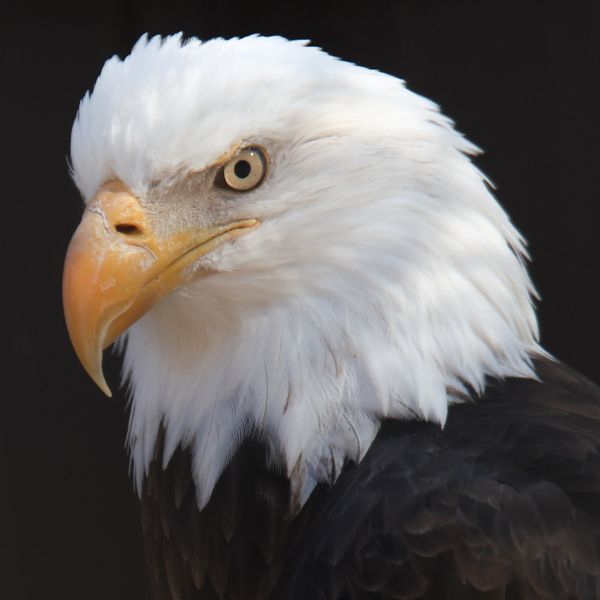
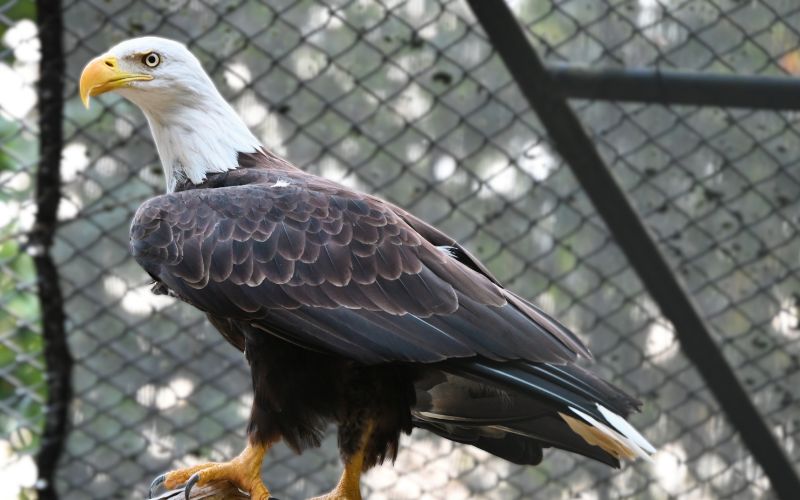
Tokeca came to Wildlife Prairie Park in 2016 from World Bird Sanctuary. Since she was injured in the wild as an adult with white feathers on her head and tail, we do not know her age, but she is estimated to be 15+ years old. Even though she is missing her right eye, she flies fairly well in her habitat. However, raptors rely on both of their eyes for adequate vision, so she would be unable to hunt or flight long distances in the wild.
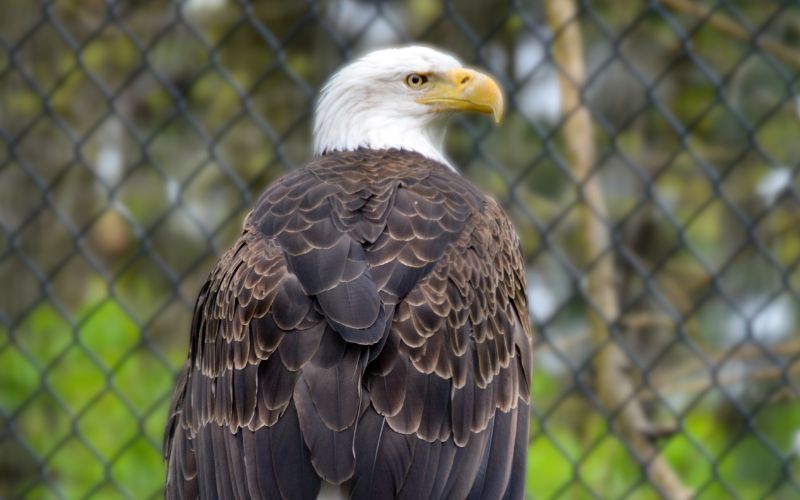
Nova can to the Park from World Bird Sanctuary after being admitted (in 2017) with a wing droop that is permanent. When brought to the sanctuary, her head was almost white which indicated between 4-5 years of age. Nova was evaluated at World Bird Sanctuary, but since she cannot fly long distances, she was deemed nonreleasable.
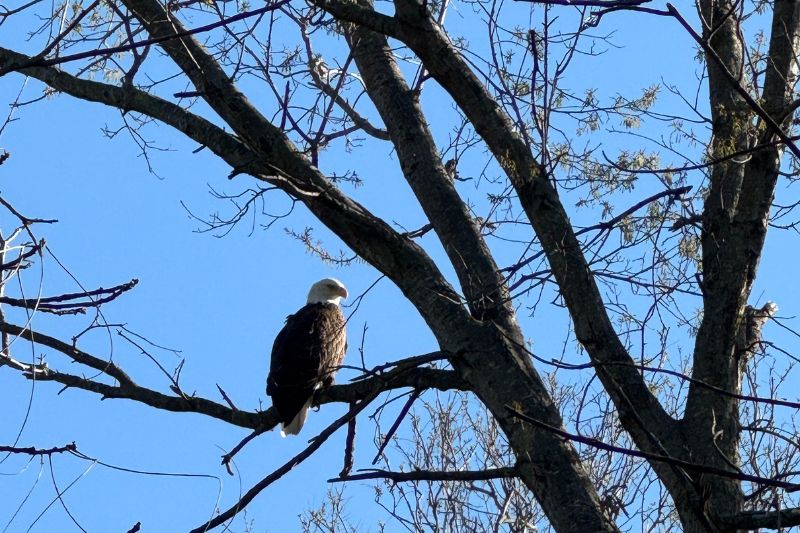
Bald eagles are found throughout North America. In Illinois, they are seen primarily near large rivers and reservoirs. Some birds spend the winter at waterfowl refuges in Southern Illinois. Wintering eagles use large trees on the riverbanks for daytime perches and generally prefer sheltered valleys and ravines as night roosts. Eagles will roost communally during winter months, in contrast with their more territorial behavior during breeding season.
Nests are built of sticks, mosses, grasses, and feathers in large trees near a major body of water. The nest is often reused and enlarged year after year by the same pair of birds. Average bald eagle nests measure 6-8 ft across and 4-6 ft deep. The largest eagle nest ever recorded was 10 feet across and 20 feet tall. The heaviest bald eagle nest weighed 2 tons. Smaller birds often use the lower layers of these large nests for secluded nesting areas of their own.
Diet in the wild consists of fish, waterfowl, muskrats, rodents, garbage and carrion. While in captivity, their diet is generally fish and rodents.
Help Feed Our Bald Eagles
Eagles have 4 to 8 times better vision than humans.
An attempt of an eagle to steal another eagle’s food is called pirating. They will also steal from other birds as well such as osprey and gulls. They are big kleptoparasites.
In the wild, bald eagles can live up to 30 years. In captivity, they can live up to 45 years.
Bald Eagles are monogamous and mate for life with both parents sharing duties while looking after their offspring.