Class: Mammalia Order: Carnivora Family: Mustelidae Genus: Neovison Species: vison
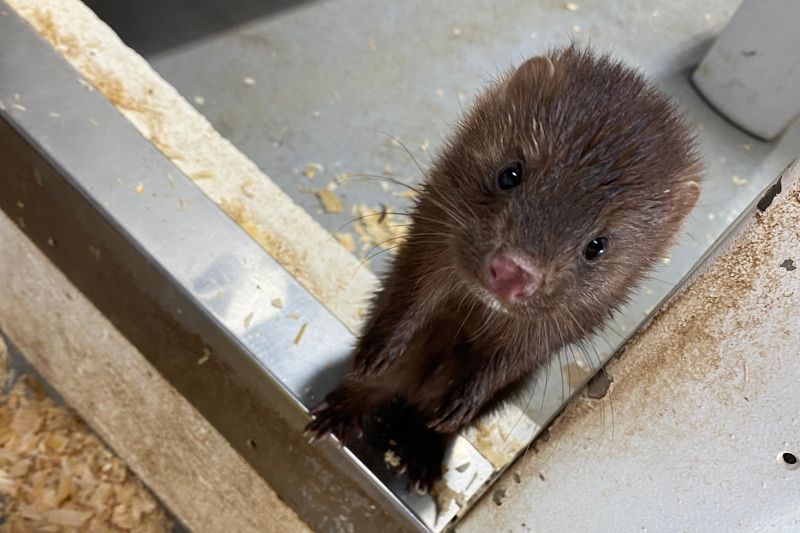
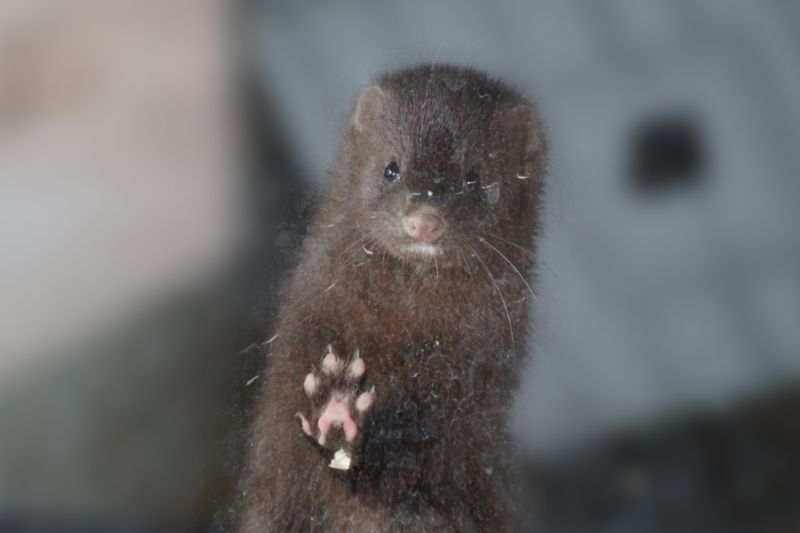
The American mink is a small, semi-aquatic carnivorous mammal belonging to the family Mustelidae. Native to North America, this species has been widely introduced to Europe, Asia, and South America. It is characterized by its sleek, elongated body, short legs, and partially webbed feet, which make it an excellent swimmer. Its fur is dense and glossy that is typically dark brown with occasional white patches. In the wild, American mink are solitary and territorial, thriving near aquatic environments.
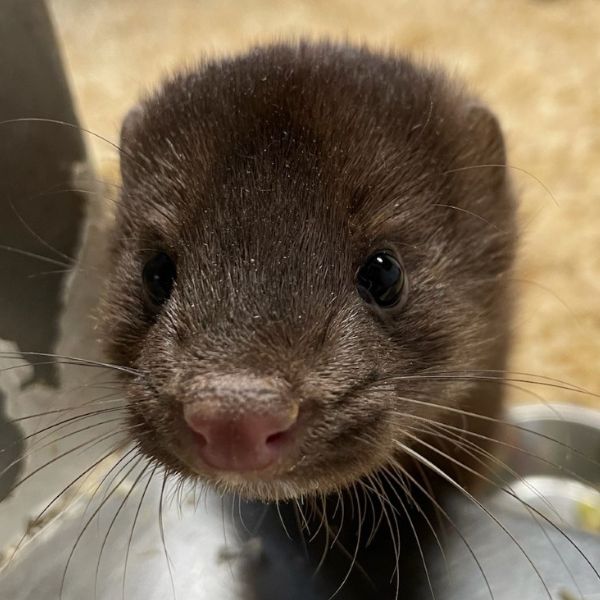
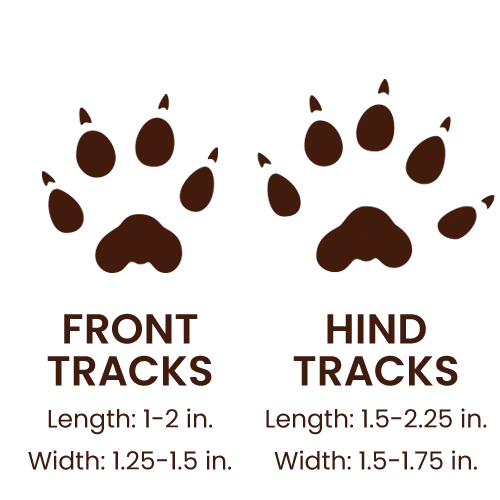
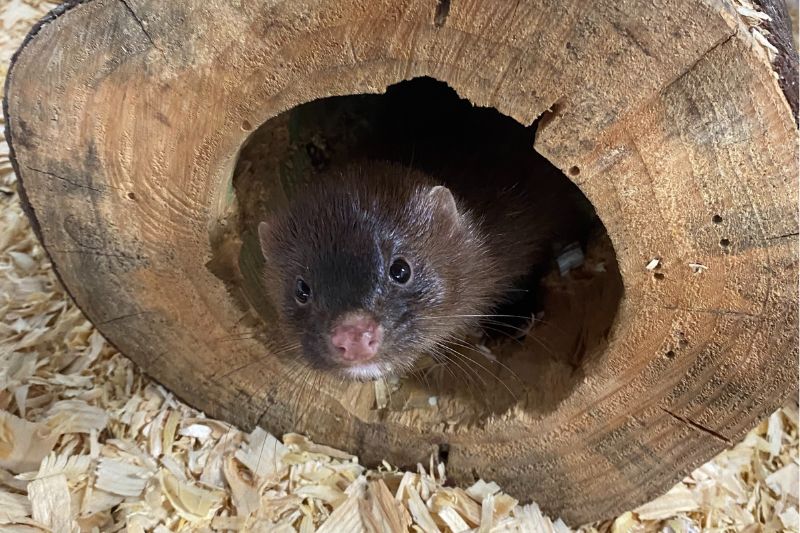
American mink inhabit areas close to water, including streams, rivers, lakes, marshes, and coastal wetlands. They prefer environments with dense vegetation or a rocky cover for shelter and hunting. Their semi-aquatic nature allows them to exploit both terrestrial and aquatic ecosystems, and they often use abandoned burrows or natural cavities near water as dens.
Mink are strict carnivores with a diverse diet. They primarily consume fish, frogs, salamanders, crayfish, muskrats, mice, and voles. They also prey on aquatic birds and their eggs, and they will occasionally hunt terrestrial animals such as rabbits. Their opportunistic feeding behavior includes caching surplus food in dens for later use. In captivity, their diet will consist of raw meat and fish, a small amount of roughage, as well as a high-protein, low-carbohydrate commercial mink kibble.
Help Feed Our Mink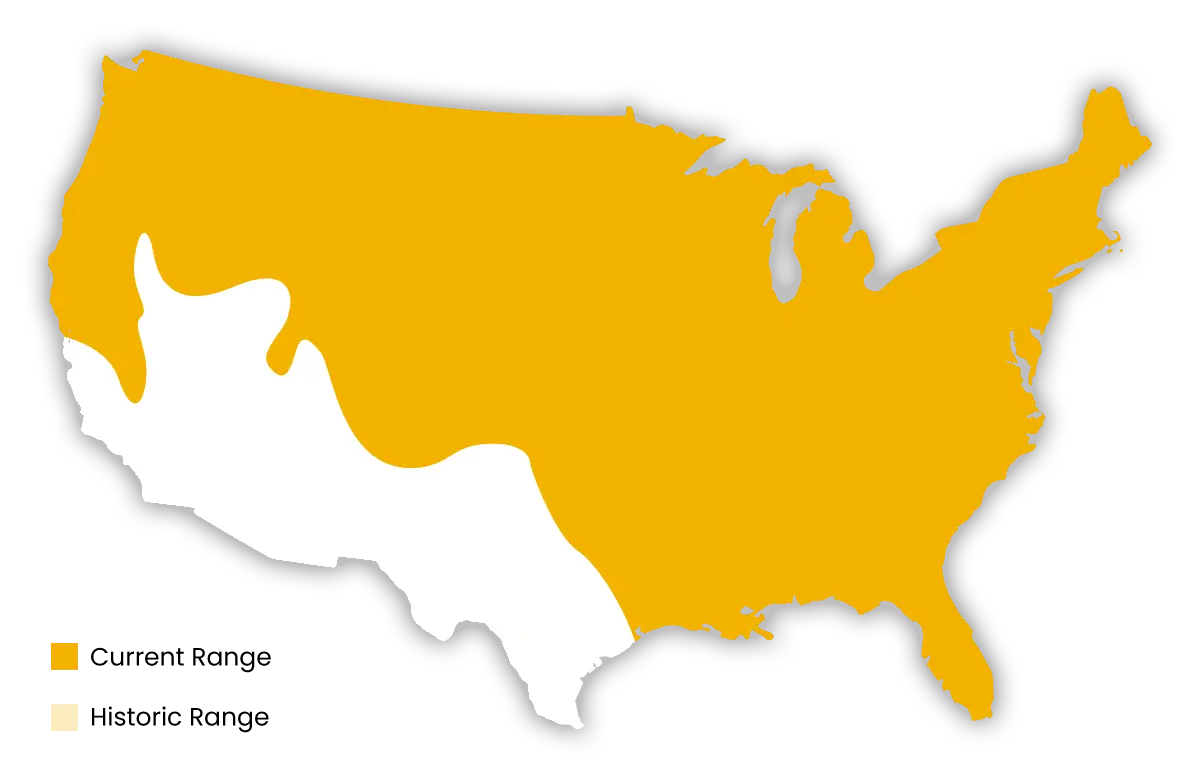
American mink are highly adapted to aquatic life. Their partially webbed feet and streamlined bodies allow them to swim efficiently and dive underwater for up to 30 meters. They can remain submerged for about 1–2 minutes while hunting fish or escaping predators. This ability makes them formidable hunters in both aquatic and terrestrial environments.
Female mink exhibit a fascinating reproductive strategy called delayed implantation. After mating, the fertilized egg does not immediately implant in the uterus. Instead, it remains dormant for several weeks, allowing the female to time the birth for optimal environmental conditions. This results in a variable gestation period ranging from 39 to 76 days.
During the COVID-19 pandemic, mink gained global attention as one of the few non-human species capable of contracting and transmitting the virus. Outbreaks in mink farms led to large-scale culling in several countries to prevent mutations and cross-species transmission, highlighting the complex relationship between wildlife, agriculture, and human health.