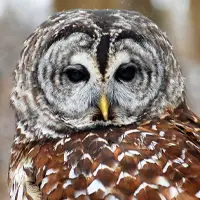
Class: Aves Order: Strigiformes Family: Tytonidae Genus: Tyto Species: furcata
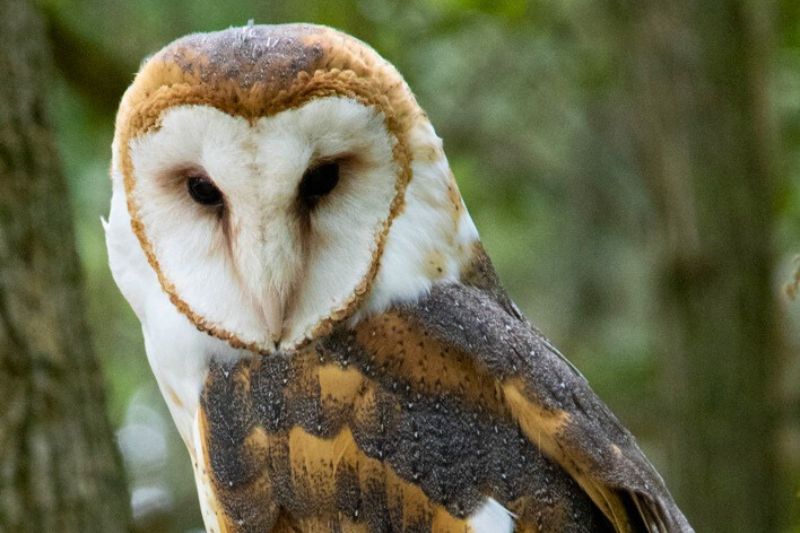
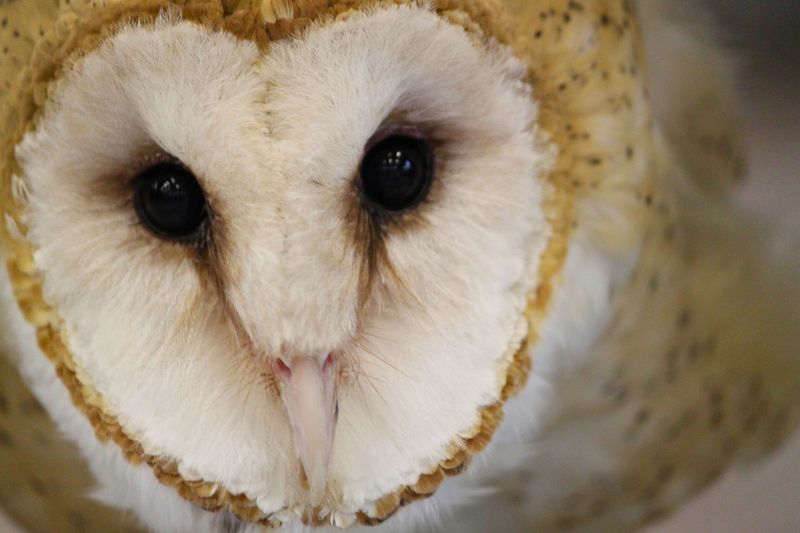
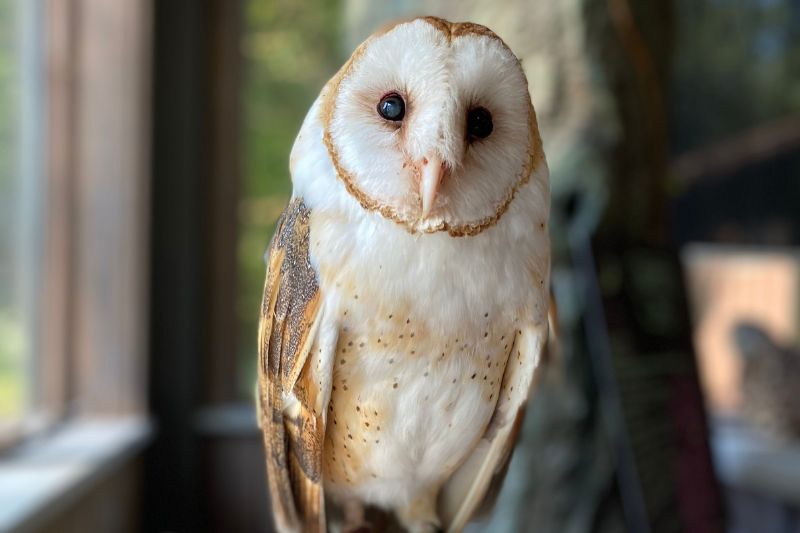
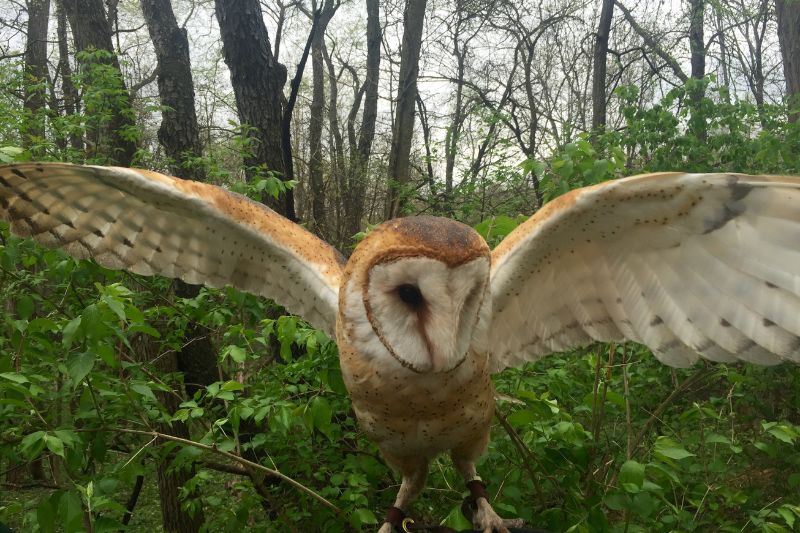
The Barn Owl is the only member of the family Tytonidae, or monkey faced owls. It is easily identified by its distinct heart-shaped, white facial disc. It also has dark eyes and lacks ear tufts. The body feathers are sandy brown, streaked with white and brown and with pale or white underparts.
Barn owls are exclusively nocturnal and begin hunting usually one hour after sunset. Based on scientific studies, the barn owl is extremely accurate at locating prey by sound alone. They can locate a mouse by the sound of the mouse’s heartbeat alone.
Owls have very soft feathers that help to muffle sounds made during flight, which allow them to approach their prey virtually undetected. A barn owl captures its prey with strong feet and talons, and nips through the backbone with a sharp, hooked beak. The prey is then usually swallowed whole. Undigested material-like bones, claws, and teeth are regurgitated in the form of a pellet approximately 8 hours later.
Currently, Wildlife Prairie Park does not have a barn owl resident.
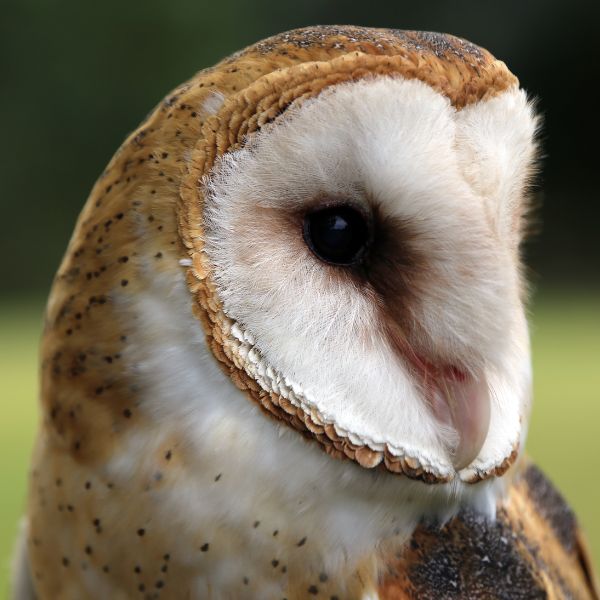
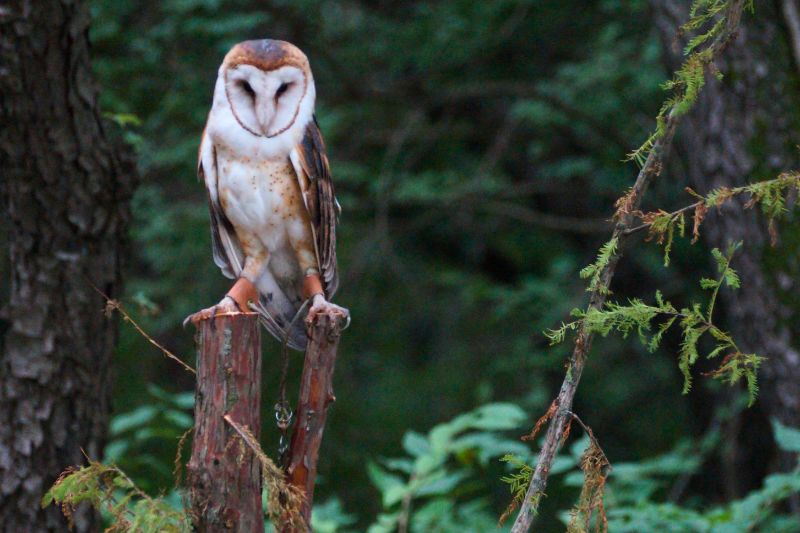
Barn owls are considered a cavity nester and live in open habitats, including grasslands, deserts, marshes, agricultural fields, strips of forest, suburbs and cities. They will take residence in tree hollows and human-made structures like nest boxes, barns, and many different types of rural buildings. They generally roost and nest about 3 meters off the ground especially since barn owls do not build a nest, so they look for an already existing concave surface in which to lay their eggs and feel safe.
Their diet in the wild consists of mice, voles, and shrews. While in captivity they are more prone to eat mice and rats.
Help Feed Our Barn Owl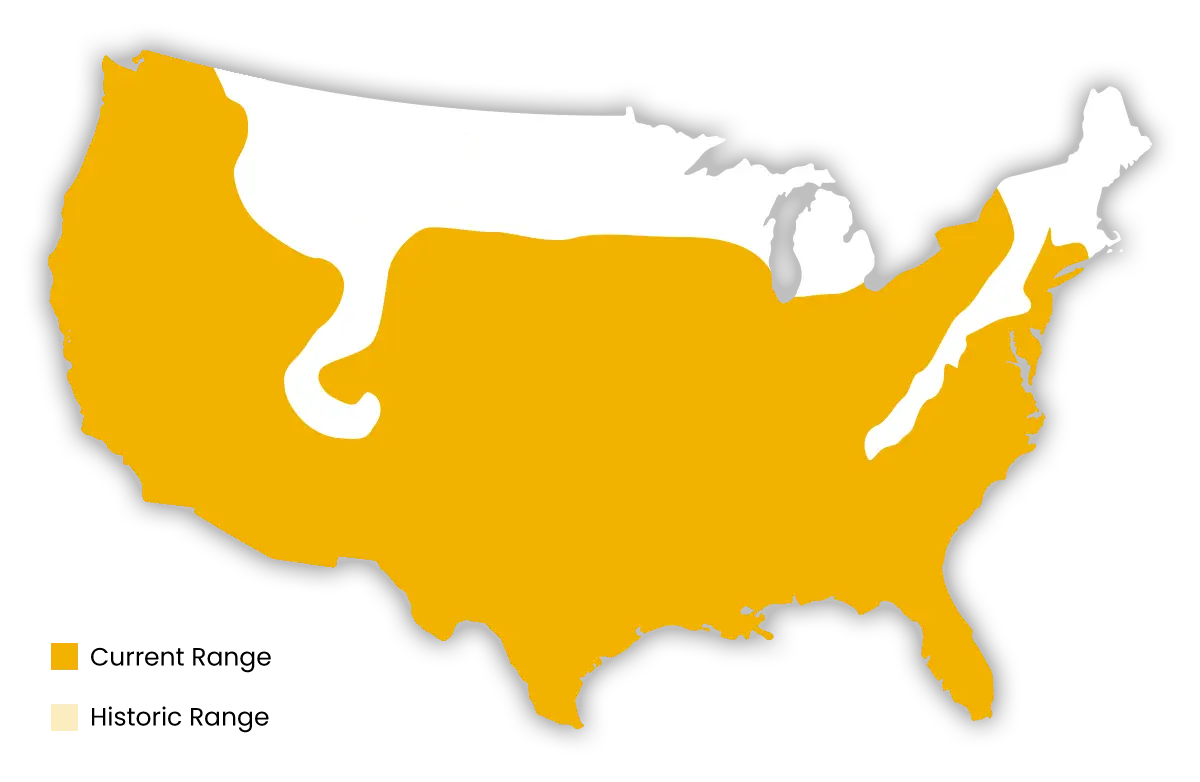
This is an owl that ‘doesn’t give a hoot’ but makes a soft chortling sound, a hiss when it feels threatened, and a loud scream to ‘freeze’ its prey in place when it’s hunting.
The Barn Owl is considered the oldest of all owls in the world. In fact, the oldest known species of Barn Owl is 25-20 million years old.
While very prominent across the world, the Barn Owl was once endangered here in Illinois and several other midwestern states. Because of conservation efforts, the barn owl population has increased, and they have been successfully removed from the Endangered and Threated Species list in Illinois.
Males feed females while they incubate eggs and brood the chicks, and females typically prepare the nest on their own.