Class: Mammalia Order: Carnivora Family: Mustelidae Genus: Taxidea Species: taxus
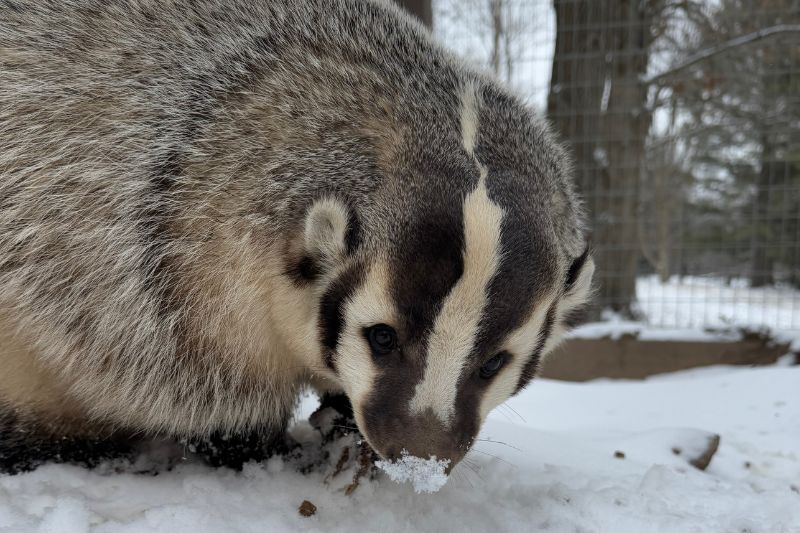
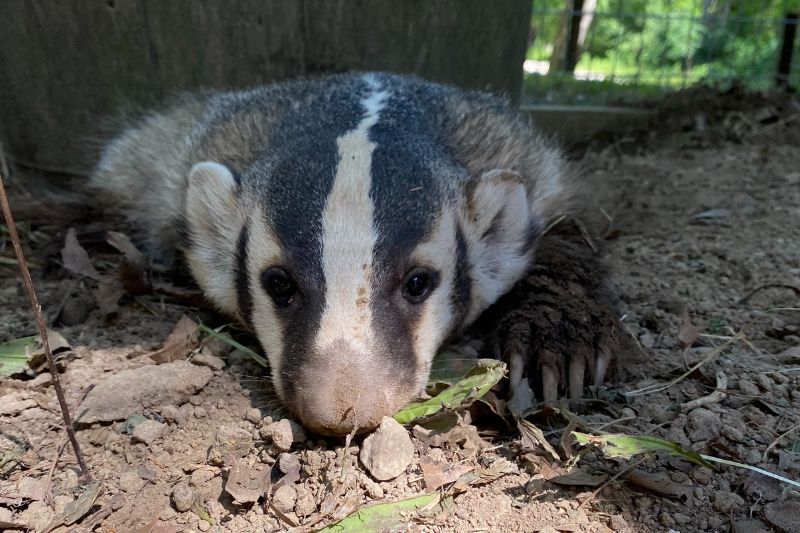
The badger is a truly fossorial (underground dwelling) mammal. Some of its adaptations for life underground include; a wedge-shaped head on a short neck, large nictitating membranes which is a transparent third eyelid, that protect the eyes from dirt, short and erect ears also protected by long hair, very muscular forelegs, partially webbed toes, and two-inch curved claws with pressure receptors. The badger has unusually loose skin, a trait responsible for anecdotal references to a badger “turning around in its skin”.
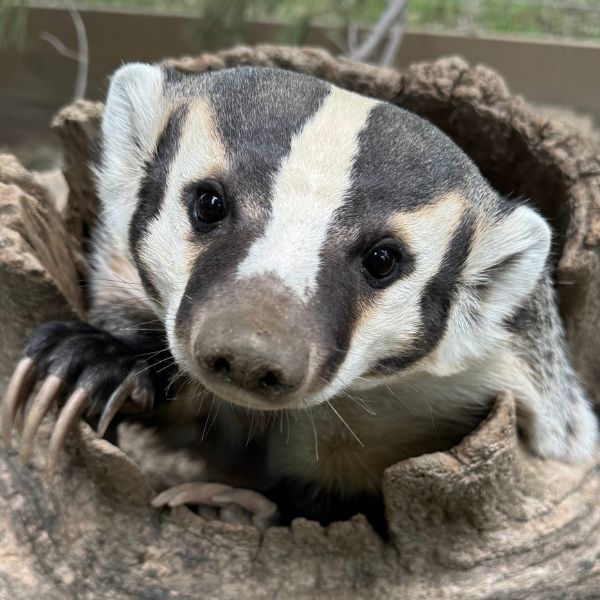
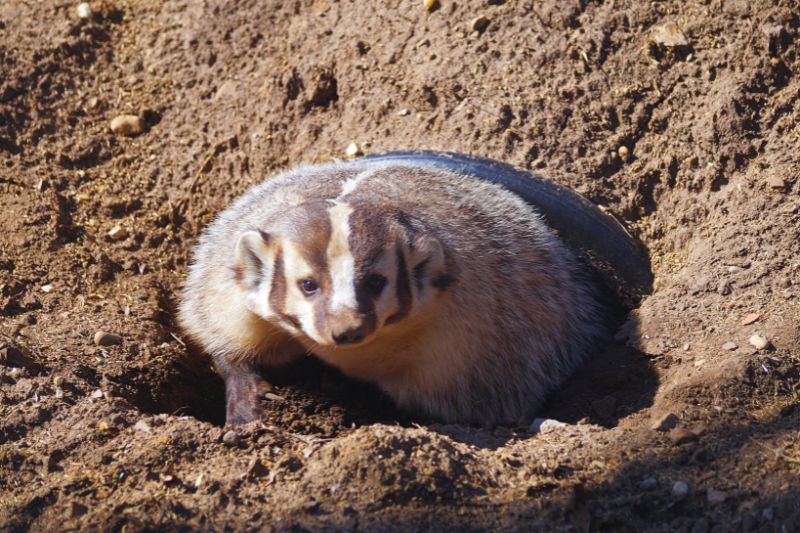
Mr. B came to the Park in 2022. He was found along the road next to his mother who had been hit by a car and taken to Hog Capital Wildlife Rescue and Rehab in Kewanee, IL. Since he cannot be released back into the wild, he found his forever home at Wildlife Prairie Park where he loves to, of course, dig, dig, dig as well as play in the water and search for food that the animal keepers hide for him. Mr. B is now enjoying digging in the newly renovated badger habitat while the grass grows and over time we’ll be introducing more plants, enrichment items, and permanent structures to turn it into a true badger paradise!
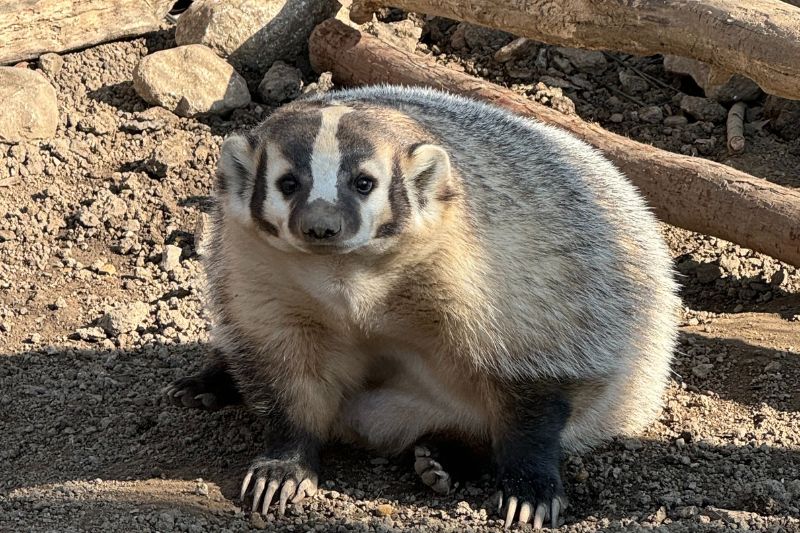
In Illinois there are two different subspecies of badger, Taxidea taxus jacksoni, and Taxidea taxus taxus. Changing landscape patterns have changed badger distribution throughout its range.
Badgers prefer to live in open areas: pastures, railroad rights-of-way, roadside shoulders, woodchuck colonies, alfalfa fields, and brushy areas. Digging burrows is not a problem for them, as they can dig rapidly and powerfully to move large obstacles like tree roots and rocks. They dig many burrows in search of food, especially ground squirrels or woodchucks. The burrows are subsequently used as temporary shelters.
Their diet in the wild will consist of rodents, rabbits, insects, birds, carrion, and reptiles, while in captivity it mostly consists of a specially prepared carnivore diet of raw meat.

Badgers use their sense of smell to communicate with others of their species. Like other mustelids, most notably skunks, badgers have scent glands from which they can emit a musky odor. It is not as foul or rank as a skunk's musk, and cannot be used to spray an enemy, but is nonetheless offensive to humans. As badgers travel and hunt their own territories, they leave notice of their passage by scent marking. Just by smelling the scent marks of another, a badger can determine whether it was male or female, relative or not, local resident or stranger, and whether it was ill or in good health.
Badgers are primarily nocturnal, but burrows and diggings manifest their presence. The dirt removed from a burrow is piled or scattered at the entrance and the burrow entrance is more wide than tall. Most burrows are less than 10 feet long. One adult badger occupies a burrow alone, with the exception of mating season or when nurturing young.